Dental Publication / Article Details |
|
Maxillary Lateral Incisor Implants: Planning with the Aid of Orthodontics
Author(s):
Vincent G. Kokich, Sr., DDS, MSD
Date Added:
1/1/0001
|
Summary:
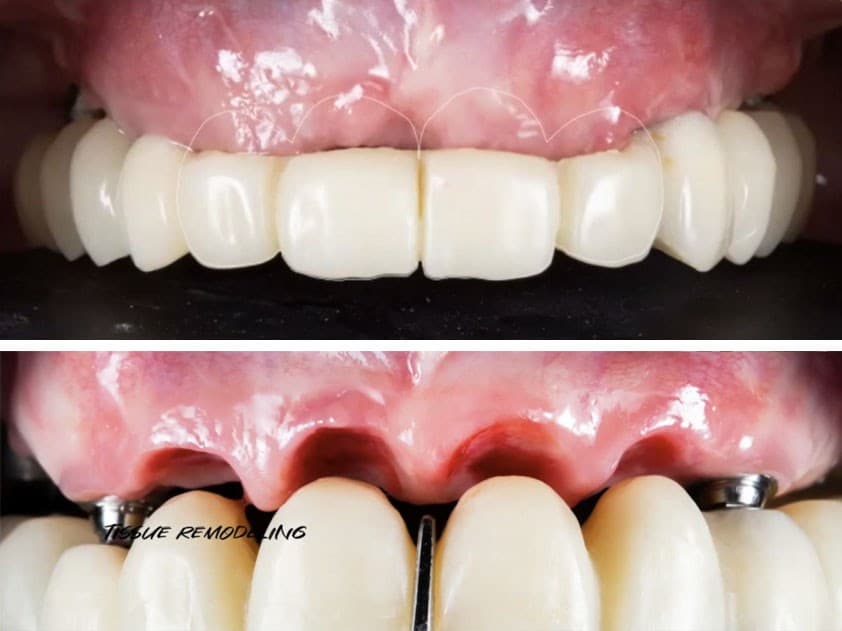
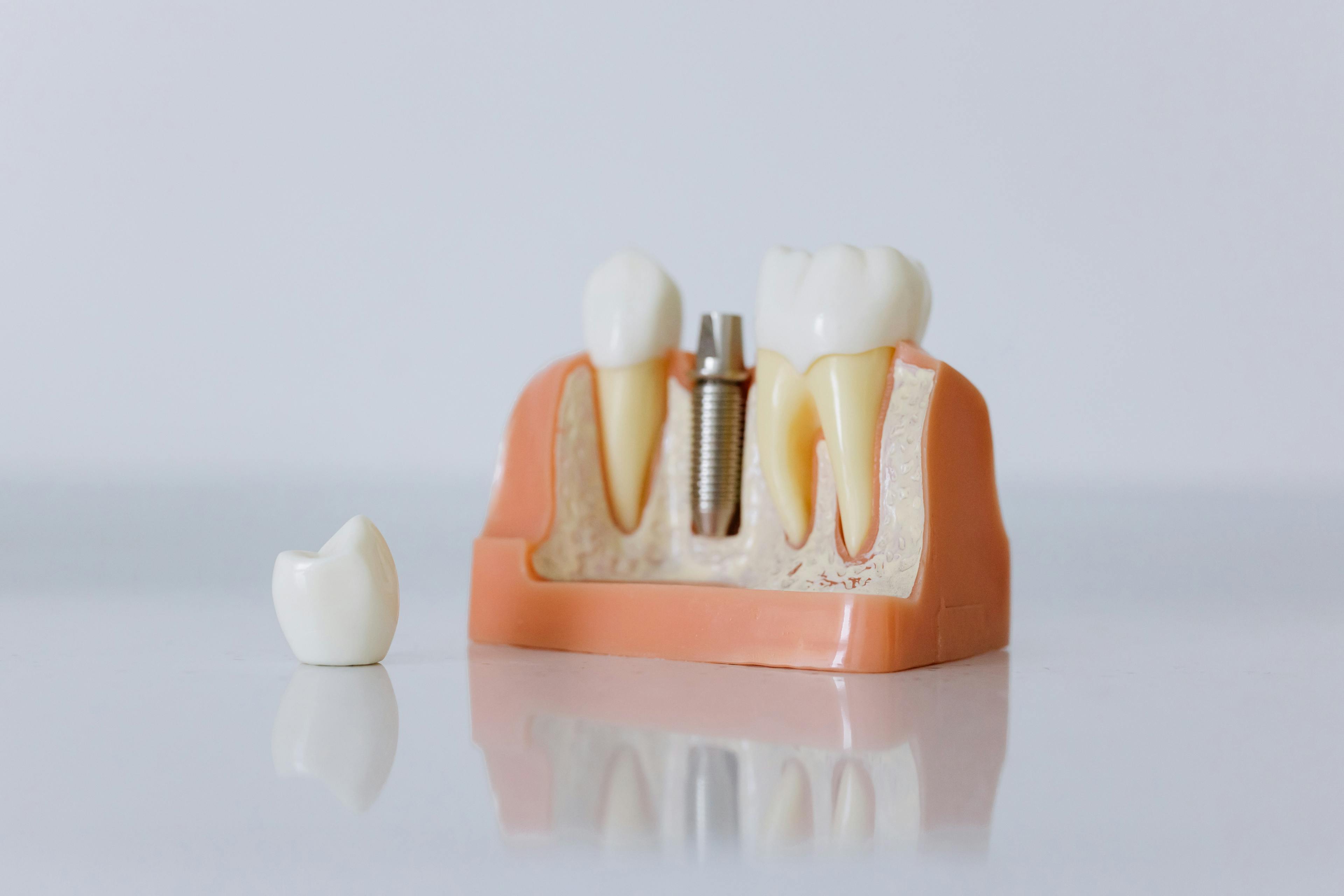
Implants are commonly used to replace congenitally missing lateral incisors in adolescent orthodontic patients. However, these restorations are often challenging for the orthodontist, surgeon, and restorative dentist. In some patients, the space across the alveolar crest is too narrow to permit the surgeon to place the implant. Occasionally the root apices of the adjacent central incisor and canine are in close proximity. In other cases the ridge thickness could be inadequate and require augmentation. When the orthodontist opens the space, the papilla heights are adversely affected. Some adolescent patients have altered passive eruption after orthodontic treatment that affects the level of the gingival margins. Finally, questions often arise regarding the appropriate age for implant placement in these young patients. If not addressed, these issues could compromise the esthetics of the implant restoration. This article will use several clinical examples to discuss each of these six potential problems and provide guildelines for their solutions.
|
|
Related Articles |
|
|
Effective Teaching Part 1
Today most orthodontists own a laptop computer that is equipped with PowerPoint (Microsoft Corporation) or some other type of presentation software. In addition, most orthodontists use a digital clinical camera with high resolution to gather photographic records of their patients before, during, and after orthodontic treatment. So any orthodontist has the capability to assemble a lecture or presentation for a group of dentists. What if you were invited to give a one-hour presentation about orthodontics…
| Author(s): |
Vincent G. Kokich, Sr., DDS, MSD;M. K. Kokich |
|
View Article>>
|
|
|
|
|
Orthodontic Microsurgery: A New Surgically Guided Technique for Dental Movement
Eight patients with malocclusions were treated with a new orthodontic-surgical technique that reduces the duration of treatment compared to conventional techniques. The monocortical tooth dislocation and ligament distraction (MTDLD) technique combines two different dental movements that work separately but simultaneously on opposite root surfaces. On the root surface corresponding to the direction of movement, vertical and horizontal microsurgical corticotomies are performed around each tooth root…
| Author(s): |
Tomaso Vercellotti, MD, DDS;Andrea Podesta, MD, DDS |
|
View Article>>
|
|
|
|
|
Adjunctive Orchestrated Orthodontic Therapy
The altruistic goal of any cosmetic dental rehabilitation is the re-establishment of a healthy maintainable aesthetic functional interface from an otherwise damaged dentition. To this end, a multi-disciplinary treatment plan is necessary to fulfill the periodontal, orthodontic, maxillofacial and cosmetic requirements for a healthy, stable dentition that has a favorable long-term prognosis. This comprehensive treatment approach strives for the constituent components of the dentition to have a proper…
| Author(s): |
Lee H. Silverstein, DDS, MS, FACD, FICD;Gene Witkin, DDS |
|
View Article>>
|
|
|
|
Related Videos |
|
|
Assessment and Treatment in Dentofacial Esthetics: A Comprehensive Global Perspective
Dr. Sarver will present a different system of esthetic classification which is made up of three major components: Macroesthetics (the facial appearance), Miniesthetics (the smile) and Miniesthetics (the teeth and gingival scaffold). These three features are all interactive-an adjustment of one has a cascade effect on the other two, and it is important to recognize all three to raise your level of care. Numerous clinical case presentations are designed to illustrate this structure of diagnosis and treatment graphically and clearly.
| Presented By: |
David M Sarver, DMD, MS |
| Presentation Style: |
Video |
| Community Rating: |
|
|
Watch Now>>
|
|
|
|
|
|
Cephalometric Diagnosis
Dr. Sperling discusses the process of cephalometric analysis in orthodontics.
| Presented By: |
Thomas Sperling, DDS |
| Presentation Style: |
Lecture |
| Community Rating: |
|
|
Watch Now>>
|
|
|
|
Related Courses |
|
|
Orthodontics
A 4 part course worth 1 CEU
| Presented By: |
Michael Sonick, DMD;Sergio Rubinstein, DDS;Thomas Sperling, DDS |
| Presentation Style: |
Online Course |
| CE Hours: |
1 CEU (Continuing Education Unit) |
|
Watch Now>>
|
|
|
|
|
Assessment and Treatment in Dentofacial Esthetics: A Comprehensive Global Perspective
Dr. Sarver will present a different system of esthetic classification which is made up of three major components: Macroesthetics (the facial appearance), Miniesthetics (the smile) and Miniesthetics (the teeth and gingival scaffold). We will cover a systematic analysis of the face, smile, and teeth and how they interact, adding a new and rewarding dimension to your approach to treatment planning and treatment outcomes.
| Presented By: |
David M Sarver, DMD, MS |
| Presentation Style: |
Online Course |
| CE Hours: |
1 CEU (Continuing Education Unit) |
|
Watch Now>>
|
|
|
|
|
The Role of CBCT in the Evaluation of Alveolar Bone
While traditional 2D radiography has been said to show less than 50% of the anatomy of alveolar bone, the arrival of CBCT technology for practicing orthodontists has given practitioners the ability to completely view and study this area with respect to tooth movement. An update on the related research will introduce this topic with a specific emphasis on the accuracy, application and importance of this radiological advancement followed by the presenter's own protocols for patient diagnosis and treatment methods. Case presentations will be used throughout the lecture to highlight the clinical significance of using CBCT in Orthodontics to anticipate and assess the periodontal consequences of tooth movement.
| Presented By: |
Robert L Waugh, DMD, MS |
| Presentation Style: |
Online Course |
| CE Hours: |
1 CEU (Continuing Education Unit) |
|
Watch Now>>
|
|
|
|
|