Dental Publication / Article Details |
|
Minimally Invasive Alveolar Ridge Augmentation Procedure (Tunneling Technique) Using rhPDGF-BB in Combination with Three Matrices: A Case Series
Author(s):
Myron Nevins, DDS;Marc L. Nevins, DMD, MMSc; Marcelo Camelo, DDS; Peter Schupbach, PhD; Bernard Friedland, BChD, MSc, JD; Joao Marcelo Borges Camelo, DDS; David M. Kim, DDS, DMSc
Date Added:
12/3/2010
|
Summary:
This study investigated a minimally invasive surgical procedure for alveolar ridge augmentation that combined recombinant human platelet-derived growth factor BB (rhPDGF-BB) and three different matrices. The minimally invasive tunneling ridge augmentation procedure was applied to 12 patients randomized into three groups: rhPDGF-BB (0.3 mg/mL) was combined with freeze-dried bone allograft (FDBA; group A), anorganic bovine bone graft (ABBG; group B), or anorganic bovine bone graft/mineralized collagen bone substitute (ABBG/MCBS; group C). Computed tomography (CT) scans were obtained presurgically and prior to 14-week re-entry surgery. Clinical reentry revealed adequate bone volume to place implants in all patients in groups A and B and two of four patients in group C.
|
|
Related Articles |
|
|
Intraoral Autogenous Block Onlay Bone Grafting for ExtensiveReconstruction of Atrophic Maxillary Alveolar Ridges
Autologous bone grafting used with dental implants was originally described by Bränemarketal in 1975, and is now a well-accepted procedure in oral and maxillofacial rehabilitation.Placement of an endosseous implant requires sufficient bone volume for complete bone coverage. Furthermore, the pattern of ridge resorption contributes to an unfavorable maxillomandibular relationship, requires angulations of the implants and/or angled abutments, and affects the proximity of adjacent facial concavities(maxillary sinus, nasal cavity) and vital structures(mandibular nerve).
|
|
|
|
|
Related Videos |
|
|
|
Immediate Dentoalveolar Restoration
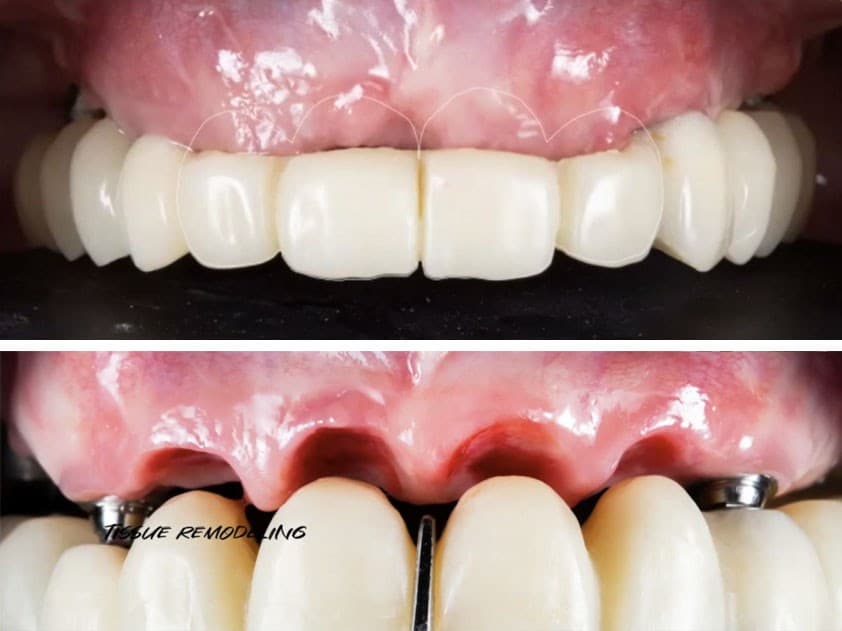
The IDR (Immediate Dentoalveolar Restoration) technique has been used for over 6 years. With it, we can reconstruct socket tissue losses in the same surgical session of dental extraction, implant placement and provisional crown installation, minimizing the treatment time and morbidity of the procedures.
In this presentation we discuss the hard and soft tissues stability when the IDR technique is applied in different types of periodontal biotypes and in sites with different defect levels.
The clinical, radiographic and tomographic follow-up of some cases is shown, allowing us to evaluate the maintenance of gingival architecture and peri-implant bone stability around the implants.
| Presented By: |
José Carlos Martins da Rosa, DDS, MS |
| Presentation Style: |
Video |
| Community Rating: |
|
|
Watch Now>>
|
|
|
|
|
Related Courses |
|
|
Alveolar Ridge Regenerative Strategies: Autogenous Bone vs BMP-2
This clinical based presentation will compare the use of autogenous bone vs BMP-2 for alveolar ridge reconstruction. The science, indications, advantages and disadvantages of each approach will be featured. Single tooth to full arch reconstruction cases will also be shown along with understanding the application of non-resorbable vs resorbable mesh barriers for alveolar ridge reconstruction.
| Presented By: |
Michael A Pikos, DDS |
| Presentation Style: |
Online Course |
| CE Hours: |
1 CEU (Continuing Education Unit) |
|
Watch Now>>
|
|
|
|
|
|
Osseointegration & Augmentation
A 4 part course worth 1 CEU.
| Presented By: |
Maurice Salama, DMD;Ziv Mazor, DMD;Hom-Lay Wang, DDS, MSD, PhD;Ady Palti, DDS |
| Presentation Style: |
Online Course |
| CE Hours: |
1 CEU (Continuing Education Unit) |
|
Watch Now>>
|
|
|
|
|