Video Details
|
Abutment Selection and Tissue Color in Implant Therapy
Description:
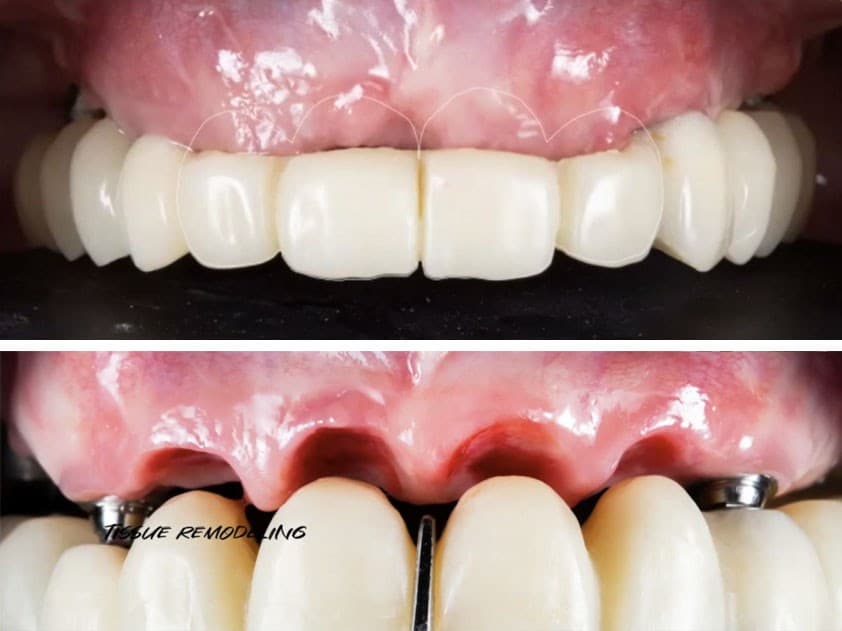
Drs. Ronald Jung and David Garber discuss the parameters that are required to achieve optimal soft tissue esthetics in implant therapy, especially as they relate to abutment selection and tissue color. New clinical research is presented and specifically related to how their conclusions can be utilized to make important clinical decisions in esthetic implant therapy. A comparison of Zirconium and titanium abutments is outlined as to their effect on tissue color.
Date Added:
11/12/2008
Author(s):
Ronald Jung, DMD
|
|
Online Videos / Surgery / Implant / Abutment Selection and Tissue Color in Implant Therapy
|
Questions & Comments
|
BORNA RASHIDISANGSARY - (9/3/2012 12:15 PM)
Very informative information on abutment selection; Thank you Dr. Jung
|
Related Courses |
|
|
Insights, Trends & Controversies in Implant Dentistry
In this first of a 4 part series, Dr. Dennis tarnow shares insights into new trends, developments and controversies in implant dentsitry. In this section, Dr. Tarnow discusses important topics related to implantitis, the gap, one-abutment/one-time, implant surfaces and design to name just a few.
| Presented By: |
Dennis P. Tarnow, DDS |
| Presentation Style: |
Online Course |
| CE Hours: |
1 CEU (Continuing Education Unit) |
|
Watch Now>>
|
|
|
|
|
Prosthetic Strategies to Enhance Dental Implant Aesthetics
The principle focus of implant dentistry has changed significantly from the era of ‘Anatomically driven implant placement’ to the current practice of ‘Restoration driven implant placement’. When we now look at the failing dentition in the aesthetic zone we now must immediately consider conversion to implants. We are continually seeking greater control of the peri-implant tissues and ultimately the aesthetics of the restoration. Implant/abutment designs allow us to consider immediate implant replacement, and immediate non-functional loading especially in the aesthetic zone, where preservation of hard and soft tissue is of paramount importance in order follow the principles of aesthetics by maintaining the elements which are already there
| Presented By: |
E. Dwayne Karateew, DDS |
| Presentation Style: |
Online Course |
| CE Hours: |
1 CEU (Continuing Education Unit) |
|
Watch Now>>
|
|
|
|
|
Zirconia Based Implant Supported Restorations: Planning and Design
Emphasis will be placed on demonstrating the different restorative options utilizing fixed detachable restorations made of monolithic zirconia, where 100% of the prostheses is zirconia.
| Presented By: |
Fernando Rojas Vizcaya, DDS, MS |
| Presentation Style: |
Online Course |
| CE Hours: |
1 CEU (Continuing Education Unit) |
|
Watch Now>>
|
|
|
|
Related Articles |
|
|
Dental Implants: Mastering Esthetics in the Smile Zone
The key to contemporary restorative dentistry is the fabrication of healthy, maintainable, esthetic, and functional prostheses. The true success of any restoration is reliant on the creation of an “illusion of reality,” regardless of the restorative modality used (eg, porcelain laminate veneers, crowns, and/or implant-supported prostheses). Developments and advances to the restorative armamentarium have significantly improved the clinician’s ability to deliver predictable and reliable treatments. Osseointegration…
| Author(s): |
Lee H. Silverstein, DDS, MS, FACD, FICD;Gregori M. Kutrzman, DDS, David Kurtzman, DDS, Peter C. Shatz, DDS |
|
View Article>>
|
|
|
|
|
Aesthetic Enhancement of Anterior Dental Implants with the Use of Tapered Osteotomes and Soft Tissue Manipulation
As osseointegration of endosseous dental implants has become predictable and well-documented, the emphasis in dental- implant treatment has shifted from functional concerns to the achievement of long-term aesthetic results. An adequate alveolar bone base is the prerequisite for functional and aesthetically optimal reconstruction of the soft-tissue architecture. This is true for both fixed partial denture (FPD) pontic sites and dental implant sites. In patients with sufficient bone height but insufficient bone…
| Author(s): |
Jack A. Hahn, DDS;Lee H. Silverstein, DDS, MS, FACD, FICD |
|
View Article>>
|
|
|
|
|
|