Video Details
|
Acellular Dermal Grafts in the Correction of Gingival Recession: Discovering the Possibilities
Description:
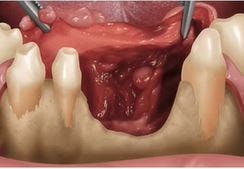
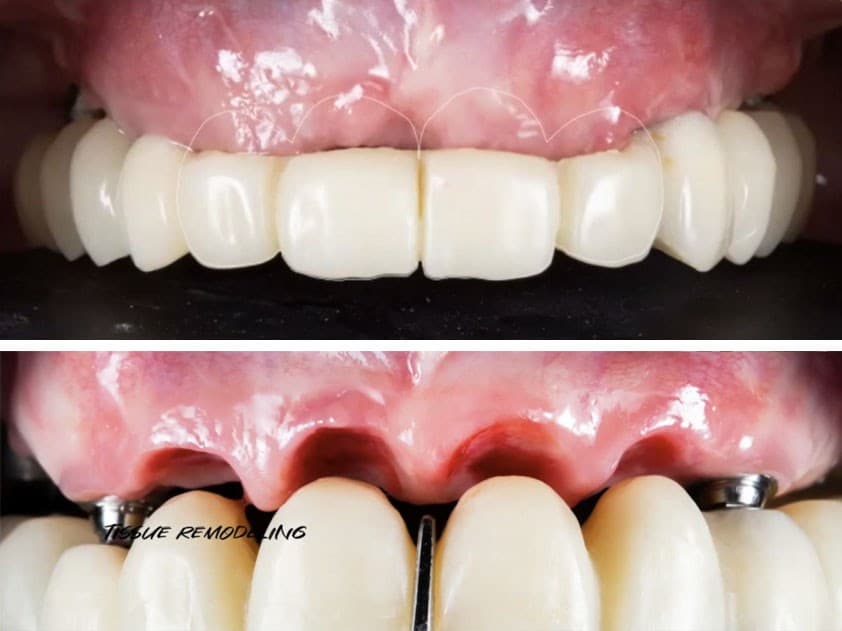
Autogenous connective tissue grafts from the palate have been the gold standard for surgically correcting gingival recession for decades. With the advent of newer soft (and hard) tissue allografts, grafting procedures are increasingly predictable, quick, effective, and less painful for patients. In this presentation, follow the evolution of root coverage surgery from autogenous grafts to the more contemporary alternatives of today. Discover how these newer materials are making it easier for patients to say "yes" and how their results can impact the level of esthetics, periodontal health and predictable restorative dentistry our profession can deliver.
Date Added:
9/2/2011
Author(s):
David Wong, DDS
Dr. David Wong is a board-certified Periodontist in private practice in Tulsa, Oklahoma.
Dr. Wong received his undergraduate education and dental training at the Un...
[read more]
|
|
Online Videos / Surgery / Soft Tissue / Acellular Dermal Grafts in the Correction of Gingival Recession: Discovering the Possibilities
|
Questions & Comments
|
Edison Louie - (5/19/2013 7:46 PM)
Thank you for your presentation...very well done.
|
omid moghaddas - (7/27/2012 10:17 AM)
really like your performance Dr Wang,great.thanks Dr Omid Moghaddas
|
Shawn Tokunaga - (7/27/2012 9:38 AM)
Loved the presentation. Clear, concise and delivered well. I am eager to delve deeper in managing tissues better after seeing this. It really opened my eyes to what is possible. Thanks David
|
sami latif - (5/1/2012 9:48 PM)
I have registered as a premium member,yet I can't seem to be able to watch any video, can you verify that I have upgraded my account,
Thanks
|
Sivan Dr Kars - (3/24/2012 4:32 PM)
Doe's the root coverage procedure work as well on non vital teeth as on vital?
|
david wong - (3/22/2012 2:50 AM)
Hi Nina, thank you for the question... for treating multiple teeth, our fee is $1100 for the first tooth and $580 for each add'l tooth. For full arches, the fee is normally between $5000-6000 depending on the difficulty of the case... for instance, if a tooth only has 1 mm of recession I won't even charge for it if it's part of a full arch case.
|
Nina Foley - (1/31/2012 5:20 PM)
Loved it...when you are doing these full mouth or >1 graft how are you charging?
|
gary toogood - (12/4/2011 10:11 AM)
very good presentation as well as informative......gary toogood
|
david wong - (9/6/2011 9:39 AM)
@binh: There are several factors to consider for ortho cases... the direction of movement, severity of recession, quality of the surrounding tissue, etc... Generally speaking, my preference is to perform the grafting before ortho treatment in order to establish a strong foundation and to minimize or prevent further recession. However, for class I (Miller) recession defects in which there is no interproximal bone loss and the recession defects do not extend to the mucogingival junction, you can graft either before or after ortho as it really will not make a difference in the patient's final outcome as long as the roots are not moved through the labial plate. If there is absolutely no keratinized/attached gingiva surrounding a tooth or teeth, I will generally graft before orthodontic treatment. I will wait 8-12 weeks before commencing ortho. Hope this answer's not too confusing, and thank you for the question!
@pierre-- I love Emdogain in some cases... there have been several studies (McGuire's work comes to mind) discussing it's use in treating recession. Results are usually best when used to treat Class I recession defects. Thin existing tissue is still going to be treated the best with either palatal tissue or an acellular dermal graft like Perioderm. The interesting thing about Emdogain, though, is that some studies report an increase in keratinized/attached gingiva and histology exists that suggest that regeneration is even possible. Thanks again for the question and for watching the presentation.
|
|
|
Related Videos |
|
|
|
The Evolving Role of Soft Tissue Enhancement in Esthetic Reconstructive Dentistry - Part 1 of 3
Soft tissue grafting techniques, new regenerative materials and bioactivators will be highlighted. The expanding role of allograft materials (Perioderm), platelet rich in growth factors (PRGF, PRF), and when to utilize them will be suggested. The ability of these combined protocols to alter the soft tissue profile around natural teeth, implants, and dentulous ridges, will be reviewed as to its critical role in "Complete Esthetics".
| Presented By: |
Maurice Salama, DMD |
| Presentation Style: |
Lecture |
| Community Rating: |
|
|
Watch Now>>
|
|
|
|
|
Related Courses |
|
|
|
|
The Basics of Root Coverage Surgery with Acellular Dermal Grafts: A STEP-BY-STEP Live Patient Demonstration
Soft tissue grafting is rapidly playing a larger role in restorative, esthetic, and reconstructive dentistry. While conventional grafting techniques have several limitations, newer grafting materials and techniques make it easier for patients to say "yes" to the treatment they truly need and desire. In this webinar, Dr. Wong will perform a step-by-step demonstration using Perioderm to correct multiple gingival recession defects. Soft tissue allografts are quickly becoming a "game changer" in dentistry, making optimum dentistry more than an ideal... it's a reality.
| Presented By: |
David Wong, DDS |
| Presentation Style: |
Online Course |
| CE Hours: |
1 CEU (Continuing Education Unit) |
|
Watch Now>>
|
|
|
|
|
Related Articles |
|
|
Use of the Subepithelial Connective Tissue Graft to Improve Esthetics
The subepithelial connective tissue graft is a gingival grafting plastic surgery procedure that can be used to enhance the aesthetic and gingival contour of the periodontium around dental implants. This technique is described and illustrated to create a soft-tissue root prominence and mask the grey color penetrating the thin labial attached gingival tissues over dental implants.
| Author(s): |
Lee H. Silverstein, DDS, MS, FACD, FICD;Michael D. Lefkove, DDS |
|
View Article>>
|
|
|
|
|
Bipolar Soft Tissue Management & Functional Mock-Ups
Patients desiring a cosmetic smile improvement can present challenges to the dentist when treatment planning. An excessive display of gingiva due to a high lip line often complicates treatment planning and can compromise the final esthetic result when proper planning is not considered prior to finalizing the case. We often have to ask ourselves as we evaluate the patient, do we “lower the river” (increase tooth length incisally), “raise the bridge” (increase tooth length gingivally) or a combination…
| Author(s): |
Lee H. Silverstein, DDS, MS, FACD, FICD;Gregori M. Kurtzman, DDS |
|
View Article>>
|
|
|
|
|
Achieving Predictable Connective Tissue Root Coverage
Gingival recession creates esthetic issues. These issues may be corrected from a restomtive perspective by the placement of composite resin or ceramic over the exposed root. But this approach often results in a gingival-incisal length that does not blend esthetically with tire adjacent teeth. Often accompanying the gingival recession is a decrease in the band of attached gingiva. The wider the band of attached gingiva, the more stabIe the long-term result Therefore, surgical correction of the recession…
| Author(s): |
Lee H. Silverstein, DDS, MS, FACD, FICD;Gregori M. Kurtzman, DDS, David Kurtzman, DDS, Peter C. Shatz, DDS |
|
View Article>>
|
|
|
|
|