Video Details
|
Advanced Simultaneous Bone Ridge Augmentation and Internal Sinus Elevation - Part 1 of 2
Description:
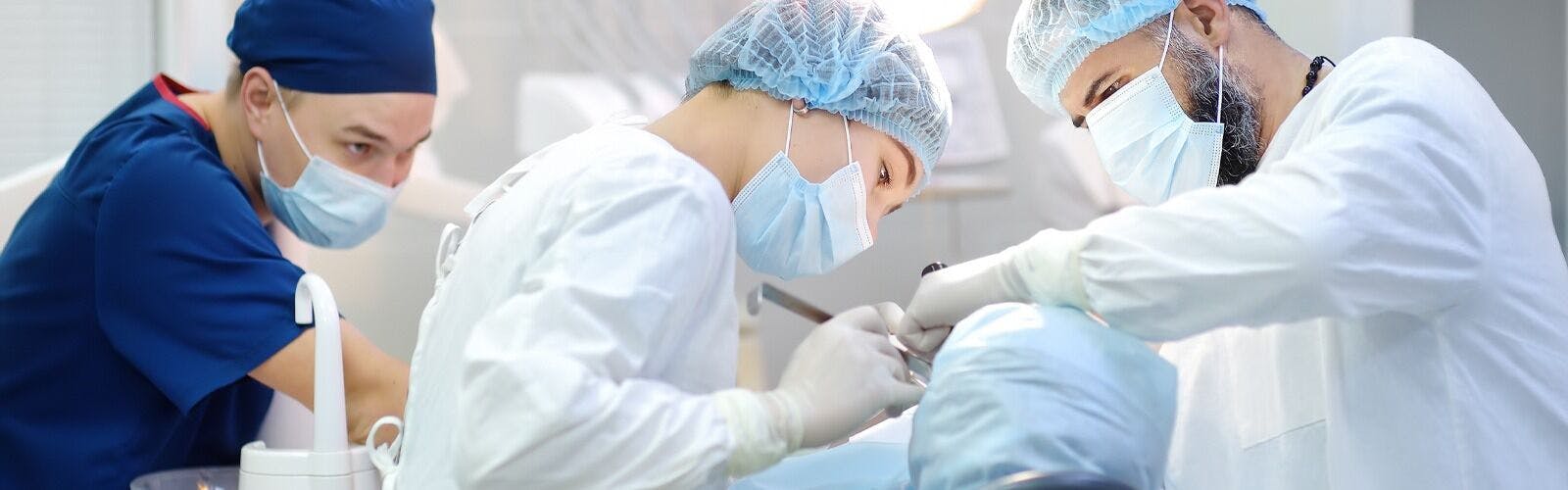
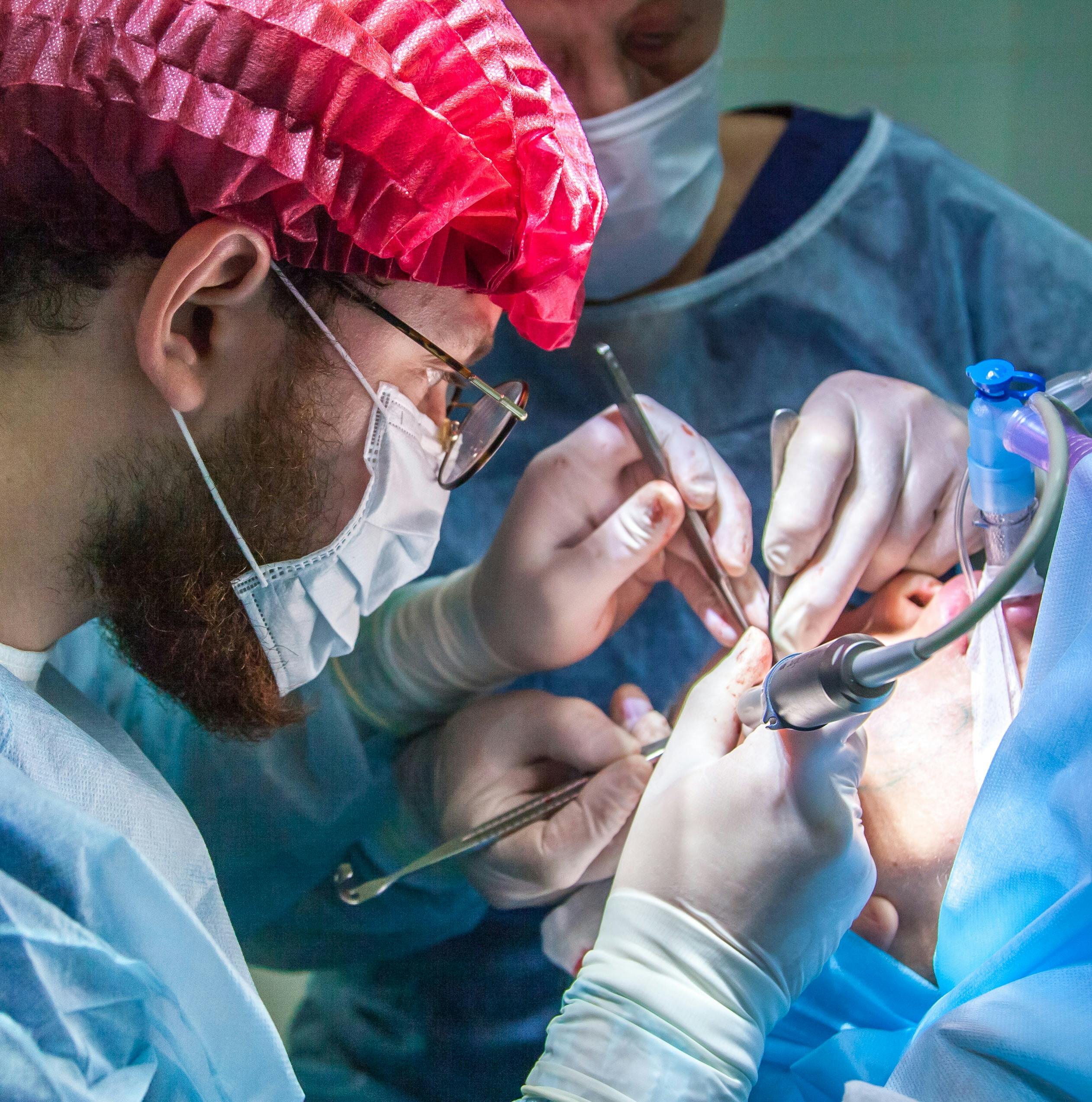
Clinicians today have access to an astounding array of new technology, tools and materials to utilize in delivering implant therapy. This video centric and surgically based presentation will highlight a few of these new tools in the augmentation of a severely resorbed posterior maxillary ridge in conjunction with a progressive crestal approach for sinus augmentation.
Presurgical CBCT treatment planning, flap design, PRGF & Fibrin application and surgical instrumentation as well as the utilization of new technologies such as the KLS Martin Sonic Weld Device for GBR and the Megagen Internal Sinus Lift Kit designed by Samuel Lee will be highlighted.
Date Added:
12/1/2010
Author(s):
Maurice Salama, DMD
Dr. Maurice A. Salama completed his undergraduate studies at the State University
of New York at Binghamton in 1985, where he received his BS in Biology. Dr. Salama
r...
[read more]
|
|
Online Videos / Surgery / Sinus Lift / Advanced Simultaneous Bone Ridge Augmentation and Internal Sinus Elevation - Part 1 of 2
|
Questions & Comments
|
Maurice Salama - (12/6/2011 8:23 AM)
Avi;
Here is the link to purchase the kits. http://www.dentalxp.com/VendorDetails.aspx?id=337
|
Maurice Salama - (12/6/2011 7:55 AM)
Avi; The instruments I currently utilize for both Crestal and Lateral approach sinus lift procedures will be posted shortly on the coming weeks on this site under the product section and purchased directly at a discount from Neobiotech. I utilize both the SLA and SCA kits routinely to access the sinus for both approaches. Keep a eye out for this on the product page and good luck.
Dr. Salama
|
Avi Glikshtein - (12/5/2011 2:06 PM)
Dr. Salama; I wanted to know where can I find instruments like you are using in crestal approach procedure. Thank you. Dr. Avi
|
Sam Busich - (3/21/2011 8:37 AM)
Dr. Salama; I am very interested in the Crestal Approach. I have watched the presentations of Dr. Samuel Lee and Dr. Ziv Mazor on this site displaying different crestal approaches. Which one do you prefer and why?
many thanks Sam
|
Maurice Salama - (3/20/2011 3:11 PM)
Dear XP Membership around the World;
Crestal Approach vs. Lateral approach?? Views and suggestions from the XP audience. I have now tried almost all the products available for both and have my own views.
Dr. Salama
|
Related Videos |
|
|
|
The MIAMBE Balloon Crestal Sinus Elevation Technique
Dr. Mazor displays in detail the utilization of the MIAMBE (Minimally Invasive Antal Membrane Balloon Elevation) Balloon for grafting of the Maxillary Sinus utilizing a crestal approach.
| Presented By: |
Ziv Mazor, DMD |
| Presentation Style: |
Video |
| Community Rating: |
|
|
Watch Now>>
|
|
|
|
|
Crestal Sinus Elevation Utilizing a Hydrodynamic Piezoelectric Approach
This surgical clinical video demonstrates thorough CBCT planning and execution of sinus elevation utilizing a crestal approach in a molar site utilizing a hydrodynamic piezoelectric approach. Sinus elevation, osseous grafting and utilization PRGF fibrin membrane are demonstrated in detail. In addition, management of achieving adequate primary stability in simultaneous implant placement is also demonstrated.
| Presented By: |
Dong-Seok Sohn, DDS, PhD |
| Presentation Style: |
Video |
| Community Rating: |
|
|
Watch Now>>
|
|
|
|
|
Dr. Ziv Mazor on Implant Dentistry
Dr. Ziv Mazor discusses many of the different aspects of implantology.
| Presented By: |
Ziv Mazor, DMD;Jack T. Krauser, DMD;Jack T. Krauser, DMD |
| Presentation Style: |
Video |
| Community Rating: |
|
|
Watch Now>>
|
|
|
|
Related Courses |
|
|
Tissue Engineering and Platelet Derived Growth Factors: Evidence Based Therapy
Platelet derived growth factors are now routinely utilized in reconstructive therapy. This presentation describes very detailed and evidence based guidelines for clinicians interested in enhancing their abilities in tissue engineering, especially as it relates to bone augmentation. Specifically, while successful bone augmentation requires the standard surgical parameters of space maintenance, low pressure on the grafts and tension-free flap closure, optimization of this goal requires management and enhancement of the local biological conditions with growth factors. Towards that end, platelet concentrates through the constant release of growth factors are able to promote and enhance new vascularization, provide plasma protein, normal lipidemia, as well as increased collagen and fibrin activity.
| Presented By: |
Joseph Choukroun, MD |
| Presentation Style: |
Online Course |
| CE Hours: |
1 CEU (Continuing Education Unit) |
|
Watch Now>>
|
|
|
|
|
|
Sinus Augmentation - Current and Future Trends
In this presentation, Dr. Ziv Mazor reviews present techniques as well as detailing the latest innovations in sinus augmentation. Specifically, Dr. Mazor pays special focus to new materials and techniques involving both the crestal as well as the lateral window approach.
| Presented By: |
Ziv Mazor, DMD |
| Presentation Style: |
Online Course |
| CE Hours: |
1 CEU (Continuing Education Unit) |
|
Watch Now>>
|
|
|
|
Related Articles |
|
|
Indirect Sinus Lift with CPS Putty
In situations where lack of bone volume is related to an enlarged maxillary sinus, elevation of the sinus floor has been advocated for implant placement.
| Author(s): |
Lanka Mahesh, BDS, MBA;Dr. Manesh Lahori; Dr. Sagrika Shukla; Dr. Prerna Kaushik |
|
View Article>>
|
|
|
|
|
Maxillary Sinus Membrane Repair: Update on Technique for Large and Complete Perforations
Maxillary sinus membrane perforation is the most common complication that occurs with sinus elevation augmentation surgery. A technique using a slow resorbing type I collagen membrane for repair of large and complete sinus membrane perforations is described. The biocompatibility and semirigid structural integrity of this membrane, along with external tack fixation, allows for optimal membrane stabilization and maintenance. (Implant Dent 2008;17:24–31)
|
|
|
|
Sinus Augmentation for Single-Tooth Replacement in the Posterior Maxilla: A 3-Year Follow-up Clinical Report
A technique for single-tooth sinus lift and simultaneous implant placement in the posterior maxilla is presented. Ten hydroxyapatite-coated cylindric implants, 13 to 15 mm in length, were placed together with a composite bone graft of demineralized freeze-dried bone allograft and autogenous bone in 10 adults. Surgical technique and anatomic considerations are discussed. Follow-up of 3 years showed successful function and no cervical bone loss in all patients.
| Author(s): |
Ziv Mazor, DMD;Michael Peleg, DMD;Michael Peleg, DMD; Martin Gross, BDS, LDS, MSc |
|
View Article>>
|
|
|
|
|