Dental Education
Online Dental Education Dental education lectures and videos Online dental ce Dental education articles Expert dental educators Dental products education Dental Community
 
Video Details
The Advantages of the Root Submergence Technique (RST) for Pontic Site Enhancement part 1

Description:
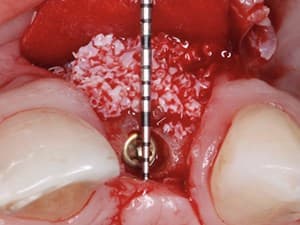
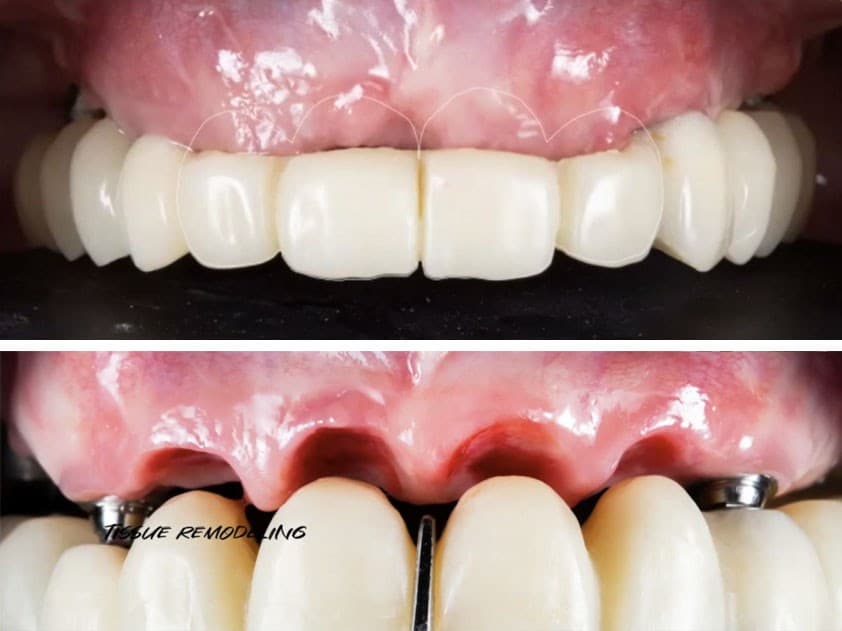
By maintaining the natural tooth root through the root submergence technique (RST) we are better able to preserve a much greater amount of surrounding tissue than the more commonly used socket preservation technique. RST maintains the natural attachment apparatus of the tooth in the pontic site which in turn allows for complete preservation of the alveolar bone frame and creates a more esthetic result in multiple tooth replacement cases.

Date Added:
3/23/2010

Author(s):

Maurice Salama, DMD Maurice Salama, DMD
Dr. Maurice A. Salama completed his undergraduate studies at the State University of New York at Binghamton in 1985, where he received his BS in Biology. Dr. Salama r...
[read more]


Online Videos / Surgery / Implant / The Advantages of the Root Submergence Technique (RST) for Pontic Site Enhancement part 1


Questions & Comments
Band Ditto64 - (10/13/2012 1:37 PM)

This is simply a great CONCEPT Dr. Salama and that you can perform it with VITAL roots is amazing. REAL TRUE and COMPLETE Ridge Preservation!!! thank you Band

james kim - (8/7/2012 9:59 PM)

I have a question on the sequence of your anterior lateral eruption case.I know you placed an implant in the #8 site for the ortho anchorage. But could you not have just placed brackets on the 6 anteriors and not place the implant until later? I would have thought that once you have the mesial bone at the ideal position on #7, placing the implant with hard and soft grafts would be more predictable. Great presentation by the way!

kevin potocsky - (5/1/2012 5:05 PM)

maurice,

for the roll technique from mod 2 do you do a horizontal split thickness incision on the buccal and two vertical incisions to bone right? do you have a video on xp of this?

Maurice Salama - (5/1/2012 9:32 AM)

As an update on root submerge nice. We continue to have excellent long term results! Also, vital teeth have performed very well. Dr. S

Maurice Salama - (5/13/2010 5:25 AM)

Yitzchak; Thanks. There is a risk of eruption of the root if there is no keratinized tissue covering it and a pontic with contact on the gingiva. As for cutting root, we want to cut it roughly 1mm above the bone and we perform this sometimes without a flap utilizing diamond burs and magnification. Hemostasis is key to allow visualization.
Good luck
Dr. S

yitzchak GOLDSHMID - (5/12/2010 10:18 AM)

Maurice! brilliant idea as allways.. 2 ques. 1. isn't there any risk of that root trying to erupt in the future? 2. could you describe in a few words how you cut to bone level without raising a flap? thanks! Yitzchak

Maurice Salama - (3/28/2010 6:04 AM)

Milind;
Endodontics is not necessary. Vital roots can be submerged. Perio roots should be debrided prior to submergence. If the root has endo, it should be sealed with glass ionomer. Multi-rooted teeth ok for RST. Can last many years in submerged state but no definite research although our cases have as many as 10+ years in some early cases.
Good luck Dr. S

milind saudagar - (3/26/2010 8:22 PM)

both videos fantastic. my question is, what is the criteria to keep rootpieces inside the bone. do we need to do perfect endodontics? what should be the periodontal condition. because most of the teeth we extract are perio compromised. also does this apply to multi rooted teeth? how many years do these root pieces stay submerged? also what material is used to seal the coronal aspect of these pieces below the gum line.

Sam Busich - (3/26/2010 9:08 AM)

Milind;
Part 2 is on the Homepage right now directly below Part 1 and it is terrific. He shows 3 ways to address vertical defects in the anterior region. Take a look.
Sam

Related Videos
The Advantages of the Root Submergence Technique (RST)  for Pontic Site Enhancement part 2 Premium Member Content

The Advantages of the Root Submergence Technique (RST) for Pontic Site Enhancement part 2
This presentation describes the RST strategy and why it can more predictably provide an esthetic implant result for multiple tooth replacement cases.

Presented By: Maurice Salama, DMD
Presentation Style: Video
Community Rating:
 
Watch Now>>
Implant Abutments and Peri-implant Tissue Stability Premium Member Content

Implant Abutments and Peri-implant Tissue Stability
Dr. Barry Goldenberg outlines the optimal requirements and characteristics for implant abutments.

Presented By: Barry Goldenberg, DMD, MS, Pc
Presentation Style: Lecture
Community Rating:
 
Watch Now>>
TMD, Parafunction and Occlusion for Natural Teeth and Implants: Diagnosis and Management Premium Member Content

TMD, Parafunction and Occlusion for Natural Teeth and Implants: Diagnosis and Management
This presentation will address the basic science related to mechanics of the head and neck and the interrelationship with everyday clinical dentistry directly related to occlusion involving implants and the natural dentition. Alternative strategies for the management of parafunction and TMJ related issues will also be outlined.

Presented By: Alvaro Ordoñez, DDS
Presentation Style: Video
Community Rating:
 
Watch Now>>
Digital Dentistry in the Management of Simple and Complex Cases: The Digital Intra-Scanner Premium Member Content

Digital Dentistry in the Management of Simple and Complex Cases: The Digital Intra-Scanner
The advent of new technologies has enabled the utilization of new materials and equipment that facilitate the production of restorations with an accuracy that has, up to now, been difficult to obtain reliably. This lecture utilizes patient presentations to help analyze and highlight new systematic clinical protocols that have been developed to optimize the evolving knowledge in digital dentistry and materials. These protocols have allowed us to modify work flow and operational techniques to shorten lead times, while maintaining optimal accuracy. Advantages and disadvantages of the methods outlined will be evaluated and analyzed on the basis of existing literature and personal experience.

Presented By: Alessandro Agnini, DMD;Andrea Mastrorosa Agnini, DDS
Presentation Style: Video
Community Rating:
 
Watch Now>>
Related Courses
Optimizing Tissue Esthetics of Single Tooth Implants Premium Member Content

Optimizing Tissue Esthetics of Single Tooth Implants
With optimized planning, precise placement of the fixture, and the use of laser technology to reduce tissue trauma we can minimize the bone and tissue changes during the surgical phase. During the restorative phase creation of proper tissue contours using the CO2 laser and control of tooth form to position tissue set the stage for obtaining optimal esthetic results.

Presented By: Lee Ann Brady, DMD
Presentation Style: Online Course
CE Hours: 1 CEU (Continuing Education Unit)
Watch Now>>
Immediate Anterior Implant Therapy: Comprehensive Esthetic Management Premium Member Content

Immediate Anterior Implant Therapy: Comprehensive Esthetic Management
To achieve "Esthetic perfection", every minimal detail should be considered, starting from the temporary on the day of the surgery: Dr Agnini will describe various clinical options and techniques for efficiently and esthetically fabricating a temporary restoration immediately after implant placement in the replacement of a single tooth.

Presented By: Alessandro Agnini, DMD;Andrea Mastrorosa Agnini, DDS
Presentation Style: Online Course
CE Hours: 1 CEU (Continuing Education Unit)
Watch Now>>
Prosthetic Strategies to Enhance Dental Implant Aesthetics Premium Member Content

Prosthetic Strategies to Enhance Dental Implant Aesthetics
The principle focus of implant dentistry has changed significantly from the era of ‘Anatomically driven implant placement’ to the current practice of ‘Restoration driven implant placement’. When we now look at the failing dentition in the aesthetic zone we now must immediately consider conversion to implants. We are continually seeking greater control of the peri-implant tissues and ultimately the aesthetics of the restoration. Implant/abutment designs allow us to consider immediate implant replacement, and immediate non-functional loading especially in the aesthetic zone, where preservation of hard and soft tissue is of paramount importance in order follow the principles of aesthetics by maintaining the elements which are already there

Presented By: E. Dwayne Karateew, DDS
Presentation Style: Online Course
CE Hours: 1 CEU (Continuing Education Unit)
Watch Now>>
Related Articles
Timing, Positioning, & Sequential Staging in Esthetic Implant Therapy

Timing, Positioning, & Sequential Staging in Esthetic Implant Therapy
Many articles address the predictability of immediate implant placement into extraction sockets; however, there are only a few reports that mention the indications and limitations of this technique. The aim of this article is to re-examine specific indications for immediate implant placement and to clarify the timing or “fourth dimension” relative to extraction and implant placement. The expanded concept of four-dimensional implant treatment planning involves the new axis of time, which must be…

Author(s): David Garber, DMD;Maurice Salama, DMD;Henry Salama, DMD;Akiyoshi Funato, D.D.S.;Tomohiro Ishikawa, DDS
View Article>>
Implant Placement in the Esthetic Zone: The Use of Autogenous Mandibular Block Grafting & Soft Tissue Augmentation

Implant Placement in the Esthetic Zone: The Use of Autogenous Mandibular Block Grafting & Soft Tissue Augmentation
“Originally published in Inside Dentistry, 2008. Copyright 2008. AEGIS Communications. Reprinted with permission.”

Author(s): David Garber, DMD;Maurice Salama, DMD;Henry Salama, DMD;Guilherme Cabral, DDS, CDT
View Article>>
Computer-Generated Abutment Using A Coded Healing Abutment: A Two-Year Preliminary Report

Computer-Generated Abutment Using A Coded Healing Abutment: A Two-Year Preliminary Report
This article presents a preliminary clinical evaluation following the placement of 107 dental implants covered with computer-coded healing abutments. The healing abutment system evaluated herein provided information to specific computer software that facilitated the delivery of an anatomical definitive abutment. This system also assisted in the development of a titanium abutment whose characteristics mimicked the natural contours of the teeth being replaced. A two-year postoperative evaluation was performed to evaluate occlusion, gingival integrity, contact areas, inflammation, food impaction, porcelain integrity, radiographic condition and overall patient satisfaction. Improved tissue response and resultant aesthetics were observed.

Author(s): Dean C. Vafiadis, DDS
View Article>>
Contact Us | Privacy Policy | Terms of Use
©2013

Preferred Language: English Flag
Contact Us · Login · Register