Dental Education
Online Dental Education Dental education lectures and videos Online dental ce Dental education articles Expert dental educators Dental products education Dental Community
 
Video Details
Alveolar Ridge Regenerative Strategies: Autogenous Bone vs BMP-2

Description:
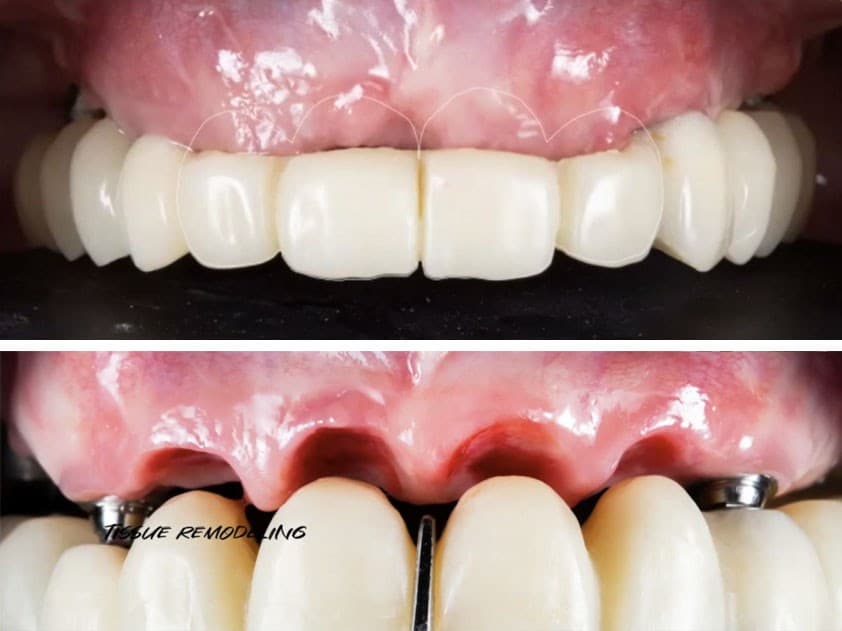
This clinical based presentation will compare the use of autogenous bone vs BMP-2 for alveolar ridge reconstruction. The science, indications, advantages and disadvantages of each approach will be featured. Single tooth to full arch reconstruction cases will also be shown along with understanding the application of non-resorbable vs resorbable mesh barriers for alveolar ridge reconstruction.

Date Added:
12/21/2012

Author(s):

Michael A Pikos, DDS Michael A Pikos, DDS
Dr. Michael A. Pikos is originally from Campbell, Ohio. He attended The Ohio State University where he graduated Summa Cum Laude and Phi Beta Kappa. He also g...
[read more]


Featured Products
Carestream Dental
CS 9300

Online Videos / Surgery / Bone Grafting / Alveolar Ridge Regenerative Strategies: Autogenous Bone vs BMP-2


Questions & Comments
Javed Bhojani - (9/21/2012 10:21 PM)

How much does rhBMP 2 Cost

Jay Lutsky - (9/19/2012 9:36 PM)

for my dentalxp colleagues who don't have easy access to Dr. Pikos's responses to your questions on his Facebook page, here they are: For those of you that viewed my recent webinar on Alveolar Ridge Regenerative Strategies: Autogenous Bone vs. rhBMP-2/ACS sponsored by Dental XP, here are my answers to questions that have been posted. For those of you who missed the webinar, it is archived on Dental XP and can be viewed by premium members. See www.dentalxp.com for details. http://www.dentalxp.com/video/alveolar-ridge-regenerative-strategies-971867.aspx?locale 1. Kathy Abbott- “What would be your choice for a particulate graft in the anterior mandible? My concern is relatively shallow vestibular depth, thin mucosa, and maintaining tenion-free closure.” My choice for particulate graft in the anterior mandible or for that matter any alveolar ridge of the maxilla or mandible is a mineralized allograft, specifically MinerOss. The regenerative capacity of this material has been extremely predictable for the 7 years that I have used it. Regarding concerns for shallow vestibular depth, thin mucosa, and maintaining tension free closure – there are times I will graft alloderm in an interpositional application and wait 3 months prior to bone grafting. Most important for tension free closure here, is meticulous periosteal release and submucosal dissection on the facial aspect of the ridge. 2. Band Ditto – “Outstanding Dr. Pikos. Well organized. You used many different materials and Regen products. Can you clarify your selection of resorbable membranes and when you would choose them over non-resorbable or Ti-mesh?” My preference for using resorbable membranes over nonresorbable including ti-mesh is primarily for esthetic zone cases. Keep in mind when one retrieves a mesh there is both blood supply and soft tissue compromise on reentry. This can be especially problematic in the esthetic zone. 3. James Orban – “If the mesh is exposed, what is your criteria to its early removal and how early?” What I classify as early mesh exposure is within 2 weeks of surgical time. Typically this is catastrophic and would only be seen due to a technique and protocol error or premature contact with a prosthesis. A “later exposure after 2 weeks is one depending on the extent that I will typically watch. I have the patient return on a periodic basis and include antibiotic treatment early on only. Also chlorhexidine rinses in essence, symptomatic treatment. If the exposure gets “large” with titanium, a decision needs to be made for early reentry although even this is rarely necessary. Ti mesh is very kind to protecting the underlying particulate graft even with exposure. 4. Brian Hollander – “thanks for a great presentation. I had 2 questions I hope you can answer: 1. What are your thoughts regarding the recent issues with an increase in cancer while using the Infuse product. 2. Have you considered using a collagen membrane over the titanium screen to increase the soft tissue?” Regarding cancer in the Infuse product, my understanding from the literature is there is no issue to be concerned about. Certainly not human related with the application we have for it including off label use. I do not use a collagen membrane over ti-mesh to increase soft tissue thickness however this certainly can be done. 5. Alper Gultekin – “Excellent presentation. Do you have any clinical experience with block allografts or xenografts?” I do have experience with block allografts. In a nut shell these are not predictable. Unfortunately, a block mineralized allograft does not behave as it’s first cousin the particulate mineralized allograft. I say this because there is not predictable revascularization of a block allograft. It also typically takes longer for reentry (up to 6 plus months) and requires a bioactive modifier and collagen membrane. That said, even that is not predictable for graft volume. Finally, complications can include loss of original recipient site bone which I’ve never seen with autogenous block bone grafts. I have no experience with block xenografts. 6. Kish Soneji – “Thanks Mike for a systematic approach to the regenerative technologies. How do you find the response to the PRGF? interesting but not always predictable but having said that the soft tissue response is excellent. Any thoughts on PRF Vs PRGF?” My experience with PRGF for the past 6 years has been very positive with regard to soft tissue response. I do believe that PRF and PRGF have a similar effect for upregulation of VEGF therefore both allow for excellent soft tissue response, ie accelerated soft tissue wound healing. 7. Vladimir Resnikov – “Thank you very much for a great webinar. I noticed that in couple of cases you placed implants along with buccal augmentation without primary closure. Can you please comment on when primary closure is necessary and when not?” Regarding buccal augmentation without primary closure, I typically don’t do this with conventional alveolar ridge grafts, ie mesh particulate, autogenous block, ridge splits. However, by design I do not obtain primary closure for extraction graft PTFE membrane placement (Cytoplast). 8. Narayan TV- “That was an excellent webinar Dr. Pikos. I have a couple of questions: 1) Is ectopic bone formation a concern with BMP use? and 2) There have been reports of increased cancer risks with BMP2 usage. What are your thoughts on these and how well founded are these claims?” There is absolutely no concern for ectopic bone formation with rhBMP-2. By it’s very specific nature of differentiation only of a stem cell to form an osteoblast is this true. In essence there are no nuclear changes which would put one at risk for this problem ie cancer, etc. As far as I know the literature claims of cancer formation are unfounded.

Michael Pikos - (9/18/2012 9:10 AM)

Greetings from the Pikos Institute. Sorry for the delay in getting back with those of you who with questions. First, thanks to all of you for the great positive feedback that I have received. Please feel free to view both questions and answers on my Facebook page. http://www.facebook.com/pikosinstitute

KATHY ABBOTT - (9/11/2012 6:57 PM)

What would be your choice for a particulate graft in the anterior mandible? My concern is relatively shallow vestibular depth, thin mucosa, and maintaining tenion-free closure.

Band Ditto64 - (9/10/2012 10:09 AM)

Outstanding Dr. Pikos. Well organized. You used many different materials and Regen products. Can you clarify your selection of resorbable membranes and when you would choose them over non-resorbable or Ti-mesh?
thanks again Band

Mark Neale - (9/9/2012 10:34 PM)

Thanks to you both. Great as always

james orban - (9/9/2012 7:07 PM)

Thank you for the great presentation.

hector norero - (9/9/2012 6:56 PM)

Congratulation Dr Pikos .It was a pleasure to enjoy your experience in this so important way to recover the lost bone!!!! I will hope that you will be in the future with another topic.....

james orban - (9/9/2012 6:36 PM)

if the mesh is exposed, what is your criteria to its early removal and how early?

Related Videos
Guided Bone Regeneration – A graphic technique video Premium Member Content

Guided Bone Regeneration – A graphic technique video
Dr. Nicolas Elian outlines guided bone regeneration.

Presented By: Nicolas Elian, DDS;Nicolas Elian, DDS
Presentation Style: Video
Community Rating:
 
Watch Now>>
Making Successful Clinical Decisions in Esthetic Implant Therapy - Part 1 of 3 Premium Member Content

Making Successful Clinical Decisions in Esthetic Implant Therapy - Part 1 of 3
This presentation will outline a systematic diagnostic and treatment design protocol for anterior implant supported restorations as well as how implant design, components and regenerative techniques influence the process.

Presented By: Henry Salama, DMD
Presentation Style: Lecture
Community Rating:
 
Watch Now>>
Bone Graft Planning Using Stereolithographic Models Premium Member Content

Bone Graft Planning Using Stereolithographic Models
3D Planning of bone deficiencies is highlighted using titanium mesh and model simulation.

Presented By: Maurice Salama, DMD
Presentation Style: Video
Community Rating:
 
Watch Now>>
Related Courses
Alveolar Ridge Regenerative Strategies: Autogenous Bone vs BMP-2 Premium Member Content

Alveolar Ridge Regenerative Strategies: Autogenous Bone vs BMP-2
This clinical based presentation will compare the use of autogenous bone vs BMP-2 for alveolar ridge reconstruction. The science, indications, advantages and disadvantages of each approach will be featured. Single tooth to full arch reconstruction cases will also be shown along with understanding the application of non-resorbable vs resorbable mesh barriers for alveolar ridge reconstruction.

Presented By: Michael A Pikos, DDS
Presentation Style: Online Course
CE Hours: 1 CEU (Continuing Education Unit)
Watch Now>>
Creative Next Generation Surgical Tools and Solutions for the Implant Practice Premium Member Content

Creative Next Generation Surgical Tools and Solutions for the Implant Practice
Modern Bone Grafting has become more predictable than ever before. Recent developments in CBCT 3D Diagnosis and the utilization of bioactive modifiers such as PRGF, PRF and BMP-2 have stimulated further advances in surgical techniques as well as a New Age Surgical Armamentarium to maximize the efficiencies and success of these sophisticated procedures.

Presented By: Maurice Salama, DMD
Presentation Style: Online Course
CE Hours: 1 CEU (Continuing Education Unit)
Watch Now>>
Vertical Bone Augmentation: Current Concepts and Techniques Premium Member Content

Vertical Bone Augmentation: Current Concepts and Techniques
This lecture will review several approaches used for vertical bone augmentation and discuss the benefits and limitations of each. There will be special emphasis on the titanium mesh and interpositional osteotomy techniques.

Presented By: David Dara Yarmand, DDS, MD
Presentation Style: Online Course
CE Hours: 1 CEU (Continuing Education Unit)
Watch Now>>
Simultaneous Autogenous Block Grafting and Implant Placement: A Predictable and More Efficient Method to Augment the Buccal Bone Premium Member Content

Simultaneous Autogenous Block Grafting and Implant Placement: A Predictable and More Efficient Method to Augment the Buccal Bone
This lecture will give you all the necessary guidelines and surgical pearls associated with simultaneous bone block and immediate implant placement as well as deal with any complications should they arise.

Presented By: Howard Gluckman, BDS, MChD
Presentation Style: Online Course
CE Hours: 1 CEU (Continuing Education Unit)
Watch Now>>
Related Articles
"Sandwich" Bone Augmentation Technique - Rationale and Report of Pilot Cases

"Sandwich" Bone Augmentation Technique - Rationale and Report of Pilot Cases
The aim of this article is to present a new technique for augmentation of deficient alveolar ridges and/or correction of osseous defects around dental implants.

Author(s): Hom-Lay Wang, DDS, MSD, PhD;Carl Misch, DDS, MDS; Rodrigo F. Neiva, DDS, MS
View Article>>
Intraoral Autogenous Block Onlay Bone Grafting for ExtensiveReconstruction of Atrophic Maxillary Alveolar Ridges

Intraoral Autogenous Block Onlay Bone Grafting for ExtensiveReconstruction of Atrophic Maxillary Alveolar Ridges
Autologous bone grafting used with dental implants was originally described by Bränemarketal in 1975, and is now a well-accepted procedure in oral and maxillofacial rehabilitation.Placement of an endosseous implant requires sufficient bone volume for complete bone coverage. Furthermore, the pattern of ridge resorption contributes to an unfavorable maxillomandibular relationship, requires angulations of the implants and/or angled abutments, and affects the proximity of adjacent facial concavities(maxillary sinus, nasal cavity) and vital structures(mandibular nerve).

Author(s): Devorah Schwartz-Arad, DMD, PhD;Liran Levin
View Article>>
Mandibular Block Autografts for Alveolar Ridge Augmentation

Mandibular Block Autografts for Alveolar Ridge Augmentation
This article reviews indications, limitations, presurgical evaluation, surgical protocol, and complications associated with mandibular block autografts harvested from the symphysis and ramus buccal shelf for alveolar ridge augmentation. The author draws from 14 years of experience with more than 500 mandibular block autografts.

Author(s): Michael A Pikos, DDS
View Article>>
Contact Us | Privacy Policy | Terms of Use
©2013

Preferred Language: English Flag
Contact Us · Login · Register