Video Details
|
Anterior Composite Restorations - The Reality of Making it Real - Part 3 of 3
Description:
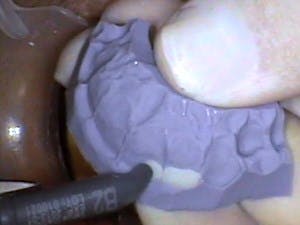
Direct anterior composite restorations are one of the most difficult clinical procedures the comprehensive, esthetic dentist attempts to do. What specifically makes these restorations so challenging? Learn the various parameters needed to create a seamless composite bonded restoration. Does the classification of material matter? How will a starburst bevel, layering and a putty matrix aid one in 3-D composite artistry. Learn finishing and polishing techniques to create realism in your direct composites and these undetectable additions to enhance one's patients smile.
Date Added:
8/22/2011
Author(s):
Brian P. LeSage, DDS FAACD
Dr. Brian P. LeSage graduated magna cum laude with the Omicron Kappa Upsilon Honor Dental Society award from the University of Maryland, Baltimore Col...
[read more]
|
|
Online Videos / Restorative / Composite Resin / Anterior Composite Restorations - The Reality of Making it Real - Part 3 of 3
|
Questions & Comments
|
Panagiotis Philippou195 - (10/30/2011 11:06 AM)
why the restorations must be slightly darker than the tooth?
|
Naveed Jamil - (10/30/2011 5:19 AM)
A brilliant 3 part instruction on how to create outstanding composite restorations, covering all aspects extremely well. The starburst bevel may well change my life! A glaze is placed over the comps at the end of the first session, I assume that is a bonding agent eg prime and bond or does Brain use something else?
|
Related Videos |
|
|
|
|
|
|
Closing the Midline Diastema
Using direct composite to close the midline diastema.
| Presented By: |
Ronald Goldstein, DDS;Ronald Goldstein, DDS |
| Presentation Style: |
Video |
| Community Rating: |
|
|
Watch Now>>
|
|
|
|
Related Courses |
|
|
|
Smile Design and The Bonded Functional Esthetic Prototype (BFEP)
The lecture will cover some simple Photoshop techniques to enhance a smile digitally to present to the patient and motivate them to accept treatment.
This lecture will mainly focus on the the step-by-step process of how to turn the 2-dimensional Photoshop smile design into a 3D Bonded Functional Esthetic Prototypes (BFEP’s) the patient wears to verify esthetic and functional acceptance. A very efficient technique using a new highly flowable but highly filled micro-hybrid that uses an injection molding tray technique will be demonstrated. A full arch composite bonding can be done in one hour with this technique. This BFEP technique can be used for “trial smiles” for pre-treatment esthetic and functional evaluation by the patient and the treatment team. It can also be used for long-term functional temporization for years if necessary. The BFEP will then be used as the final guide for preparations for Anterior Etched Ceramic restorations (porcelain veneers and glass ceramics.
| Presented By: |
Edward A. McLaren, DDS, MDC |
| Presentation Style: |
Online Course |
| CE Hours: |
1 CEU (Continuing Education Unit) |
|
Watch Now>>
|
|
|
|
|
Excellence in Cosmetic Dentistry: Anterior Esthetics
Dr. Mike Koczarski demonstrates composite techniques that will increase speed of placement for maximum quality and optimal esthetics.
| Presented By: |
Michael Koczarski, DDS |
| Presentation Style: |
Online Course |
| CE Hours: |
1.5 CEU (Continuing Education Units) |
|
Watch Now>>
|
|
|
|
|
Clinical Tips for Posterior Composites
Despite the popularity of posterior composites, it is a topic that still creates questions and frustrations for many clinicians. Our goal is to place these restorations with ease and success to create long lasting results. We will discuss preparation design, material selection, matrices, and placement techniques. One of the most common questions I get is about predictably creating tight contacts, and we will look at several techniques to ensure this happens.
| Presented By: |
Lee Ann Brady, DMD |
| Presentation Style: |
Online Course |
| CE Hours: |
1 CEU (Continuing Education Unit) |
|
Watch Now>>
|
|
|
|
|