Video Details
|
Anterior Implant placement and Tissue Augmentation
Description:
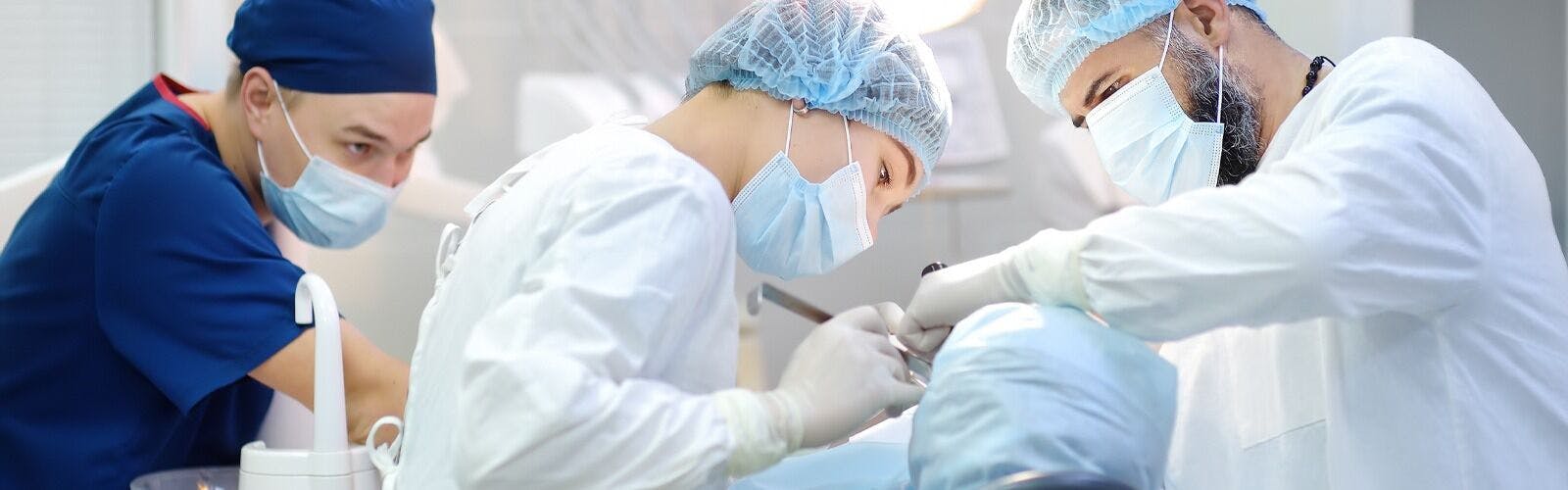
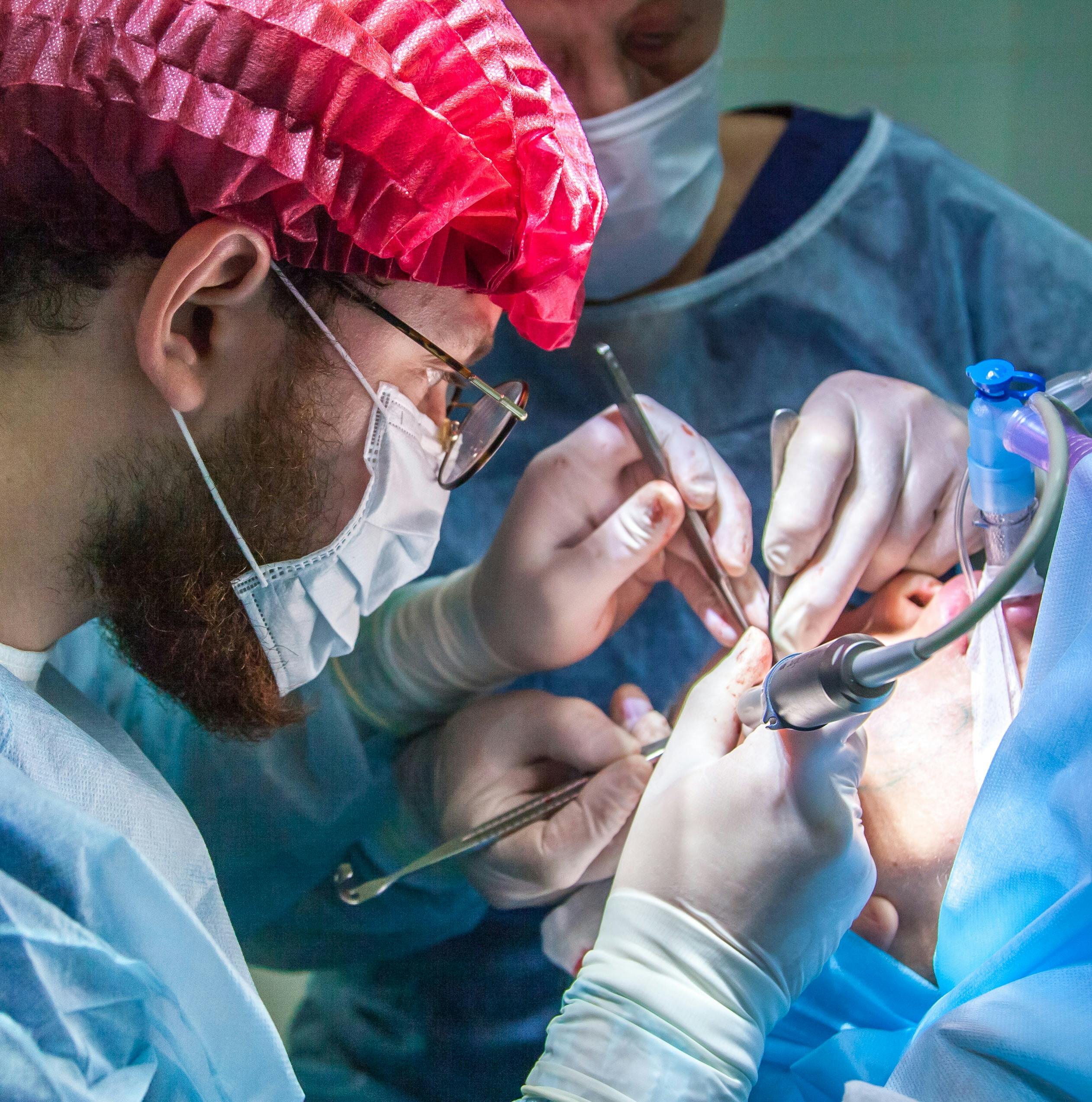
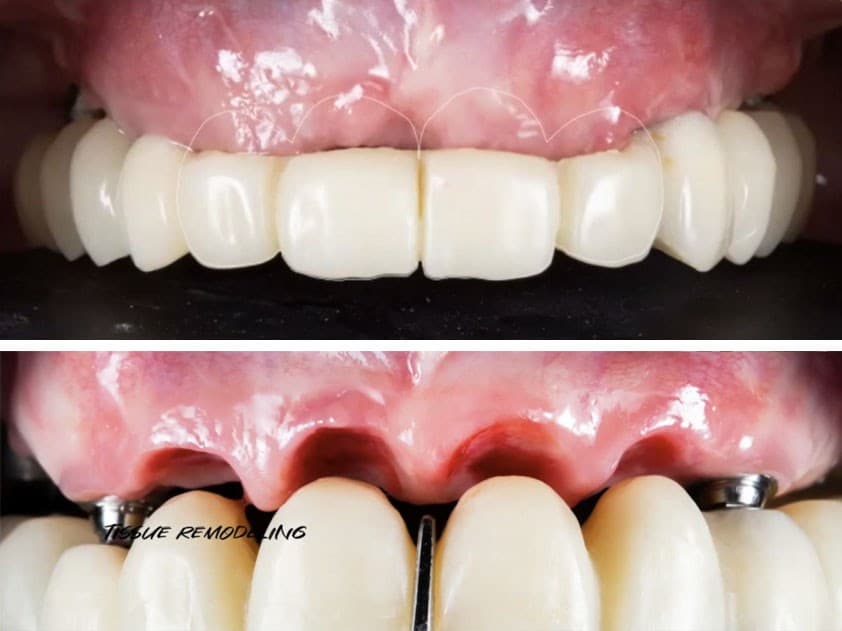
In this detailed surgical technique video, Dr. Michael Sonick outlines the keys to anterior implant placement in conjunction with hard and soft tissue augmentation. Ridge expansion, bone substitutes, PRGF and the use of connective tissue grafting for a pontic site enhancement are all discussed and demonstrated in detail.
Date Added:
4/1/2010
Author(s):
Michael Sonick, DMD
Dr. Michael Sonick is a full time practicing periodontist and implant surgeon in Fairfield, Connecticut. He is also an active teacher, clinical researcher and author. ...
[read more]
|
|
Online Videos / Surgery / Bone Grafting / Anterior Implant placement and Tissue Augmentation
|
Questions & Comments
|
Mike Sonick - (6/30/2011 9:07 PM)
I do treat smokers. The research shows pretty much the same success with smokers as with non- smokers.
however, with bone grafting procedures, I recommend that patients quit smoking one week before surgery and for at least3 weeks post surgery. In my experience heavy smokers (greater than one pack a day) do not heal as well as non-smokers.
with that said about 30% of my implant patients do smoke.
|
kevin potocsky - (6/29/2011 1:23 PM)
what is your philosophy of implant success with smokers? any limitations?
|
Noora alkadasi - (12/13/2010 10:16 PM)
amaizing
|
Sam Busich - (12/13/2010 4:48 PM)
I must agree with Dr. Sonick.
|
Mike Sonick - (12/12/2010 6:09 PM)
Rodolfo Piccolo - (12/9/2010 7:08 AM)
hello, you used 3i implant diameter 3,25 or 4,00? why don't you pierce the bone before gbr?
Rodolfo the implant diagmet was 3.25. The bone was not pierced for it was very vascular. If it did not bleed I would have decorticated it. I was also concerned about hitting the implant. It could have been decorticated prior to implant placement.
|
Rodolfo Piccolo - (12/9/2010 7:08 AM)
hello, you used 3i implant diameter 3,25 or 4,00? why don't you pierce the bone before gbr?
|
Mike Sonick - (11/21/2010 8:42 PM)
DR FARHAN DURRANI - (5/30/2010 9:34 AM)
DR FARHAN DURRANI EXCELLENT SUGERY IN VIDEO LOOKS EASY BUT REALLY PERFORMING IS EXPERT JOB CAN YOU PLEASE TELL ME THE SUTURES USED IN STABILIZING CONNECTIVE TISSUE GRAFT WITH UNDERLYING FLAP
5-0 gut sutures with a p-3 cutting needle
|
Mike Sonick - (11/21/2010 8:42 PM)
Simon Milbauer - (4/4/2010 7:41 AM)
I think that this is a great case presentation from Dr Sonick - as usual. I have a question though-I noticed that the implant was sunk quite a bit-it will move the implant-abutment connection further deep, are you not concerned about the marginal gap? Also, you said the insertion torque would exceed 65NcM- will it not compress the bone too much? Thanks for the video, Simon Milbauer
Simon Thanks for your comments. Inserting the implant deep is not a problem as long as there is bone on the adjacent teeth. It is the bone on adjacent teeth that determines the papilla adjacent to a single tooth implant.
As for insertion torque, it does not seem to matter. A while paper published earlier this year by Meltzer et al. reviewed implants with over 100 N-cm of insertion torque with no ill consequences.
My success rate over the past year was 98.5 % utilizing this type of implant (Tapered Certain Biomet 3i) with high insertion torques.
|
Mike Sonick - (11/21/2010 8:39 PM)
Sam Busich - (4/3/2010 7:18 PM)
Well done video. I do feel strongly though that the membrane should be tacked down and stabilized for the most successful results. Mobility of the graft material or membrane is a recipe for failure. I do agree with the CTG utilization. Sam
Sam, I agree that tacking the membrane is a good thing. However, if I can achieve relatively good stability with the resorbable membranes, I frequently do not tack.
|
|
|
Related Courses |
|
|
|
|
Tissue Engineering and Platelet Derived Growth Factors: Evidence Based Therapy
Platelet derived growth factors are now routinely utilized in reconstructive therapy. This presentation describes very detailed and evidence based guidelines for clinicians interested in enhancing their abilities in tissue engineering, especially as it relates to bone augmentation.
| Presented By: |
Joseph Choukroun, MD |
| Presentation Style: |
Online Course |
| CE Hours: |
1 |
|
Watch Now>>
|
|
|
|
Related Articles |
|
|
|
Alloplastic Bone Substitutes Around Dental Implants
The repair of osseous defects has been a goal in dentistry for many decades. Subsequently, within the last several years, there has been an emergence of a new class of materials in dentistry referred to as synthetic bone. Finding the ideal bone substitute material has been the goal of researchers for many years. In attempting to achieve this ideal material, dental practitioners have tried with varying degrees of success: autogenous and demineralized freeze-dried bone, allografts of plastic, carbon…
| Author(s): |
Lee H. Silverstein, DDS, MS, FACD, FICD;Lee M. Whitesides, DMD, MMSC |
|
View Article>>
|
|
|
|
|
|