Video Details
|
Bone Graft Planning Using Stereolithographic Models
Description:
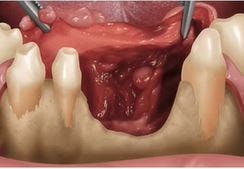
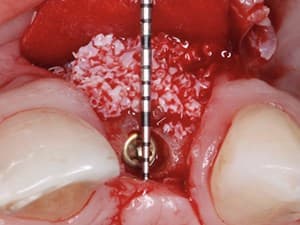
In this video, Dr. Salama highlights the enormous value to the clinician in treatment planning using 3D technologies available in dentistry. i-CAT CT scans, Materialise 3D models and pre-fitting of titanium mesh onto these models can expedite the surgical procedures and increase regenerative success and precision.
Date Added:
6/5/2009
Author(s):
Maurice Salama, DMD
Dr. Maurice A. Salama completed his undergraduate studies at the State University
of New York at Binghamton in 1985, where he received his BS in Biology. Dr. Salama
r...
[read more]
|
|
Online Videos / Surgery / Bone Grafting / Bone Graft Planning Using Stereolithographic Models
Related Videos |
|
|
|
|
|
|
|
|
Pre-Implant Ridge Bioengineering: The Bone Block Allograft Technique - Part 1 of 2
Narrow ridge deficiencies can limit dental implant placement. As well, the pain and various complications associated with chin, ramus and hip bone block grafts for ridge augmentation purposes discourage many from pursuing this method of treatment. The 'bone block allograft' technique helps overcome narrow ridge limitations for dental implant placement as well as minimizing surgical post-op pain, risks and complications. This is an extremely versatile procedure which can be performed in the anterior and posterior sextants of both the maxillary and mandibular arches.
| Presented By: |
Herbert Veisman, BSc, DDS, FRCD |
| Presentation Style: |
Video |
| Community Rating: |
|
|
Watch Now>>
|
|
|
|
|
Titanium Mesh and it's Role in Bone Augmentation; A Clinical Review
Different surgical procedures have been proposed in reconstruction of deficient alveolar ridges for placing dental implants in optimum prosthetic and esthetic position. One of the inconveniences of titanium mesh which has been reported is the exposure of it but on the other hand the benefit in comparison to non resorbable membranes is that there is no need for removal and the risk of infection is very low. In this lecture different cases will be presented and clinical points to be considered in using titanium mesh will be highlighted.
| Presented By: |
Omid Moghaddas, DDS, MSD |
| Presentation Style: |
Video |
| Community Rating: |
|
|
Watch Now>>
|
|
|
|
Related Courses |
|
|
|
|
Titanium Mesh and rhBMP-2 in Ridge Augmentation: Options and Limitations
There are several advantages to using titanium mesh for space maintenance including strength, ease of use, low cost and biocompatibility. This webinar will discuss the use of rhBMP-2 for managing horizontal and vertical bone deficiencies with various scaffolds.
| Presented By: |
Craig M Misch, DDS, MDS |
| Presentation Style: |
Online Course |
| CE Hours: |
1 CEU (Continuing Education Unit) |
|
Watch Now>>
|
|
|
|
|
Related Articles |
|
|
Alloplastic Bone Substitutes Around Dental Implants
The repair of osseous defects has been a goal in dentistry for many decades. Subsequently, within the last several years, there has been an emergence of a new class of materials in dentistry referred to as synthetic bone. Finding the ideal bone substitute material has been the goal of researchers for many years. In attempting to achieve this ideal material, dental practitioners have tried with varying degrees of success: autogenous and demineralized freeze-dried bone, allografts of plastic, carbon…
| Author(s): |
Lee H. Silverstein, DDS, MS, FACD, FICD;Lee M. Whitesides, DMD, MMSC |
|
View Article>>
|
|
|
|
|
Retrospective Evaluation of Crestal Bone Changes Around Implants With Reduced Abutment Diameter Placed Non-Submerged and at Subcrestal Positions: The Effect of Bone Grafting at Implant Placement
One method to measure the success of dental implant treatment is to evaluate marginal peri-implant bone-level changes and stability over time. The location of the fixture–abutment interface (FAI) can be of major importance when the goal is to construct esthetic restorations. In these situations the FAI is often placed in a more apical position to create an ideal emergence profile for the prosthetic construction. However, several animal studies have reported that placement of the FAI in a subcrestal position may result in peri-implant marginal bone loss. The aim of the present study is to evaluate the effect of bone grafting of the defect between the bone crest and the coronal aspect of the implant for implants with reduced abutment diameters placed non-submerged and in subcrestal positions.
| Author(s): |
Alan Fetner, DMD;Theofilos Koutouzis, DDS; Michael Fetner, DMD; Tord Lundgren, DDS |
|
View Article>>
|
|
|
|
|
|