Video Details
|
Consecutive Anterior Implants: Surgical and Restorative Management of Esthetic Failures - Part 2
Description:
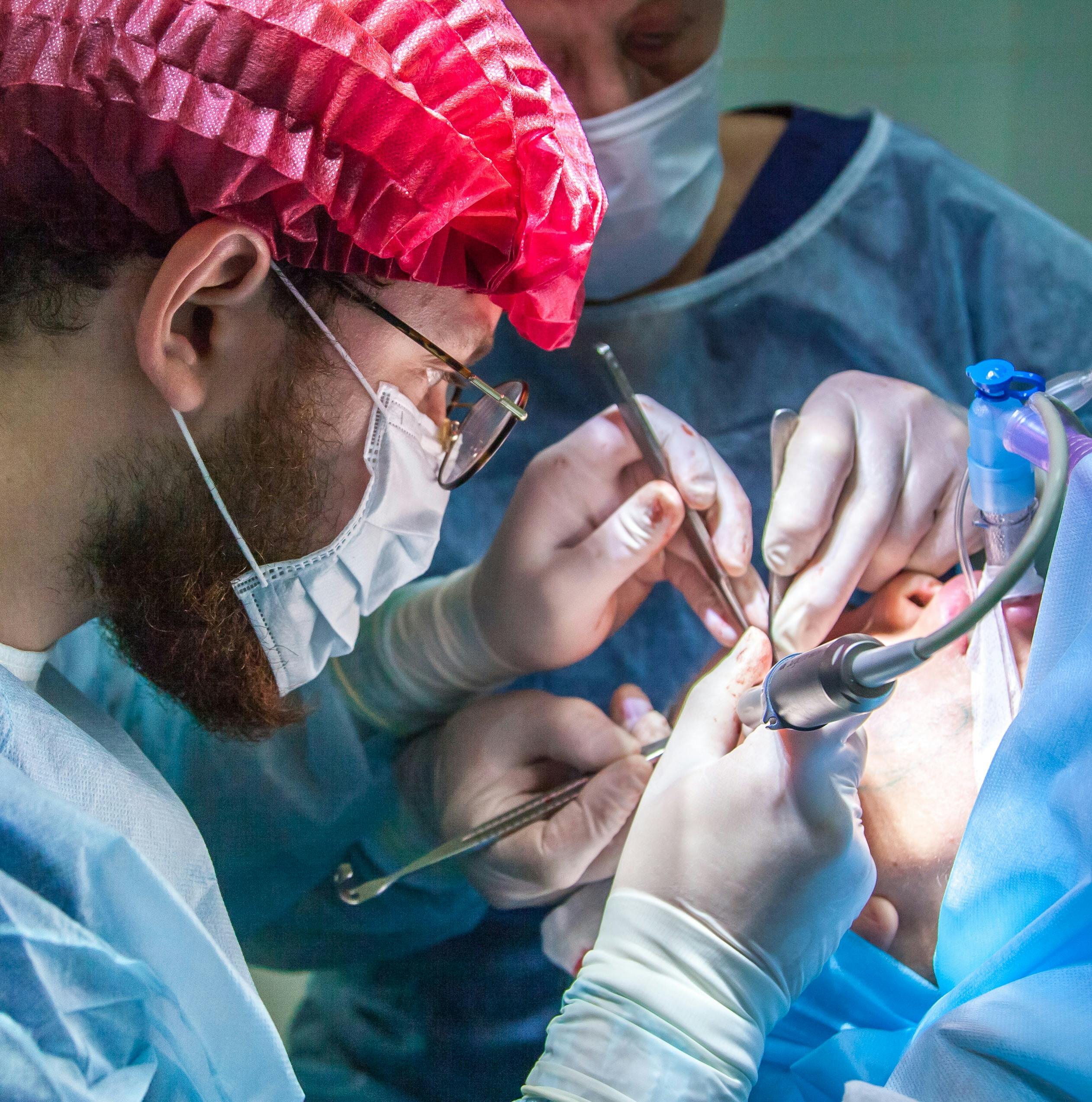
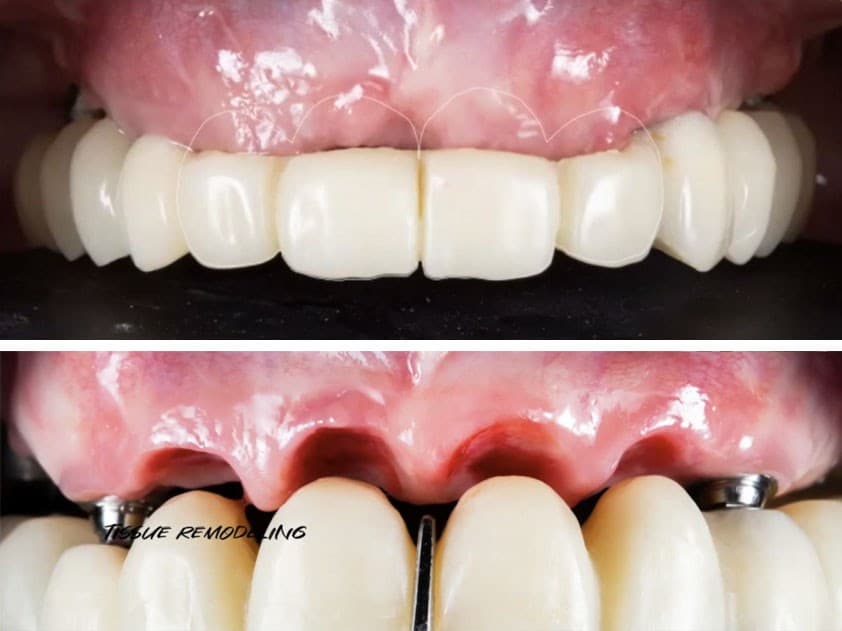
Esthetically successful placement of consecutive implants in the anterior region, especially in the lateral/central environment, remains as one of the most challenging endeavors in implant therapy. This webinar will focus on the diagnosis and treatment design options for the implant replacement of two or more adjacent teeth in the anterior region with emphasis on preventing mid-facial and interdental tissue loss. In addition, the surgical and restorative management and correction of esthetic failures will be discussed including the use of connective tissue allograft.
Date Added:
5/11/2011
Author(s):
David Garber, DMD
Dr.
David Garber has a dual appointment at the Medical College
of Georgia School of Dentistry, in Augusta Georgia, as Clinic...
[read more]
Maurice Salama, DMD
Dr. Maurice A. Salama completed his undergraduate studies at the State University
of New York at Binghamton in 1985, where he received his BS in Biology. Dr. Salama
r...
[read more]
Stephen J. Chu, DMD, MSD, CDT
Dr. Stephen Chu received his doctoral degree from the University of Pennsylvania School of Dental Medicine in 1984 and his master’s degree in restorative dentistry and ...
[read more]
Dennis P. Tarnow, DDS
Dennis P. Tarnow is currently Clinical Professor of Periodontology and Director of Implant Education at Columbia School of Dental Medicine. Dr. Tarnow has a certificate in Per...
[read more]
|
|
Online Videos / Surgery / Implant / Consecutive Anterior Implants: Surgical and Restorative Management of Esthetic Failures - Part 2
|
Questions & Comments
|
Maurice Salama - (12/11/2011 4:26 PM)
Fahran; best to keep inter-implant distances a minimum of 3 mm but we prefer to avoid these situations particularly in the Central-Lateral situations which we feel is most difficult. There we use, cantilevers or root submerge techniques.
Kind regards Dr. Salama
|
FARHAN DURRANI492 - (12/11/2011 10:47 AM)
DEAR DR GARBER
ACCORDING TO YOUR PRESENTATION
IMPLANTS SHOULD HAVE NARROW DAIMETER ABUTMENTS AND SHOULD BE PLACED IMMEDIATELY AFTER IMPLANT PLACEMENT BUT INTER IMPLANT DISTANCE SHOULD BE 2 OR 3 MM?
DR FARHAN DURRANI
|
Joseph Gaudio - (5/21/2011 6:59 AM)
Thanks Henry.
|
henry salama - (5/17/2011 3:38 AM)
I have found that drifting of the root is not a concern if permanently cemented with a resin cement. However, a way to avoid the dilemma is to not connect the implant and tooth restorations but place a lateral wing on the tooth crown that sits on a cingulum rest on the implant restoration preventing it from migrating apically.
|
Joseph Gaudio - (5/16/2011 8:52 AM)
Joseph Gaudio, DDS
The only question I have was the splinting of the central incisor implant with the lateral incisor natural tooth that was maintained after ortho extrusion. The 3 year post op looks great but I thought that sounding or the apical drifting of the root from the lateral incisor restoration was a concern??
|
James Romeo - (2/10/2011 12:48 PM)
dentimp huang, Part 3 and 4 are available in the Related Videos below.
|
dentimp huang - (1/3/2011 12:25 PM)
IS there Part 3 ? Looking forward to seeing ...
|
samir younis - (1/3/2011 5:58 AM)
the distance between 2 implants in case of prosthetic plateform ist 1_2mm or 2_3mm
|
Maurice Salama - (1/1/2011 2:31 AM)
I must say I enjoyed the interaction between Drs. Tarnow & Chu and Dr. Garber and myself.
Lot's to learn with implants in the esthetic zone.
|
Related Courses |
|
|
Implant Esthetics: Recognizing Pitfalls and How to Avoid Problems
In this Webinar on Implant Esthetics, Dr Stanley describes the "No Half Smiles" philosophy that he practices. An emphasis is placed on both the clinical and technical requirements necessary for delivering consistent successful esthetic results in everyday practice. In addition, several techniques are demonstrated to make patient management through this process more efficient. As Dr. Stanley states" the challenges of getting it right are many but avoiding complications is vital to the success of our daily practice.
| Presented By: |
Miguel Stanley, DDS |
| Presentation Style: |
Online Course |
| CE Hours: |
1 CEU (Continuing Education Unit) |
|
Watch Now>>
|
|
|
|
|
|
Optimizing Tissue Esthetics of Single Tooth Implants
With optimized planning, precise placement of the fixture, and the use of laser technology to reduce tissue trauma we can minimize the bone and tissue changes during the surgical phase. During the restorative phase creation of proper tissue contours using the CO2 laser and control of tooth form to position tissue set the stage for obtaining optimal esthetic results.
| Presented By: |
Lee Ann Brady, DMD |
| Presentation Style: |
Online Course |
| CE Hours: |
1 CEU (Continuing Education Unit) |
|
Watch Now>>
|
|
|
|
Related Articles |
|
|
The Use of an Extraoral Verification Template for Dental Implant Supported Prosthesis
This article demonstrates the utilization of a preprosthetic extraoral verification template that could be used to ensure the accuracy of the master cast from which the laboratory working model is used as the in vitro foundation for the implant-supported prosthesis framework construction.
| Author(s): |
Lee H. Silverstein, DDS, MS, FACD, FICD;Gregori M. Kurtzman, DDS, Allen Schneider, DDS, Peter C. Shatz, DDS |
|
View Article>>
|
|
|
|
|
Minimally Invasive Antral Membrane Balloon Elevation – Results of a Multicenter Registry
The challenge of bone augmentation of this segment has been traditionally addressed by two approaches: lateral maxillary window and the “osteotome technique,” also called bone-added osteotome sinus floor elevation (BAOSFE).
| Author(s): |
Ziv Mazor, DMD;Efraim Kfir, DMD; Moshe Goldstein, DMD; Israel Yerushalmi, DMD; Ronen Rafaelov, DMD; Vered Kfir, DMD; Edo Kaluski, MD, FACC, FESC, FSCAI |
|
View Article>>
|
|
|
|
|
Socket Preservation to Gain
Tooth loss not only poses difficulty in mastication, it also involves the probable resorption of alveolar bone due to a loss of function and stimulation from the periodontal ligament fibers (PDL). Bone grafting at the time of tooth removal provides bone quantity and quality for future placement of dental implant(s). The challenge during this procedure—referred to as socket preservation—is maintaining the graft in place as well as providing a final working area with sufficient keratinized tissue…
| Author(s): |
Lee H. Silverstein, DDS, MS, FACD, FICD;Peter C. Shatz, DDS |
|
View Article>>
|
|
|
|
|