Video Details
|
Consecutive Anterior Implants: Surgical and Restorative Management of Esthetic Failures - Part 3
Description:
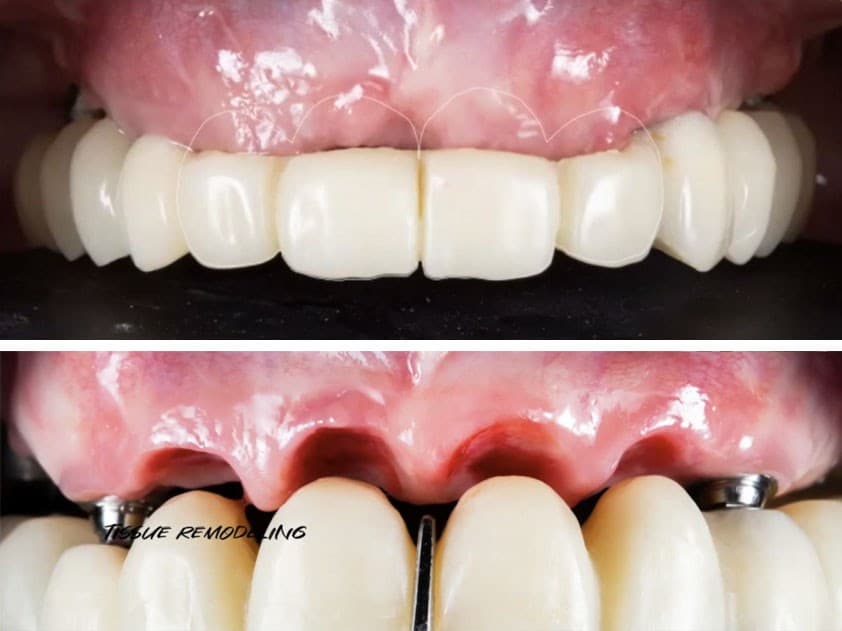
Esthetically successful placement of consecutive implants in the anterior region, especially in the lateral/central environment, remains as one of the most challenging endeavors in implant therapy. This webinar will focus on the diagnosis and treatment design options for the implant replacement of two or more adjacent teeth in the anterior region with emphasis on preventing mid-facial and interdental tissue loss. In addition, the surgical and restorative management and correction of esthetic failures will be discussed including the use of connective tissue allograft.
Date Added:
1/17/2011
Author(s):
David Garber, DMD
Dr.
David Garber has a dual appointment at the Medical College
of Georgia School of Dentistry, in Augusta Georgia, as Clinic...
[read more]
Maurice Salama, DMD
Dr. Maurice A. Salama completed his undergraduate studies at the State University
of New York at Binghamton in 1985, where he received his BS in Biology. Dr. Salama
r...
[read more]
Stephen J. Chu, DMD, MSD, CDT
Dr. Stephen Chu received his doctoral degree from the University of Pennsylvania School of Dental Medicine in 1984 and his master’s degree in restorative dentistry and ...
[read more]
Dennis P. Tarnow, DDS
Dennis P. Tarnow is currently Clinical Professor of Periodontology and Director of Implant Education at Columbia School of Dental Medicine. Dr. Tarnow has a certificate in Per...
[read more]
|
|
Online Videos / Surgery / Implant / Consecutive Anterior Implants: Surgical and Restorative Management of Esthetic Failures - Part 3
|
Questions & Comments
|
Maurice Salama - (5/21/2011 9:02 AM)
Joseph; I do not think it is necessary for papilla preservation if implant distance is at 1.5mm from healthy natural tooth but it appears that platform switching may aid in crestal bone preservation around the implant that may assist in a more stable gingival margin.
Dr. Salama
|
Joseph Gaudio - (5/21/2011 7:09 AM)
For a single tooth implant, i.e.#8, is platform switching necessary if adjacent natural teeth exist and are periodontally healthy in order to maintain papillae?
|
henry salama - (1/23/2011 2:53 PM)
We've used this tx protocol a number of times with successful outcomes. However, I do think there definitely are considerations and contraindications to consider. Success begins and depends on 1) a stable implant with adequate bone and soft thickness to maintain health and esthetics. 2) The design of the abutment is key in that it has to be designed to be both retentive and contain resistance form to any rotational displacement. 3rd, the occlusal scheme must be designed around the restoration to protect the cantilever from any lateral/horizontal forces in all relationships and movement except eating. If these factors cannot met, then this tx is contraindicated.
|
Simon Milbauer - (1/23/2011 10:15 AM)
Dr Tarnow, thank you for great lecture I have not had had any probs with the sound at all.One question: are you not worried about the mechanical stress exerted on the cantilevered implant when designing the free ended pontic?Say,parafunctional patients, grinders etc? Thank you, Simon Milbauer
|
Laurent Rosemblaum - (1/23/2011 9:22 AM)
Nice presentation,but the sound is very poor.
when they talk together,it's very difficult for a non fluent english listener to understand.
|
Duc Vo - (1/20/2011 10:42 PM)
When art meets science.
|
Related Videos |
|
|
|
|
|
|
Ridge Splitting and/or GBR - Maxilla vs. Mandible - Part 1 of 2
Mandibular ridge splitting has been a clinical challenge due to high density of cortical bone. Therefore, some clinicians recommends two stage approach to overcome this issue. We will also present an unique ridge splitting technique that is easy to do and predictable using one stage approach.
| Presented By: |
Samuel Lee, DDS |
| Presentation Style: |
Video |
| Community Rating: |
|
|
Watch Now>>
|
|
|
|
|
All-On-Four Protocol - The Technique and Reality
Dr. Duello will focus on the specific clinical technique of the All On Four procedure. The webinar will introduce the indications, clinical exams, and pre-surgical preparations for All On Four.
| Presented By: |
George V. Duello, DDS, MS |
| Presentation Style: |
Lecture |
| Community Rating: |
|
|
Watch Now>>
|
|
|
|
|
Immediate Loading Utilizing Guided Surgery
Dr. Alvarez shares numerous technical and clinical modifications to existing protocols which he believes make his approach more user friendly.
| Presented By: |
Orlando Alvarez Del C., DDS, MS |
| Presentation Style: |
Lecture |
| Community Rating: |
|
|
Watch Now>>
|
|
|
|
Related Courses |
|
|
Immediate Implant Provisionalization: A Critical Aspect in Tissue Care and Esthetics-Part 2
Tissue support, emergence profile and The provisional restoration phase of implant therapy has become one of the most critical steps in immediate or delayed placement for several reasons. A step-by-step protocol will be presented in how to fabricate the proper screw-retained provisional restoration from the fabrication of the acrylic shell to managing and capturing the proper supportive subgingival contour.
| Presented By: |
Stephen J. Chu, DMD, MSD, CDT |
| Presentation Style: |
Online Course |
| CE Hours: |
1 CEU (Continuing Education Unit) |
|
Watch Now>>
|
|
|
|
|
Controversies Surrounding Delayed vs. Immediate Implant Placement: Is There No Middle Ground?
This presentation looks critically at the literature and attempts to give clinicians a more flexible approach to immediate and delayed implant placement. Critical surgical guidelines and clinical pearls will be offered for both types of treatment as well as the management of some of the complications that may arise from immediate or delayed implant placement.
| Presented By: |
Howard Gluckman, BDS, MChD |
| Presentation Style: |
Online Course |
| CE Hours: |
1 CEU (Continuing Education Unit) |
|
Watch Now>>
|
|
|
|
|
Cad Cam Technologies to Restore a Case on Natural Dentition & Implant
Dr Agnini will describe various clinical options and techniques for efficiently and esthetically fabricating a temporary restoration immediately after implant placement in the replacement of a single tooth.
| Presented By: |
Alessandro Agnini, DMD;Andrea Mastrorosa Agnini, DDS;Luca Dondi |
| Presentation Style: |
Online Course |
| CE Hours: |
1 CEU (Continuing Education Unit) |
|
Watch Now>>
|
|
|
|
Related Articles |
|
|
Timing, Positioning, & Sequential Staging in Esthetic Implant Therapy
Many articles address the predictability of immediate implant placement into extraction sockets; however, there are only a few reports that mention the indications and limitations of this technique. The aim of this article is to re-examine specific indications for immediate implant placement and to clarify the timing or “fourth dimension” relative to extraction and implant placement. The expanded concept of four-dimensional implant treatment planning involves the new axis of time, which must be…
| Author(s): |
David Garber, DMD;Maurice Salama, DMD;Henry Salama, DMD;Akiyoshi Funato, D.D.S.;Tomohiro Ishikawa, DDS |
|
View Article>>
|
|
|
|
|
The Bio-Derm Ridge Plumping Technique for Pontic Site Development
Seibert Class III apicocoronal and buccolingual alveolar ridge defects with associated gingival mucosal atrophy and absence of interdental papillae are common in edentulous areas within the anterior esthetic zone of the maxilla. Normal emergence profiles, critical to achieving
esthetic restorations, require restoration of
normal hard and soft tissue morphology, including
re-establishment of adjacent interdental papillae.
| Author(s): |
Nicholas Toscano, DDS, MS;Dan Holtzclaw, DDS, MS |
|
View Article>>
|
|
|
|
|
Timing of Loading and Effect of Micromotion on Bone
A significant no-load healing period is the generally accepted prerequisite for osseointegration in dental implantology. The aim of this article was to examine whether this no-load healing period is validated by the experimental literature. In vivo histological data was scrutinized to identify the effect of early loading protocols on the bone-implant interface. Several loading modes were identified. They were categorized into groups according to implant design and the type of prosthetic reconstruction,…
| Author(s): |
Henry Salama, DMD;S. Szmukler-Moncler, Y. Reingewirtz, J. H. Dubruille |
|
View Article>>
|
|
|
|
|