Video Details
|
Effective Techniques for Placement of Narrow Diameter Implants - Part 3 of 3
Description:
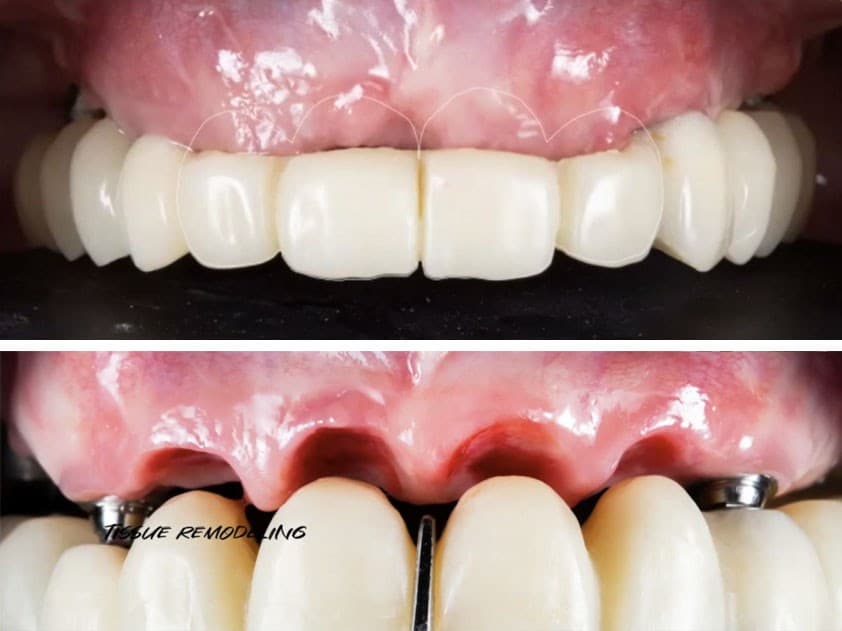
This presentation utilizes results from a prospective clinical trial as well as clinical experience to outline indications for effective and efficient utilization of narrow diameter implants in regions of limited space. Along with a simplified approach to placement, soft tissue management and provisionalization will be discussed in depth.
Date Added:
7/5/2011
Author(s):
Michael Reddy, DMD, DMSc
Dr. Reddy is Professor and Chairman of the Department of Periodontology at the University of Alabama at Birmingham School of Dentistry. Dr. Reddy is a 1981 graduate of...
[read more]
|
|
Online Videos / Surgery / Implant / Effective Techniques for Placement of Narrow Diameter Implants - Part 3 of 3
|
Questions & Comments
|
Sam Busich - (7/12/2011 6:56 PM)
Outstanding...very nicely presented. Thank you Sam
|
Related Courses |
|
|
CAD CAM Dentistry for Teeth and Implants
This webinar will discuss options for Cad/Cam fabrication of ceramic restorations for teeth and implants.
| Presented By: |
Dean C. Vafiadis, DDS |
| Presentation Style: |
Online Course |
| CE Hours: |
1 CEU (Continuing Education Unit) |
|
Watch Now>>
|
|
|
|
|
All-On-Four Implant Protocol - Fad or Phenomena
This webinar with Dr. George Duello and Dr. Maurice Salma will discuss the various treatment options available today for this patient segment and emphasize when and where the All-On-Four protocol can be successfully utilized to eliminate the need for costly augmentation procedures and months of healing time.
| Presented By: |
George V. Duello, DDS, MS |
| Presentation Style: |
Online Course |
| CE Hours: |
1 CEU (Continuing Education Units) |
|
Watch Now>>
|
|
|
|
|
Insights, Trends & Controversies in Implant Dentistry
In this first of a 4 part series, Dr. Dennis tarnow shares insights into new trends, developments and controversies in implant dentsitry. In this section, Dr. Tarnow discusses important topics related to implantitis, the gap, one-abutment/one-time, implant surfaces and design to name just a few.
| Presented By: |
Dennis P. Tarnow, DDS |
| Presentation Style: |
Online Course |
| CE Hours: |
1 CEU (Continuing Education Unit) |
|
Watch Now>>
|
|
|
|
Related Articles |
|
|
Root Fracture During Insertion of Prefabricated Posts
The consequence of inappropriate post selection and/ or hasty insertion can result in tooth fracture and/or loss. It has been demonstrated that conical or parallel sided post design has a direct effect on root fracture during post insertion. However, during experimentation it became apparent that root size and its relationship to post size had a direct effect on root fracture. This article correlates root size, post size, and fracture rate during insertion of prefabricated posts.
| Author(s): |
Lee H. Silverstein, DDS, MS, FACD, FICD;Allan S. Deutsch, DMD, Barry Lee Musikant, DMD, John Cavallari, MS (EE), James Lepley, DDS, Karen Ohlen, BA, Martin Lesser, PhD |
|
View Article>>
|
|
|
|
|
CT Scan Technology
Implant dentistry, one of the most predictable treatment alternatives offered to patients who are missing teeth can be enhanced by thorough pre-surgical diagnosis and treatment planning efforts by all members of the implant team. Conventional radiologic techniques including periapical and panoramic radiographs are limited by the two dimensional interpretation of existing hard and soft tissue. The inherent distortion factor can misrepresent bone topography in critical areas associated with vital anatomy or potential implant sites. Advances in diagnostic radiological techniques improved with the introduction of CT scan technology for dental applications. The enhanced diagnostic range of this evolving technology empowers the clinician with necessary tools to avoid potential complications associated with implant dentistry.
|
|
|
|
Implant Site Preparation with Motorized Bone Expanders
The osteotome technique has been utilized for many years as a viable approach to expand atrophic ridges. Despite its effectiveness, the mechanical impact from the surgical mallet is not well tolerated by patients. Additionally, reports in the literature describe postoperative complications that include concussions and benign paroxysmal vertigo. These conditions can be alarming for the patient and clinician, as their effects may persist for several weeks. A new technique for atraumatic ridge expansion…
|
|
|
|