Dental Education
Online Dental Education Dental education lectures and videos Online dental ce Dental education articles Expert dental educators Dental products education Dental Community
 
Video Details
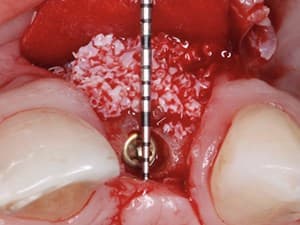
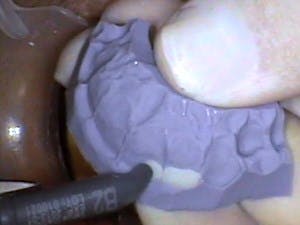
Extraction Site Grafting

Description:
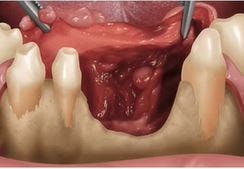
Dr. Bartee describes in great detail a protocol for post extraction socket management in terms of hard tisse grafting on primary site preparation for implant placement.

Date Added:
6/20/2008

Author(s):

Barry K. Bartee, D.D.S., M.D. Barry K. Bartee, D.D.S., M.D.
Dr. Barry Bartee received his undergraduate education from Abilene Christian University where he earned a B.S. in Biology and then received the DDS degree from Baylor C...
[read more]


Online Videos / Surgery / Implant / Extraction Site Grafting


Questions & Comments
Robert Odegard - (1/31/2010 8:49 PM)

Is it recommended to remove the membranes with the sutures in two weeks? I have been leaving mine in for 4-6 weeks. I have been getting great results.

Robert Odegard - (1/31/2010 8:49 PM)

Is it recommended to remove the membranes with the sutures in two weeks? I have been leaving mine in for 4-6 weeks. I have been getting great results.

Barry Bartee, DDS, MD - (2/24/2009 1:47 PM)

Here are links to images of the case reports mentioned in my response.

http://dentalxp.com/xperts/76/ti250_flapless.pdf

http://dentalxp.com/xperts/76/Cytoplast_Technique_Single_Page_09.pdf

http://dentalxp.com/xperts/76/dual_layer_cytoplast.pdf

Paresh Dodhiwala - (2/22/2009 2:57 AM)

excellent presentation

Barry Bartee, DDS, MD - (2/18/2009 6:23 PM)

Thank you for the question Dr. Haq. If there is a bony dehiscence of the buccal wall, my choice of protocols and materials will differ depending on the morphology of the defect and esthetic demands of the patient, i.e. smile/lip line, and gingival biotype. In esthetically demanding cases, assuming a moderate or thick biotype, I will use a layered approach using mineralized bone, bovine collagen membrane (Cytoplast RTM) and then the PTFE membrane over that (Cytoplast TXT 200). If more than 1/2 of the socket width is missing, then I will not place an immediate implant, but rather graft and place the implant later in a staged approach. The titanium reinforced version of the dPTFE membrane (Cytoplast Ti250 AN) can be used as well, and this can even be used with a tunneling approach, avoiding incision and reflection of the interdental papilla. I will post a link to that case report and the dual layer case report. As far as using alloplastic materials, that would be appropriate if you have a patient that does not want to use allograft, but the time to achieve bone regeneration is typically longer, greater than 6 months in my experience, and as a result there will be some additional volume loss compared to using the faster resorbing alloplasts. I have had sucecss with beta tricalcium phosphate in this application.

Wleed Haq - (2/10/2009 4:25 AM)

Dear Barry,
What protocol and which materials would you use if you had a dehisence of the buccal wall during extraction of an upper incisor? Could this be achieved using alloplastic materials? Many thanks.

Timothy Williams - (11/19/2008 12:57 PM)

Since taking Dr. Bartee's socket preservation courses many years ago I have experienced nothing short of success. Since using the Cytoplast TXT-200 membrane and Cytoplast PTFE suture combination, I have seen the predictability of excellent tissue response sky-rocket. Patient's have been extremely complimentary of the healing period and lack of post-operative complications. As stated by Dr. Rabinowitz, I likewise have seen excellent bone quality and quantity upon implant placement. Thank you Dr. Bartee for this very clear and informative video on Extraction Site Grafting.

Jeffrey Rabinowitz - (11/9/2008 7:16 AM)

Very nice presentation. I have been successfully utilizing Dr Bartee's extraction site preservation technique for several years. I use it routinely in single tooth extraction cases where five essentially intact socket walls remain. I have only occassionally used it for multiple extraction site cases or in cases of compromised buccal and/or lingual wall integrity - instances in which I typically utilize collagen membranes. In five walled single extraction cases, I have consistently seen excellent bone quality and quantity for subsequent successful implant placement or as pontic receptor sites. I have always used Puros as the graft material along with the Cytoplast TXT-200 membrane with great results. Even lacking primary closure, which is typically the case, the post-op course is calm and comfortable. For anyone who has not tried this technique, I highly recommend it as being precictable and successful. Dr Bartee's one day course on socket preservation and this particular technique is also quite worthwhile. As an aside, the technique is very cost effective, due to the reasonable pricing of the membranes, but as they are so good and the procedure is so predictable and successful, I would likely utlize them regardless of cost.

Michael Weinberg - (11/1/2008 9:18 PM)

Barry, Well done! I've gone back to using the Cytoplast TXT-200 instead of collagen membranes. I am getting much better results.

Related Videos
New Technologies in Bone and Implant Reconstruction of the Posterior Mandible Premium Member Content

New Technologies in Bone and Implant Reconstruction of the Posterior Mandible
In this clinical video, multiple hopeless severely resorbed and mobile anterior teeth are extracted and immediately replaced using CBCT and 3D planning with immediate loading protocols

Presented By: Maurice Salama, DMD
Presentation Style: Video
Community Rating:
 
Watch Now>>
Delayed Implant Placement after Extraction - Strategies and Soft Tissue Management - Part 1 Premium Member Content

Delayed Implant Placement after Extraction - Strategies and Soft Tissue Management - Part 1
Dr. Orlando Alvarez outlines his risk management and clinical strategies for implementing a delayed implant placement protocol after extraction.

Presented By: Orlando Alvarez Del C., DDS, MS
Presentation Style: Lecture
Community Rating:
 
Watch Now>>
Consecutive Anterior Implants: Surgical and Restorative Management of Esthetic Failures - Part 5 Premium Member Content

Consecutive Anterior Implants: Surgical and Restorative Management of Esthetic Failures - Part 5
This webinar will focus on the diagnosis and treatment design options for the implant replacement of two or more adjacent teeth in the anterior region with emphasis on preventing mid-facial and interdental tissue loss.

Presented By: David Garber, DMD;Maurice Salama, DMD;Stephen J. Chu, DMD, MSD, CDT;Dennis P. Tarnow, DDS
Presentation Style: Lecture
Community Rating:
 
Watch Now>>
Related Courses
Brilliant Implant Esthetics - Innovative Soft-Tissue Shaping and Prosthetic Socket Preservation Premium Member Content

Brilliant Implant Esthetics - Innovative Soft-Tissue Shaping and Prosthetic Socket Preservation
This presentation will demonstrate a workflow for oral surgeons, prosthodontists and dental technicians to achieve a predictable midfacial soft tissue level by an effective and atraumatic protocol.

Presented By: Paul Weigl, DDS
Presentation Style: Online Course
CE Hours: 1 CEU (Continuing Education Unit)
Watch Now>>
Alveolar Ridge Regenerative Strategies: Autogenous Bone vs BMP-2 Premium Member Content

Alveolar Ridge Regenerative Strategies: Autogenous Bone vs BMP-2
This clinical based presentation will compare the use of autogenous bone vs BMP-2 for alveolar ridge reconstruction. The science, indications, advantages and disadvantages of each approach will be featured. Single tooth to full arch reconstruction cases will also be shown along with understanding the application of non-resorbable vs resorbable mesh barriers for alveolar ridge reconstruction.

Presented By: Michael A Pikos, DDS
Presentation Style: Online Course
CE Hours: 1 CEU (Continuing Education Unit)
Watch Now>>
CAD CAM Dentistry for Teeth and Implants Premium Member Content

CAD CAM Dentistry for Teeth and Implants
This webinar will discuss options for Cad/Cam fabrication of ceramic restorations for teeth and implants.

Presented By: Dean C. Vafiadis, DDS
Presentation Style: Online Course
CE Hours: 1 CEU (Continuing Education Unit)
Watch Now>>
Related Articles
Periodontally Considerations of Dental Implantology

Periodontally Considerations of Dental Implantology
<p>The endosseous dental implant has steadily progressed to become an important modality of restoring incomplete dentitions in either fully or partially edentulous patients. Osseointegrated dental implants have demonstrated relatively high success rates in both the maxillary and the mandibular jaws. The American Academy of Implant Dentistry (AAID), the American Dental Association (ADA), and numerous other professional organizations have endorsed the placement of osseointegrated dental implants as…

Author(s): Lee H. Silverstein, DDS, MS, FACD, FICD;Jerry J. Garnick , David Kurtzman, DDS, Peter C. Shatz
View Article>>
Fifty Years of Interdisciplinary Site Development: Lessons &amp; Guidelines from Periodontal Prosthesis

Fifty Years of Interdisciplinary Site Development: Lessons & Guidelines from Periodontal Prosthesis
Just as "osseointegration" became synonymous with successful restoration of function in the fully edentulous patient during the 1980s, the term "implant site development" has become intricately associated in the 1990s with the techniques used to achieve esthetic results with implants in the partially edentulous patient. This article explores the roots of the concept of site development within the philosophy and principles of periodontal prosthesis. In addition, the myriad of techniques that are…

Author(s): David Garber, DMD;Maurice Salama, DMD;Henry Salama, DMD;Pinhas Adar, MDT, CDT;Edwin S. Rosenberg, DMD
View Article>>
Pilot Clinical and Histologic Evaluations of a Two-Piece Zirconia Implant

Pilot Clinical and Histologic Evaluations of a Two-Piece Zirconia Implant
An investigation was conducted to evaluate the clinical and histologic results of bone and soft tissue healing around a two-piece zirconia dental implant in a human model.

Author(s): Myron Nevins, DDS;Marcelo Camelo, DDS; Marc L. Nevins, DMD, MMSc; Peter Schupbach, PhD; David M. Kim, DDS, DMSc
View Article>>
Contact Us | Privacy Policy | Terms of Use
©2013

Preferred Language: English Flag
Contact Us · Login · Register