Video Details
|
Functional Gingival Grafts in Anterior Implant Therapy - Part 1 of 2
Description:
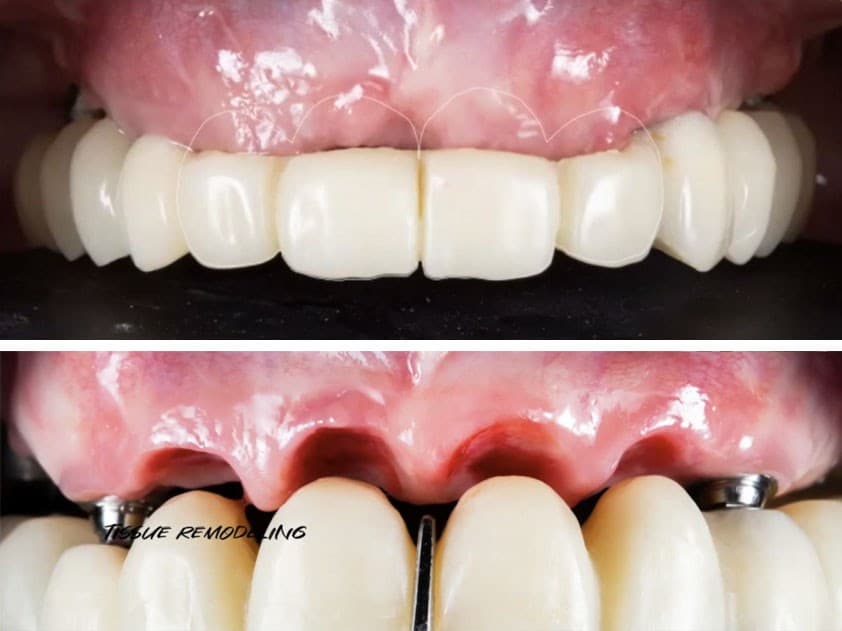
In this first of a two part series, Dr. Richard Martin, an oral & maxillofacial surgeon from Dallas Texas, outlines his approach to simultaneous gingival grafting following extraction to preserve or enhance the critical labial gingival margins around implant restorations in the esthetic zone.
Date Added:
9/26/2010
Author(s):
Richard Martin, DDS
Dr. Richard Martin is an Oral and Maxillofacial Surgeon in Lewisville-North Dallas, Texas. He is a graduate of New York University College of Dentistry where he was elected O...
[read more]
|
|
Online Videos / Surgery / Soft Tissue / Functional Gingival Grafts in Anterior Implant Therapy - Part 1 of 2
|
Questions & Comments
|
chad schnabel - (10/4/2010 4:53 AM)
Is the lid graft just a separate CT graft? Elaborate a little on that procedure if you would. Are you still using a membrane, or using autogenous tissue for this?
|
richard martin - (10/1/2010 6:39 PM)
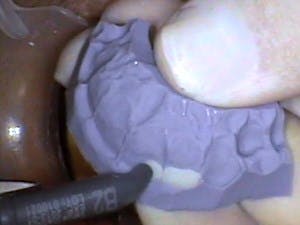
David, thanks for you comment. The photo that follows this slide is not the same patient, the purpose of the stone cast is just to demonstrate the technique. However, the patient that the cast belongs too, does have a "shorter" lateral. The case does appear later in the presentation and if you examine you will notice that the "flipper" is more coronal to encourage the tissue to migrate.
|
David Lee600 - (10/1/2010 1:32 PM)
Why is the the uuper right lateral incisor (tooth #7) two to three mm shorter than the upper right canine (tooth #6)on the model for the "flipper", than is the case in the mouth.
|
Related Videos |
|
|
|
The Evolving Role of Soft Tissue Enhancement in Esthetic Reconstructive Dentistry - Part 3 of 3
Soft tissue grafting techniques, new regenerative materials and bioactivators will be highlighted. The expanding role of allograft materials (Perioderm), platelet rich in growth factors (PRGF, PRF), and when to utilize them will be suggested. The ability of these combined protocols to alter the soft tissue profile around natural teeth, implants, and dentulous ridges, will be reviewed as to its critical role in "Complete Esthetics".
| Presented By: |
Maurice Salama, DMD |
| Presentation Style: |
Lecture |
| Community Rating: |
|
|
Watch Now>>
|
|
|
|
|
Dento-Facial Esthetics in Search of Equilibrium
Dr. Rogerio Zambonato outlines new perspectives on dento-facial esthetic paradigms that aim at bringing into equilibrium function, health and comfort along with the alignment of dento-facial parameters of beauty.
| Presented By: |
Rogério Zambonato Freitas, DDS, MS |
| Presentation Style: |
Lecture |
| Community Rating: |
|
|
Watch Now>>
|
|
|
|
|
Related Articles |
|
|
Similarities Between an Acellular Alloderm and a Palatal Graft for Tissue Augmentation
Predictable tissue regeneration presents a considerable challenge in the surgical treatment of gingival tissue defects. Soft-tissue augmentation procedures to increase the existing or create a new zone of attached keratinized gingival tissue have classically been performed using the patient's own masticatory mucosa and, more recently, using an acellular dermal allograft as the donor material. This article presents a clinical case whereby an acellular dermal allograft was placed on the buccal surface…
| Author(s): |
Lee H. Silverstein, DDS, MS, FACD, FICD;Russell A. Gornstein, DDS, MD, Donald P. Callan, DDS, Baldev Singh, BDS, PhD |
|
View Article>>
|
|
|
|
|
|
Current Trends in Gingival Recession Coverage 2
The recession of the gingiva is increasingly becoming a prominent condition in the oral health of many patients and should be treated at its earliest detection. Part I of this discussion reviewed the multifactorial etiology and decision modality; a treatment option was demonstrated for gingival recession using the tunneling technique. This concluding part of the discussion highlights two clinical cases using alternative approaches. The correction of Class I and II gingival recessions are presented as a means of minimizing surgical trauma and achieving predictable aesthetic results.
|
|
|
|