Video Details
|
Guided Bone Regeneration of a Compromised Extraction Site
Description:
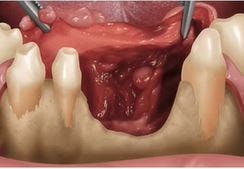
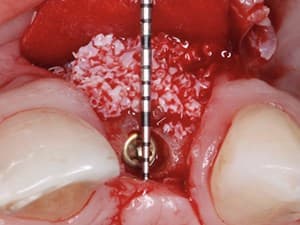
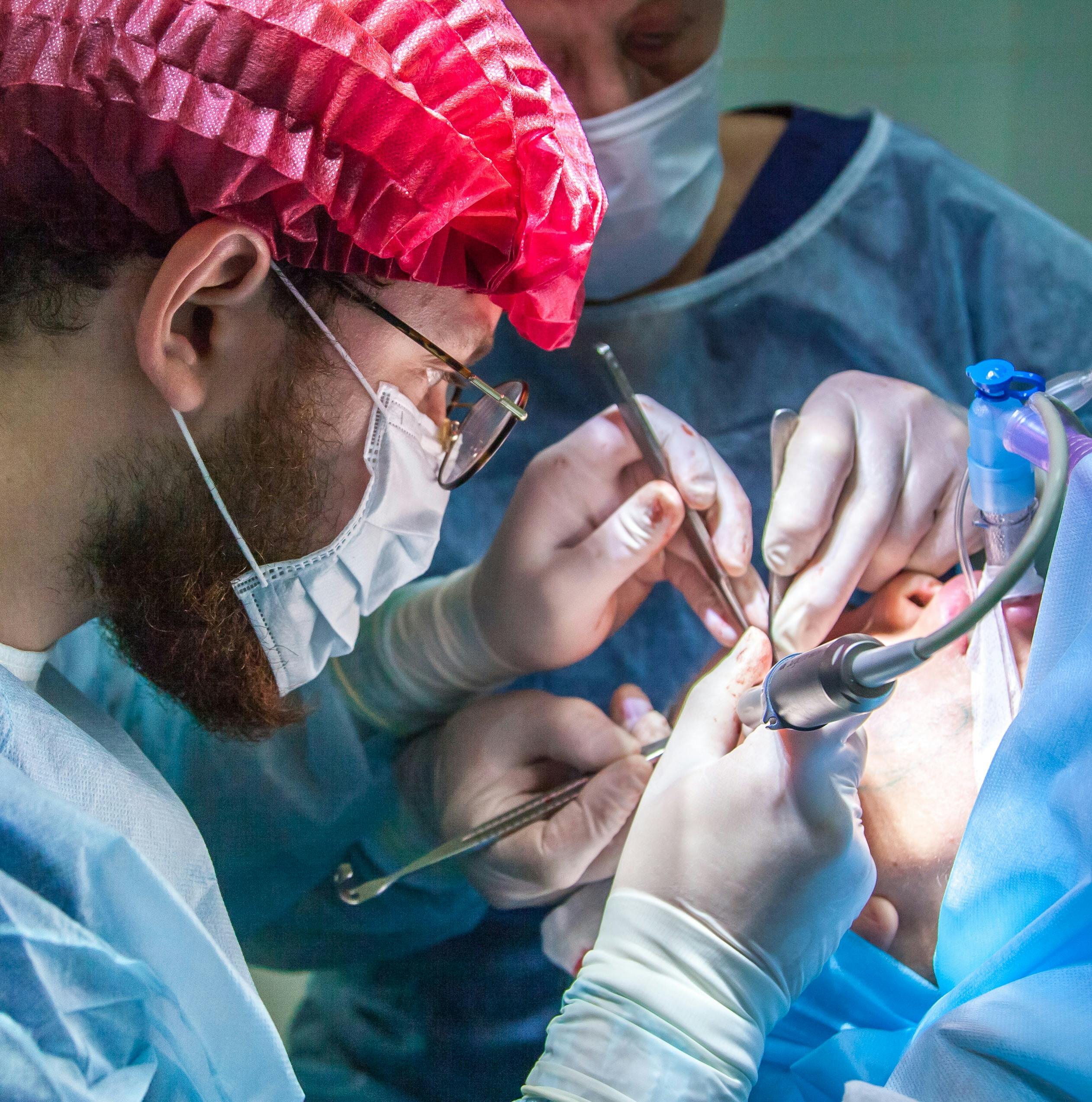
In this surgical technique video, Dr. Michael Sonick shares a routine clinical challenge and demonstrates the extraction of a fractured premolar with simultaneous guided bone regeneration. His very detailed and concise demonstration focuses on the preparation of the extraction site as well as the utilization of growth factors and membranes.
Date Added:
9/24/2010
Author(s):
Michael Sonick, DMD
Dr. Michael Sonick is a full time practicing periodontist and implant surgeon in Fairfield, Connecticut. He is also an active teacher, clinical researcher and author. ...
[read more]
|
|
Online Videos / Surgery / Bone Grafting / Guided Bone Regeneration of a Compromised Extraction Site
|
Questions & Comments
|
Mike Sonick - (4/20/2013 11:19 AM)
George. Thanks for your question. Please see my answer below to Benjamin. I agree with the publication by Artzi. That is why I use cancellous allograft with a growth factor. I obtain 50% vital bone in 6 months.
|
Mike Sonick - (4/20/2013 11:17 AM)
Benjamin
There is not way to know if there is vital bone without a biopsy. In my experience the use of BioOss and Biogide results in 50% vital bone in approximately 6-9 months. The turnover is slow. I usually use Puros or some other bone allograft with Gem 21 and a collagen membrane. I have been able to obtain 50% vital bone in 4 months with this technique. For more information you may want to consult my text Implant Site Development published by Wiley Blackwell
|
Benjamin Saidel - (2/21/2013 8:36 PM)
Dr Sonick I am a quite new with these bone grafting techniques so your assistance will be greatly appreciated
I grafted a socket following the extraction of a upper left first molar last year which had fractured post endo. (There was periapical pathology extending into the furcation with an associated buccal swelling.)
Following extraction of the tooth it became obvious that the buccal plate had been lost so I raised a flap and grafted the socket using only Bio-OSS and a Bio-guide membrane. The socket healed uneventfully ( some granules had leaked out from under the membrane at 1 week review but did not seem to adversely affect healing) This was 6- 8 months ago. I have reviewed her a couple of times during this period and clinically the tissues have healed well. I have also taken peri apical X-rays which show the graft material
The patient is now ready to have the implant placed. I have taken a CBCT and in the area of the socket is a dense radiopacity which must be the graft material. My question to you is the following- Has bone formed in this area or is it only graft material?
I am now concerned that when I raise a flap to place the implant all I will find is graft material with little or no new bone,which may even come away in the flap and I will be left with an open socket or partially healed socket
Kind regards
Benjamin Saidel
London
|
George Kotsakis - (4/24/2011 11:19 AM)
Dr Sonick, you have been fastiduous in explaining us every step as always, thank you very much. I have only one question, you seem to have used some bovine graft as well. I have in my mind the publication by Artzi et al on bovine xenografts, where after 6 months the had minimal mature bone, mostly CT on the coronal aspect of the socket and almost 35% of xenograft all over the socket. Howcome u manage to get back in, as early as 5 months and get dense bone???
|
Mike Sonick - (12/12/2010 6:12 PM)
Jorge The membrane was not exposed. It was placed underneath the tissue and a collagen plug placed coronally. altho the collagen plug is left exposed this does not seem to be a problem for it is completely epithelialized within two weeks. I used to use CTG for this procedure but have found them to take more time with no improvement in result.
Immediate implants without a flap with this technique would be a probelm for the buccal plate would not be regenerated. It is all about eh buccal plate. If no buccal plate exists you must flap and regenerate independent of whether you are placing an implant or not.
|
Jorge Gutierrez - (11/29/2010 9:42 AM)
Dr Michael I would like to know in your video the membrane was exposed to the mouth that does not compromise the final result of their work, would not be better to cover with tissue graft? What do you think of making an immediate implants with the technique without flap?
|
Mike Sonick - (11/21/2010 8:36 PM)
Dr. Sonick; Do you ever utilize a CTG over the top of the extraction site to contain the graft material and increase the keratinized tissue? Also, when you placed the implant it appears you left the interproximal areas open to granulate in by secondary intention healing. Isn't that risky? Thanks Sam
Sam,
I have used CT to cover the top of extraction sites to contain graft materials in the past. However, today I simply use a collagen plug. I place it beneath the soft tissue and allow the tissue to granulate over the top. It is not risky. Infection is less than 1% and there is a significant increase in keratinized gingiva without the need for a second surgery to harvest the CT graft.
|
Mike Sonick - (11/21/2010 8:34 PM)
Carlos
I have PRP, PRGR and other biologics for grafting. Today, I alwasy use a biologic when grafting, usually Gem 21 or Emdogain.
|
Mike Sonick - (11/21/2010 8:34 PM)
Simon
I am not concerned about damaging bone with the high speed finishing bur. I have been using it for root planning, degranulation, and detoxification for over 20 years without any negative consequences. It is a technique I learned from the late Dr Sal Squatrito.
|
|
|
Related Videos |
|
|
|
Extraction Site Management
The biological rational for making clinical decisions relative to the requirement for grafting or the benefits of flapless implant protocols.
| Presented By: |
Maurice Salama, DMD |
| Presentation Style: |
Video |
| Community Rating: |
|
|
Watch Now>>
|
|
|
|
|
Related Courses |
|
|
|
Vertical Bone Augmentation: Current Concepts and Techniques
This lecture will review several approaches used for vertical bone augmentation and discuss the benefits and limitations of each. There will be special emphasis on the titanium mesh and interpositional osteotomy techniques.
| Presented By: |
David Dara Yarmand, DDS, MD |
| Presentation Style: |
Online Course |
| CE Hours: |
1 CEU (Continuing Education Unit) |
|
Watch Now>>
|
|
|
|
|
Creative Next Generation Surgical Tools and Solutions for the Implant Practice
Modern Bone Grafting has become more predictable than ever before. Recent developments in CBCT 3D Diagnosis and the utilization of bioactive modifiers such as PRGF, PRF and BMP-2 have stimulated further advances in surgical techniques as well as a New Age Surgical Armamentarium to maximize the efficiencies and success of these sophisticated procedures.
| Presented By: |
Maurice Salama, DMD |
| Presentation Style: |
Online Course |
| CE Hours: |
1 CEU (Continuing Education Unit) |
|
Watch Now>>
|
|
|
|
Related Articles |
|
|
Alloplastic Bone Substitutes Around Dental Implants
The repair of osseous defects has been a goal in dentistry for many decades. Subsequently, within the last several years, there has been an emergence of a new class of materials in dentistry referred to as synthetic bone. Finding the ideal bone substitute material has been the goal of researchers for many years. In attempting to achieve this ideal material, dental practitioners have tried with varying degrees of success: autogenous and demineralized freeze-dried bone, allografts of plastic, carbon…
| Author(s): |
Lee H. Silverstein, DDS, MS, FACD, FICD;Lee M. Whitesides, DMD, MMSC |
|
View Article>>
|
|
|
|
|
The Bio-Derm Ridge Plumping Technique for Pontic Site Development
Seibert Class III apicocoronal and buccolingual alveolar ridge defects with associated gingival mucosal atrophy and absence of interdental papillae are common in edentulous areas within the anterior esthetic zone of the maxilla. Normal emergence profiles, critical to achieving
esthetic restorations, require restoration of
normal hard and soft tissue morphology, including
re-establishment of adjacent interdental papillae.
| Author(s): |
Nicholas Toscano, DDS, MS;Dan Holtzclaw, DDS, MS |
|
View Article>>
|
|
|
|
|
Mandibular Block Autografts for Alveolar Ridge Augmentation
This article reviews indications, limitations, presurgical evaluation, surgical protocol, and complications associated with mandibular block autografts harvested from the symphysis and ramus buccal shelf for alveolar ridge augmentation. The author draws from 14 years of experience with more than 500 mandibular block autografts.
|
|
|
|