Video Details
|
Immediate Implants in Molar Sites - Wide Diameter Implants: Part 2
Description:
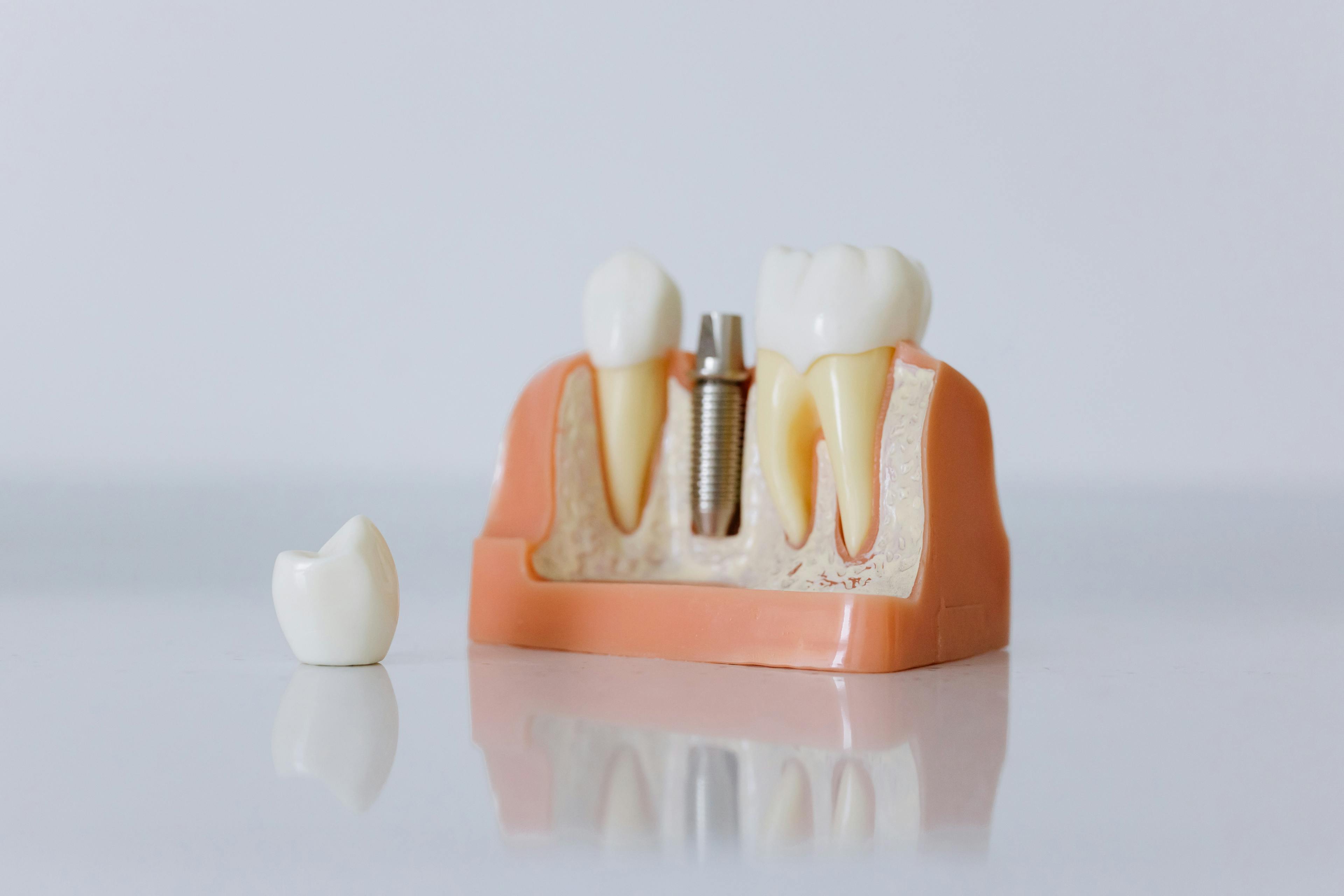
In Part 2 of this lecture series, Dr. Murray Arlin, a periodontist from Toronto, specifically highlights the use of wide diameter implants in immediate molar extraction sites. The utilization and advantages of short extra wide implants is discussed in detail.
Date Added:
1/7/2010
Author(s):
Murray Arlin, DDS, dip. Perio., FRCD
Dr. Arlin received his D.D.S. from McGill University in 1977. After a 1 year Residency in General Dentistry at the Jewish General Hospital in Montreal, he began his Pos...
[read more]
|
|
Online Videos / Surgery / Implant / Immediate Implants in Molar Sites - Wide Diameter Implants: Part 2
|
Questions & Comments
|
Michael Tischler - (11/3/2011 7:51 AM)
Murray,
Hi. Great presentation. I have been using this system for 2 years with great success.Thanks
Michael Tischler, DDS
|
DR.Ahmed R.Sugendran - (1/20/2010 12:51 AM)
how dose this tapered wide body implant compared with straigh wide body implant with internal hex?Would it work the same way or do we need to see more clinical evedence?Booth this straight and tapered( tapered looks more bone friendly)wide body implant is a practical clinical solution.i hope dr.Arlin can answer this.Thanks great lecture.
|
Paolo Giuliani - (1/14/2010 6:02 PM)
It's nice to see what common sense has been to me for years is being practiced with clinical success. I look forward to 5 year follow ups. Thanks.
|
Joseph Whitehouse - (1/10/2010 3:58 PM)
This presentation is emblematic of the continuing advances in knowledge in this discipline. Thank you for helping me improve my ability.
|
Muray Arlin - (1/10/2010 6:31 PM)
[quote=Muray Arlin][quote=Kenneth Serota]Regardless of the axial placement or the diametral size of the fixture, platform switching needs are essential...not evident and unfortunately saucerization seems to characterize the vast majority of the restored cases......Dr. Weigl's and Dr. Saynor's presentations address the reality that the concerns about tissue support and contour can be obviated by fixture design and precise cone connection. The ANKYLOS system allows you go to 5.5 and I'm not totally certain about the D size...point being that deep and wide is simply old engineering....I fear that reverting to even larger fixtures is an invitation to disaster for the inexperienced.[/quote]
Hi Ken and thans for your comments. Once we get to Part II I will demonstrate the Max 8mm and 9mm implants which incorporate a Platform Shift.[/quote]
Another point Ken on the wide diameter implant, is that I agree that going too wide can be dangerous if used in the wrong situations. I addressed this in the beginning of the seminar part I. When we get to Part II you will see that an 8mm or 9mm implants can be placed comfortably in most immediate molar extraction sites, while still respecting the surgical protocol of staying about 2mm lingual to the facial bone. These diameters can rarely if ever be safely used in healed sites where we are confronted with the inevitable post extraction shrinkage.
|
Muray Arlin - (1/10/2010 6:00 PM)
[quote=Kenneth Serota]Regardless of the axial placement or the diametral size of the fixture, platform switching needs are essential...not evident and unfortunately saucerization seems to characterize the vast majority of the restored cases......Dr. Weigl's and Dr. Saynor's presentations address the reality that the concerns about tissue support and contour can be obviated by fixture design and precise cone connection. The ANKYLOS system allows you go to 5.5 and I'm not totally certain about the D size...point being that deep and wide is simply old engineering....I fear that reverting to even larger fixtures is an invitation to disaster for the inexperienced.[/quote]
Hi Ken and thans for your comments. Once we get to Part II I will demonstrate the Max 8mm and 9mm implants which incorporate a Platform Shift.
|
Kenneth Serota - (1/10/2010 5:36 AM)
Regardless of the axial placement or the diametral size of the fixture, platform switching needs are essential...not evident and unfortunately saucerization seems to characterize the vast majority of the restored cases......Dr. Weigl's and Dr. Saynor's presentations address the reality that the concerns about tissue support and contour can be obviated by fixture design and precise cone connection. The ANKYLOS system allows you go to 5.5 and I'm not totally certain about the D size...point being that deep and wide is simply old engineering....I fear that reverting to even larger fixtures is an invitation to disaster for the inexperienced.
|
Muray Arlin - (1/10/2010 5:58 PM)
[quote=Abe Spigler]Nice presentation, unfortunately the slides were ahead of the commentary.[/quote]
Yes they are not synchronized well after the first few minutes. I will contact Dental XP to see if this can be improved.
|
Abe Spigler - (1/10/2010 2:25 AM)
Nice presentation, unfortunately the slides were ahead of the commentary.
|
|
|
Related Courses |
|
|
|
CAD CAM Dentistry for Teeth and Implants
This webinar will discuss options for Cad/Cam fabrication of ceramic restorations for teeth and implants.
| Presented By: |
Dean C. Vafiadis, DDS |
| Presentation Style: |
Online Course |
| CE Hours: |
1 CEU (Continuing Education Unit) |
|
Watch Now>>
|
|
|
|
|
Simplification of the Complex Case - Restorative Efficiencies
Contemporary implant dentistry relies on a proper diagnosis, astute treatment planning with an interdisciplinary team. Vision, communication and execution are indispensable for a long term healthy esthetic outcome.
| Presented By: |
Sergio Rubinstein, DDS |
| Presentation Style: |
Online Course |
| CE Hours: |
1 CEU (Continuing Education Unit) |
|
Watch Now>>
|
|
|
|
Related Articles |
|
|
Immediate Loading of Osseotitie Implants-After 4 months
A growing number of clinical reports show that early and immediate loading of endosseous implants may lead to predictable osseointegration; however, these studies provide mostly short- to mid-term results based only on clinical mobility and radiographic observation. Other methods are needed to detect the possible presence of a thin fibrous interposition of tissue that could increase in the course of time and lead to clinical mobility. A histologic evaluation was performed on two immediately loaded…
| Author(s): |
Tiziano Testori, MD, DDS, FICD;Serge Szmukler-Moncler, DDS, Luca Francetti, MD DDS, Massimo Del Fabbra, BSc, PhD, Antonio Scarano, DDS, Adriano Piattelli, MD, DDS, Robert L. Weinstein, MD, DDS |
|
View Article>>
|
|
|
|
|
|
Human Histologic Evidence of Connective Tissue Attachment to a Dental Implant
Courtesy of Quintessence Publishing
| Author(s): |
Myron Nevins, DDS;Marc L. Nevins, DMD, MMSc, Marcelo Camelo, DDS, Janie Lee Boyesen, DDS, DMSc, David M. Kim, DDS, DMSc |
|
View Article>>
|
|
|
|
|