Dental Education
Online Dental Education Dental education lectures and videos Online dental ce Dental education articles Expert dental educators Dental products education Dental Community
 
Video Details
Immediate Molar Replacement Utilizing Narrow Diameter Implants - Allowing Implant Placement in Almost Any Situation - Part 2 of 2

Description:
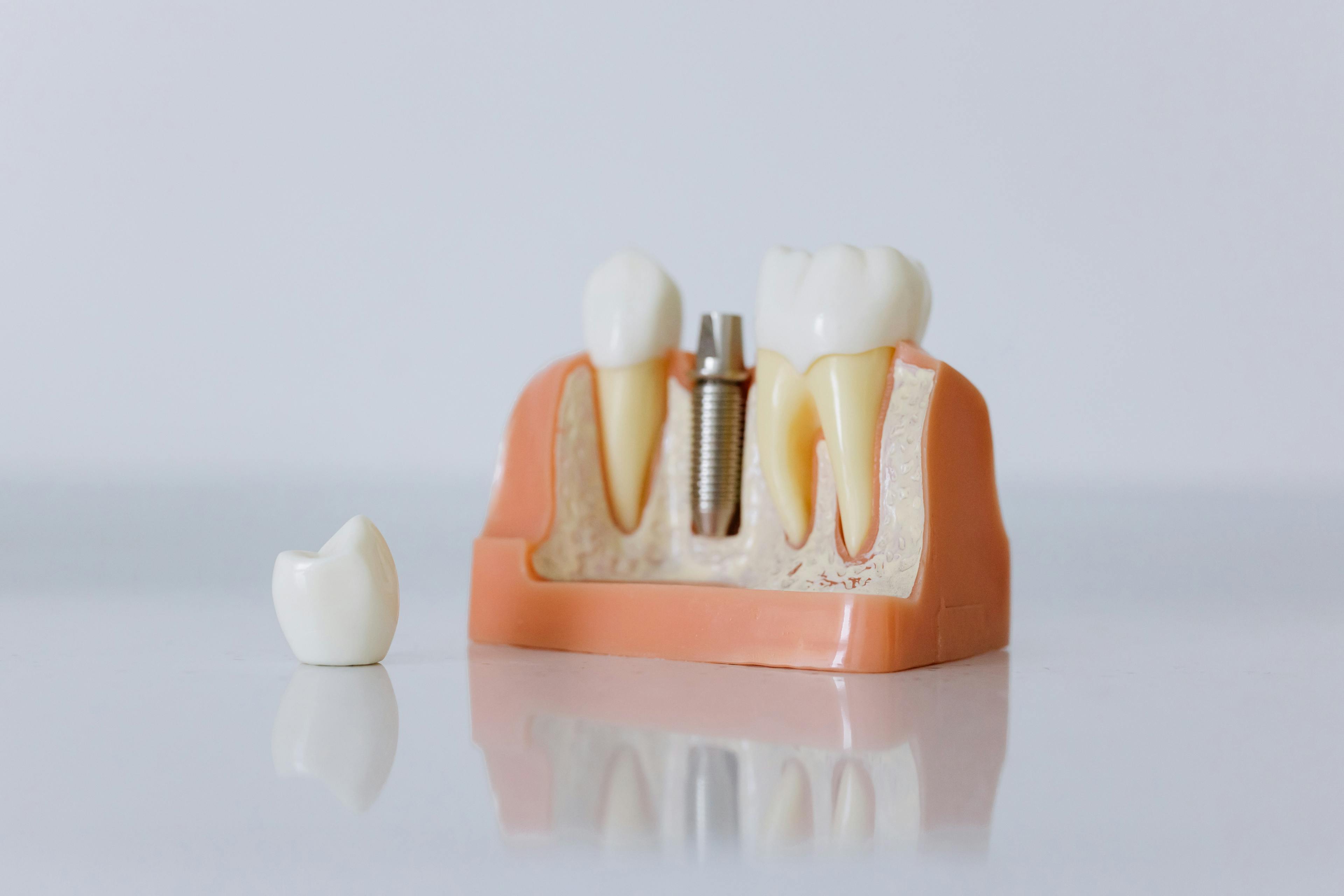
Immediate molar placement has been widely reported in the literature with excellent results. All the studies insist that a wide diameter implants are essential as they are the only way to achieve primary stability and are the only implants that can handle the forces that molar regions produce. But there are a number of problems with wide diameter implants. This presentation will dispel all these myths as well as show how narrow diameter implants can not only handle the forces but also make immediate molar placement more predictable and possible in almost all scenarios.

Date Added:
1/14/2011

Author(s):

Howard Gluckman, BDS, MChD Howard Gluckman, BDS, MChD
Dr Gluckman completed his dental training at the university of Witwatersrand in Johannesburg in 1990. After spending a number of years in a general practice he complet...
[read more]


Online Videos / Surgery / Implant / Immediate Molar Replacement Utilizing Narrow Diameter Implants - Allowing Implant Placement in Almost Any Situation - Part 2 of 2


Questions & Comments
Howard Gluckman - (2/4/2013 4:51 PM)

@Jan-Stefaans Unfortunately you cannot use the bicon implant for this of therapy as you need to have an implant that has a thread not fins. the Bicon has to be tapped into place and one generally needs the threads to allow easy placement of the implant in the furcation bone. One may be able to use it in specific areas especially where you have a thick furcation. But as soon as you try to tap an implant in it will take the path of least resistance

Jan-Stefaans du Plessis - (10/16/2012 6:12 AM)

What about Bicon implants, would you use the as well in this cases?

Jan-Stefaans du Plessis - (10/16/2012 6:12 AM)

What about Bicon implants, would you use the as well in this cases?

mario magrini - (8/17/2012 12:15 PM)

For Riian Wolfaardt: I use a brasilian implant: Neodent Drive It has the same design of nobel active, same connection of ankylos. You can try it. High primary stability and vantages of real morse taper connection

John Sullivant - (8/14/2012 11:37 PM)

Great job, impressive.. Have used the EZ plus implant from megagen some, believe it has the Morse taper as you described. Have you used it before? Also what type of artificial bone did you say you used? Finally on your ridge preservations when you are not doing immediate, do you use any barrier then at all? thanks in advance..

Howard Gluckman - (4/13/2011 1:23 PM)

Hey Riaan. how you doing. Yes you can definitely use the nobelactive but you will have to use wider diameter implants like the 4,3 and the 5mm implants. they also tend to have one problem in that they can sometimes follow their own course and end up in the wrong root. The ankylos is more ideal in that you need less preparation. I have used both extensively and both work of that there is no doubt but you cannot use a narrow diameter with the nobelactive due to the type of connection it is not as secure a morse connection as the ankylos is. thanks for the comments regards Howard

Riaan Wolfaardt - (4/12/2011 4:50 PM)

Thx for great presentation Howard. Something to add to my repertoir. Would you absolutely not use an Nobel Active implant in these cases. I use Nobel Active , and my feeling is they are ideally suited for this kind of treatment. Riaan Wolfaardt

Howard Gluckman - (4/12/2011 4:03 AM)

Hi Milo I do not know the implant at all. One thing that is critical is the morse taper. it has to be the same as the ankylos and not a morse that is similar to the nobelactive or the strauman. these do not have a true morse taper that gives the proper cold weld. you need a system that has no opening of the components during micro motion. if you look at Paul Weigls studies he shows clearly how the ankylos bends rather than having any opening of the implant abutment interface as this will lead to failure of the implant or the screw at some stage and will most likely lead to implant fracture. that is why so many systems need to use a wide diameter in the molar sites. thanks for the comments. Check out our academies page on facebook just search for the implant academy and go check it out.

Milo Garcia Tempone - (1/24/2011 4:44 PM)

I have been shown lately the anthorgir implants very similar to the ankylos, do you know them or have seen them? If so what is your opinion using them in those cases you present because they are very similar in shape an diameter. Dame prosthetic principle

Related Videos
Immediate Molar Replacement Utilizing Narrow Diameter Implants - Allowing Implant Placement in Almost Any Situation - Part 1 of 2 Premium Member Content

Immediate Molar Replacement Utilizing Narrow Diameter Implants - Allowing Implant Placement in Almost Any Situation - Part 1 of 2
Immediate molar placement has been widely reported in the literature with excellent results. All the studies insist that a wide diameter implants are essential as they are the only way to achieve primary stability and are the only implants that can handle the forces that molar regions produce. But there are a number of problems with wide diameter implants. This presentation will dispel all these myths as well as show how narrow diameter implants can not only handle the forces but also make immediate molar placement more predictable and possible in almost all scenarios.

Presented By: Howard Gluckman, BDS, MChD
Presentation Style: Lecture
Community Rating:
 
Watch Now>>
Implant Abutment Design and Selection Premium Member Content

Implant Abutment Design and Selection
Dr. Gehrke outlines the impact of abutment design and selection on developing esthetic peri-implant soft tissue outcomes.

Presented By: Dr. Peter Gehrke
Presentation Style: Lecture
Community Rating:
 
Watch Now>>
Functional Gingival Grafts in Anterior Implant Therapy - Part 1 of 2 Premium Member Content

Functional Gingival Grafts in Anterior Implant Therapy - Part 1 of 2
Dr. Richard Martin outlines his approach to simultaneous gingival grafting following extraction to preserve or enhance the critical labial gingival margins around implant restorations in the esthetic zone.

Presented By: Richard Martin, DDS
Presentation Style: Lecture
Community Rating:
 
Watch Now>>
Hervorragende Implantat Ästhetik - innovative Formgebung des Weichgewebes und prothetische Socket Preservation (Versorgung der Extraktionsalveole) - Teil 1 Premium Member Content

Hervorragende Implantat Ästhetik - innovative Formgebung des Weichgewebes und prothetische Socket Preservation (Versorgung der Extraktionsalveole) - Teil 1
Diese Präsentation demonstriert einen Arbeitsablauf für Oral-Chirurgen, Prothetiker und Zahntechniker zur Erreichung eines vorhersagbaren „mid-facial“ Weichteilniveaus durch ein effektives und atraumatisches Protokol.

Presented By: Paul Weigl, DDS
Presentation Style: Lecture
Community Rating:
 
Watch Now>>
Related Courses
Bridging Clinical Skills and Practice Success in Periodontics and Implant Therapy Premium Member Content

Bridging Clinical Skills and Practice Success in Periodontics and Implant Therapy
This program is one of a series that will address the "additional" skills and systems that are required to bridge clinical skills into practice success.

Presented By: Mark K. Setter, DDS, MS
Presentation Style: Online Course
CE Hours: 1 CEU (Continuing Education Unit)
Watch Now>>
Immediate Implant Provisionalization: A Critical Aspect in Tissue Care and Esthetics Premium Member Content

Immediate Implant Provisionalization: A Critical Aspect in Tissue Care and Esthetics
A step-by-step protocol will be presented in how to fabricate the proper screw-retained provisional restoration from the fabrication of the acrylic shell to managing and capturing the proper supportive subgingival contour.

Presented By: Stephen J. Chu, DMD, MSD, CDT
Presentation Style: Online Course
CE Hours: 1 CEU (Continuing Education Unit)
Watch Now>>
Insights, Trends & Controversies in Implant Dentistry Premium Member Content

Insights, Trends & Controversies in Implant Dentistry
In this first of a 4 part series, Dr. Dennis tarnow shares insights into new trends, developments and controversies in implant dentsitry. In this section, Dr. Tarnow discusses important topics related to implantitis, the gap, one-abutment/one-time, implant surfaces and design to name just a few.

Presented By: Dennis P. Tarnow, DDS
Presentation Style: Online Course
CE Hours: 1 CEU (Continuing Education Unit)
Watch Now>>
Related Articles
A New Implant Design for Crestal Bone Preservation: Initial Observations and Case Report

A New Implant Design for Crestal Bone Preservation: Initial Observations and Case Report
Following the exposure and restoration of two-piece dental implants, some change in the vertical level of the peri-implant crestal bone height has been reported. This change in crestal bone height has not, however, negatively impacted long-term implant success. This article describes how the concept of platform switching is incorporated into a new implant design as a means of reducing or eliminating the occurrence of crestal bone loss. Preliminary observations from clinicians utilizing this new implant design are herein presented.

Author(s): Tiziano Testori, MD, DDS, FICD;Harold Baumgarten, DMD, Roberto Cocchetto, DDS, MD, Alan Meltzer, DMD, MScD, Stephan Porter, DDS, MSD, MS
View Article>>
Instrumentation for Modern Day Implant Surgery

Instrumentation for Modern Day Implant Surgery
Public awareness of the aesthetic possibilities through the replacement of missing or nonsalvageable teeth has been elevated with advances in dental implant therapy and related hard and soft tissue regenerative therapies. This has led to an increase in the fabrication of fixed prostheses supported by either natural teeth, dental implants, or removable prostheses anchored by implants rather than conventional tissue- or tooth-supported partial dentures.

Author(s): Lee H. Silverstein, DDS, MS, FACD, FICD;Peter C. Shatz, DDS
View Article>>
Dental Implants: Mastering Esthetics in the Smile Zone

Dental Implants: Mastering Esthetics in the Smile Zone
The key to contemporary restorative dentistry is the fabrication of healthy, maintainable, esthetic, and functional prostheses. The true success of any restoration is reliant on the creation of an “illusion of reality,” regardless of the restorative modality used (eg, porcelain laminate veneers, crowns, and/or implant-supported prostheses). Developments and advances to the restorative armamentarium have significantly improved the clinician’s ability to deliver predictable and reliable treatments. Osseointegration…

Author(s): Lee H. Silverstein, DDS, MS, FACD, FICD;Gregori M. Kutrzman, DDS, David Kurtzman, DDS, Peter C. Shatz, DDS
View Article>>
Contact Us | Privacy Policy | Terms of Use
©2013

Preferred Language: English Flag
Contact Us · Login · Register