Video Details
|
Immediate Reconstruction of the Posterior Mandible with Multiple Implants
Description:
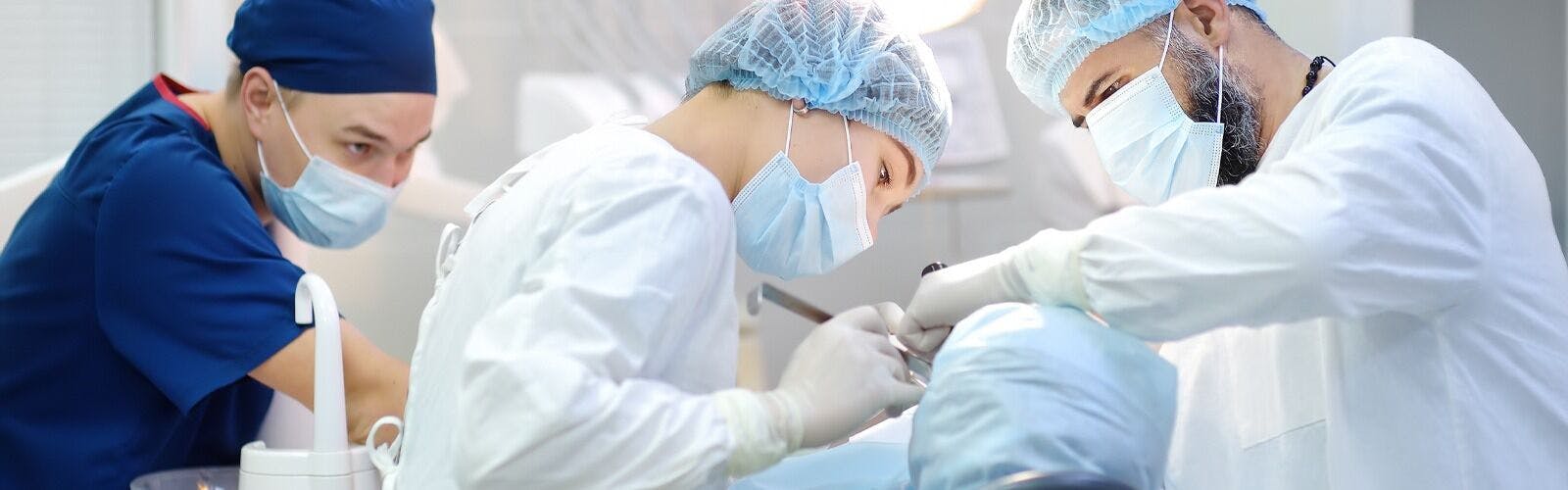
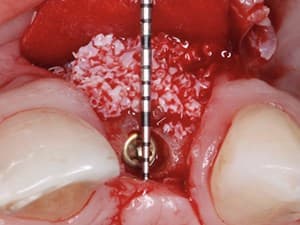
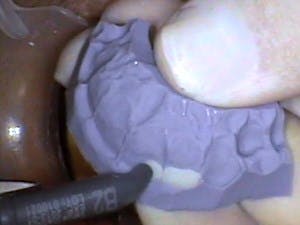
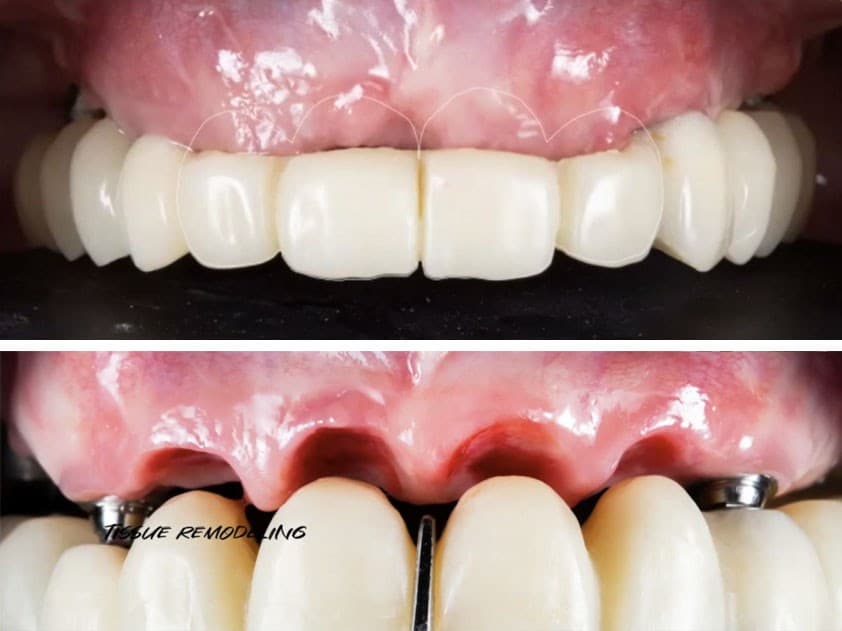
This surgical video highlights the diagnostic phase with review of the CBCT and 3D images to properly treatment plan the placement of multiple adjacent implants for immediate temporization in a previously grafted mandibular posterior region. Anatomy of available bone and location of the mandibular nerve are discussed. Implant placement and confirmation of accuracy of the plan utilizing restorative and surgical guides are described. Bone grafting using allograft mineralized bone and PRGF as well as management of the gingival tissues as part of effecient surgical protocols are clarified. One Abutment-One Time techniques are instrumental in facilitating immediate temporization utilizing the placement of final abutments at the time of implant insertion. The Restorative phase is described highlighting the the use of acrylic copings for these abutments, immediate reline at the time of surgery using a vacuum formed matrix and Triad reline material. 2 month post-op images of healing of soft tissues and final impression taking utilizing snap caps and flowable resin are also included.
Date Added:
3/14/2013
Author(s):
Maurice Salama, DMD
Dr. Maurice A. Salama completed his undergraduate studies at the State University
of New York at Binghamton in 1985, where he received his BS in Biology. Dr. Salama
r...
[read more]
|
|
Online Videos / Surgery / Implant / Immediate Reconstruction of the Posterior Mandible with Multiple Implants
|
Questions & Comments
|
Maurice Salama - (4/11/2013 3:22 AM)
Thanks Bassam. We are considering revisiting past cases and showing the follow up and reposting them. Would that be of interest? Dr. Salama
|
Bassam Algheryafi - (4/10/2013 7:58 PM)
Very inspirational presentation Dr.Salama; is there anyway you can put together all links related to this case or any case in future thus we can watch it from the start to finish? thanks for your dedication to this forum.
|
Maurice Salama - (3/27/2013 5:22 PM)
Loc; Thanks for the nice comments, please see my previous post below. Arrestin or Acromycin can be utilized for the antibiotic paste. Thanks Dr. Salama
|
Loc Huynh - (3/27/2013 1:56 PM)
Dear Dr. Salama,
Great Presentation! love it!
what's the name of the antibiotic paste for cementing? where can I buy them?
thank you very much
|
Maurice Salama - (3/27/2013 11:15 AM)
Sanjeev and Fahran; Many thanks for the kind words. I am glad that this video has been instructional for both of you. Dr. Salama
|
sanjeev sharma - (3/27/2013 8:50 AM)
Learned a lot from video. Thanks Dr. Salama..
|
FARHAN DURRANI492 - (12/11/2011 8:36 AM)
dear dr salama you are genius and great inspiration for me ,i have been doing implant surgeries after watching your videos ,thank you very much
Dr Farhan Durrani
India
|
Maurice Salama - (10/25/2011 2:08 PM)
Yossef; You can utilize antibiotic paste like Arestin or Acromycin mixed with a glycerin carrier that you can have made at your pharmacy. thanks Dr. Salama
|
Yossef Shmerling - (10/25/2011 1:17 PM)
Hello Doctor Salama an d thx for the wonderfull presentation.
can you repeat the name of the paste that you use for cemanting the temporary bridge?
|
|
|
Related Courses |
|
|
Zygomatic Implants in the Treatment of Fully Edentulous Patients
This presentation aims to bring some possibilities in the treatment of edentulous patients with a severe atrophic maxilla. The major problem is that the absence of an appropriate bone bed, will compromise any approach with bone grafts and substitutes, as well as involving a greater morbidity and treatment time. In this way the oral rehabilitation with zygomatic implants is a current need for many patients, which will require a scientific knowledge of the dental care professional. Through this slide show and video demonstration you will be able to recognize and diagnose cases recommended for the therapy with zygomatic implants and its possible configurations supporting an oral rehabilitation.
| Presented By: |
Alexander D. Salvoni, PhD |
| Presentation Style: |
Online Course |
| CE Hours: |
1 CEU (Continuing Education Unit) |
|
Watch Now>>
|
|
|
|
|
Tissue Engineering and Platelet Derived Growth Factors: Evidence Based Therapy
Platelet derived growth factors are now routinely utilized in reconstructive therapy. This presentation describes very detailed and evidence based guidelines for clinicians interested in enhancing their abilities in tissue engineering, especially as it relates to bone augmentation. Specifically, while successful bone augmentation requires the standard surgical parameters of space maintenance, low pressure on the grafts and tension-free flap closure, optimization of this goal requires management and enhancement of the local biological conditions with growth factors. Towards that end, platelet concentrates through the constant release of growth factors are able to promote and enhance new vascularization, provide plasma protein, normal lipidemia, as well as increased collagen and fibrin activity.
| Presented By: |
Joseph Choukroun, MD |
| Presentation Style: |
Online Course |
| CE Hours: |
1 CEU (Continuing Education Unit) |
|
Watch Now>>
|
|
|
|
|
Related Articles |
|
|
|
The Bio-Derm Ridge Plumping Technique for Pontic Site Development
Seibert Class III apicocoronal and buccolingual alveolar ridge defects with associated gingival mucosal atrophy and absence of interdental papillae are common in edentulous areas within the anterior esthetic zone of the maxilla. Normal emergence profiles, critical to achieving
esthetic restorations, require restoration of
normal hard and soft tissue morphology, including
re-establishment of adjacent interdental papillae.
| Author(s): |
Nicholas Toscano, DDS, MS;Dan Holtzclaw, DDS, MS |
|
View Article>>
|
|
|
|
|
Failure Causes,Timing, and Cluster Behavior:An 8-Year Study of Dental Implants
An implant-supported restoration offers a predictable treatment for tooth replacement. 1–3 Success rates for implants are high. Never the-less,failures that mandate implant removal do occur.This lengthens and complicates the treatment process, 3–7 as well as jeopardize the clinician’s efforts to accomplish satisfactory function and esthetics. For the patient,this usually involves further cost and additional procedures.
| Author(s): |
Devorah Schwartz-Arad, DMD, PhD;Amir Laviv,DMD,and Liran Levin,DMD |
|
View Article>>
|
|
|
|
|