Dental Education
Online Dental Education Dental education lectures and videos Online dental ce Dental education articles Expert dental educators Dental products education Dental Community
 
Video Details
Keys to Successful Implants within the Esthetic Zone - Part 1 of 2

Description:
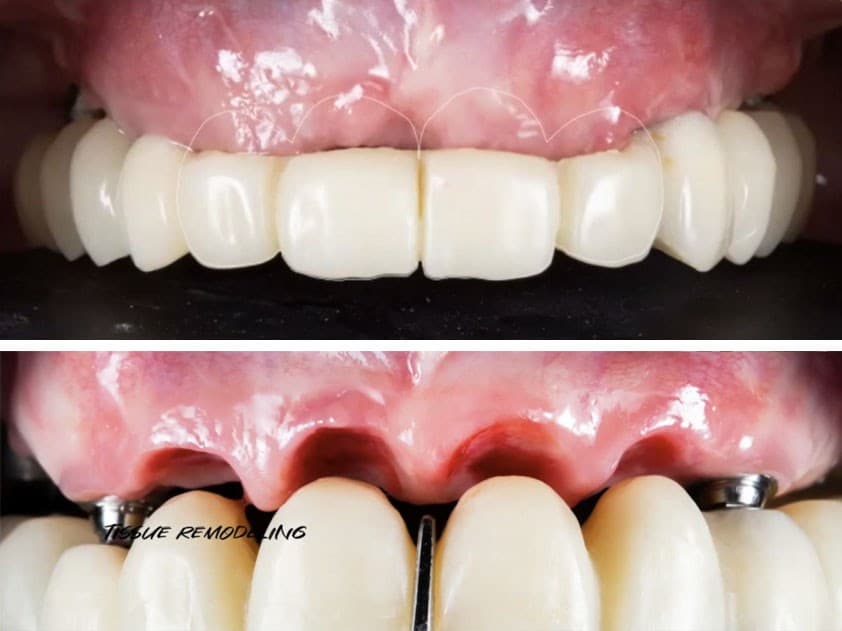
In this first of a two part presentation, Dr. Michael Sonick outlines the keys to successfully placing implants in the anterior region. This section emphasizes the need for precise treatment planning so that proper 3-dimensional implant positioning can be achieved. A detailed understanding of the mesial-distal, buccal-palatal and incisal-apical surgical positioning of dental implants will be explored.

Date Added:
11/13/2010

Author(s):

Michael Sonick, DMD Michael Sonick, DMD
Dr. Michael Sonick is a full time practicing periodontist and implant surgeon in Fairfield, Connecticut. He is also an active teacher, clinical researcher and author. ...
[read more]


Online Videos / Surgery / Implant / Keys to Successful Implants within the Esthetic Zone - Part 1 of 2


Questions & Comments
Mike Sonick - (5/11/2011 2:38 PM)

Simon
I agree with Dr Salama. The papilla sparing incision is one that I do not use very frequently for it leads to papilla compromise via a loss of blood supply as well as scaring as Maurice pointed out. The key for papilla is the bone. If you have the bone and the contact point is in the correct place you will have the papilla. Mike Sonick

Maurice Salama - (5/7/2011 1:47 PM)

Simon; Unsure about Dr. Sonick's response but I personally do not like the "papilla saving" incision. I feel it is over utilized and often restricts blood supply to the flap and forces the surgeon to graft and place the membrane over the incision line. It often causes scar formation which could be a negative in the esthetic zone. Dr. Salama

Simon Milbauer - (5/5/2011 10:19 AM)

Dr Sonick,why you do not recommend papilla saving incision?I have attended a course focusing on soft tissue management recently and the lecturer who was a periodontist was actually recommending this type of flap design.

Mike Sonick - (11/21/2010 8:30 PM)

Jeffrey,

This presentation focussed on the needed biologic concepts in order to idealize the placement of implants. I specifically utilized long term follow up in order to demonstrate long term follow up and to demonstrate the longevity of the results when biologic principles are followed.

Today - many of us are focused on the "new and improved". Fact is biology has not changed in the last 30 years. I learned from many of my teachers, Tarnow, Garber,Abrams, Kramer, and many others that as long as biologic prinicples are followed, success will usually occur.

Mike Sonick - (11/21/2010 8:26 PM)

Sam

I graft with Connective Tissue when i want to augment the soft tissue. In this presentation, my attempt was to try and use Guided Gingival Growth to enhance soft tissue without having to do a connective tissue graft.

Today, I frequently graft with bone e.g. BioOss and a membrane at the time of initial implant surgery in order to increase the volume buccally. This is called a contour graft and has been described by Danny Buser.

I hope that helps. Connective Tissue Grafting can be done at any of the following times:

1. prior to implant placement
2. At the time of implant placement
3. At the time of second stage surgery
4. Post second stage surgery

Personally, I prefer 3. at the time of second stage surgery if CTG is to be done.

Hope that helps.

Mike Sonick - (11/21/2010 8:26 PM)

Sam

I graft with Connective Tissue when i want to augment the soft tissue. In this presentation, my attempt was to try and use Guided Gingival Growth to enhance soft tissue without having to do a connective tissue graft.

Today, I frequently graft with bone e.g. BioOss and a membrane at the time of initial implant surgery in order to increase the volume buccally. This is called a contour graft and has been described by Danny Buser.

I hope that helps. Connective Tissue Grafting can be done at any of the following times:

1. prior to implant placement
2. At the time of implant placement
3. At the time of second stage surgery
4. Post second stage surgery

Personally, I prefer 3. at the time of second stage surgery if CTG is to be done.

Hope that helps.

Sam Busich - (11/21/2010 7:31 PM)

Dr. Salama;
I disagree, the images and cases did not appear to support some of the concepts offered. I have seen Dr. Sonick lecture and enjoy his videos on XP but the comments made were fair in this case.
Sam

Maurice Salama - (11/19/2010 9:22 PM)

Jeffrey; It appears to be a lecture aimed at concepts and perhaps not as much a review of current surgical techniques.

jeffrey puglese - (11/19/2010 9:13 PM)

HOW ABOUT GETTING SOME UP TO DATE SURGICAL CASES FOR THIS PRESENTATION

Related Videos
Keys to Successful Implants within the Esthetic Zone - Part 2 of 2 Premium Member Content

Keys to Successful Implants within the Esthetic Zone - Part 2 of 2
Dr. Michael Sonick outlines the keys to successfully placing implants in the anterior region.

Presented By: Michael Sonick, DMD
Presentation Style: Lecture
Community Rating:
 
Watch Now>>
New Concepts in Single Implants in the Esthetic Zone - Part 1 of 2 Premium Member Content

New Concepts in Single Implants in the Esthetic Zone - Part 1 of 2
Dr. Nigel Saynor describes the latest clinical perspectives in anterior esthetic implant therapy.

Presented By: Nigel Saynor, BDS, MDent, Sc
Presentation Style: Lecture
Community Rating:
 
Watch Now>>
Extraction and Immediate Implant of #8 Premium Member Content

Extraction and Immediate Implant of #8
Extraction & immediate implant replacement.

Presented By: Maurice Salama, DMD
Presentation Style: Video
Community Rating:
 
Watch Now>>
Parameters for Integration of Aesthetics and Function with Implant Therapy

Parameters for Integration of Aesthetics and Function with Implant Therapy
In this detailed lecture, Dr. Sergio Rubinstein takes a clinician’s view on what are the important factors that must be considered to successfully integrate implants into everyday practice.

Presented By: Sergio Rubinstein, DDS
Presentation Style: Lecture
Community Rating:
 
Watch Now>>
Related Courses
All-On-Four Implant Protocol - Fad or Phenomena Premium Member Content

All-On-Four Implant Protocol - Fad or Phenomena
This webinar with Dr. George Duello and Dr. Maurice Salma will discuss the various treatment options available today for this patient segment and emphasize when and where the All-On-Four protocol can be successfully utilized to eliminate the need for costly augmentation procedures and months of healing time.

Presented By: George V. Duello, DDS, MS
Presentation Style: Online Course
CE Hours: 1 CEU (Continuing Education Units)
Watch Now>>
Increase Surgical Implant and Regenerative Success by Going 3D and Using Innovative Products Premium Member Content

Increase Surgical Implant and Regenerative Success by Going 3D and Using Innovative Products
Detailed videos using 3D planning software as well as innovative products by a speaker with an extensive background in implant and regenerative surgical procedures.

Presented By: Maurice Salama, DMD
Presentation Style: Online Course
CE Hours: 1 CEU (Continuing Education Unit)
Watch Now>>
Implant Esthetic Premium Member Content

Implant Esthetic
Implants...Esthetics...Solutions

Presented By: Kenneth K. S. Lee, DDS;Sergio Rubinstein, DDS
Presentation Style: Online Course
CE Hours: 1 CEU (Continuing Education Unit)
Watch Now>>
Related Articles
CT-Derived Model-Based Surgery for Immediate Loading of Maxillary Anterior Implants

CT-Derived Model-Based Surgery for Immediate Loading of Maxillary Anterior Implants
A novel approach to predict implant placement utilizing CT-derived model-based surgery was performed for a maxillary-anterior aesthetic immediate extraction/immediate restoration; root proximity and inter-implant positioning was an additional complication. The use of state-of-the-art diagnostic and treatmentplanning tools described in this article has been shown to be effective for both partial and completely edentulous patient presentations. These tools can serve as a foundation for accurate, highly practical, and repeatable CT-scan–derived modelbased presurgical prosthetic planning for the immediate loading of dental implants.

Author(s): Scott D. Ganz, DMD
View Article>>
Periodontally Considerations of Dental Implantology

Periodontally Considerations of Dental Implantology
<p>The endosseous dental implant has steadily progressed to become an important modality of restoring incomplete dentitions in either fully or partially edentulous patients. Osseointegrated dental implants have demonstrated relatively high success rates in both the maxillary and the mandibular jaws. The American Academy of Implant Dentistry (AAID), the American Dental Association (ADA), and numerous other professional organizations have endorsed the placement of osseointegrated dental implants as…

Author(s): Lee H. Silverstein, DDS, MS, FACD, FICD;Jerry J. Garnick , David Kurtzman, DDS, Peter C. Shatz
View Article>>
Transitional Custom Abutments: Optimizing Esthetics in Implant Supported Restorations

Transitional Custom Abutments: Optimizing Esthetics in Implant Supported Restorations
As the discipline of implant prosthodontics continues to evolve, additional emphasis has been focused on the role of adequate emergence profiles and peri-implant soft tissue contours. Despite the development of anatomically shaped healing abutments, currently advocated techniques exhibit clinical limitations. This article introduces the transitional custom abutment technique as a method of manipulating the supraimplant soft tissue contours so that optimal emergence profiles and increased restorative flexibility…

Author(s): Ernesto A. Lee, DMD
View Article>>
Contact Us | Privacy Policy | Terms of Use
©2013

Preferred Language: English Flag
Contact Us · Login · Register