Video Details
|
Making Successful Clinical Decisions in Esthetic Implant Therapy - Part 1 of 3
Description:
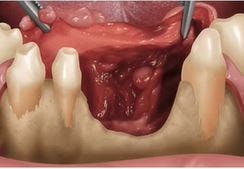
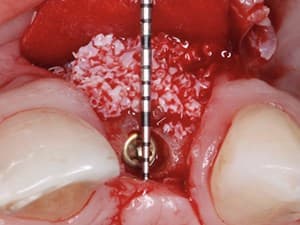
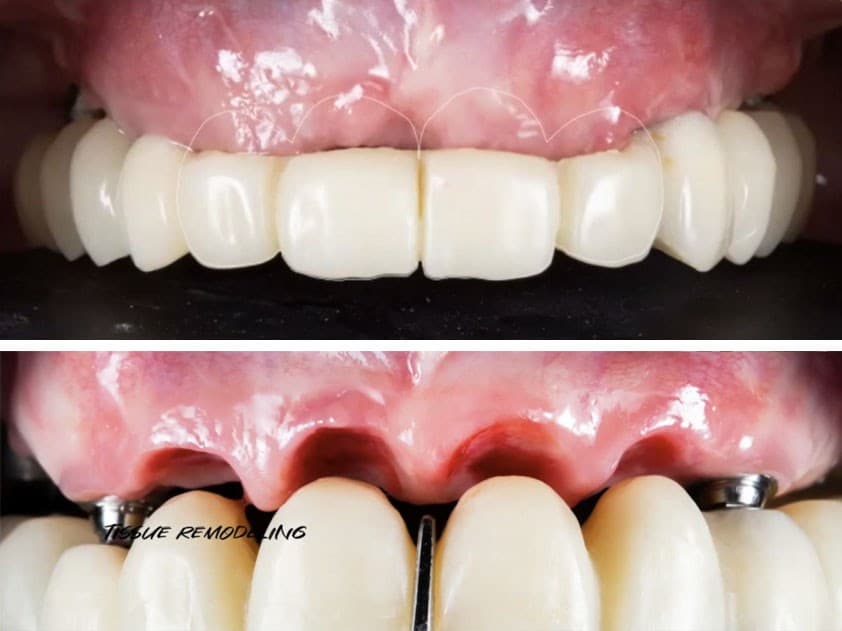
Implant supported restorations that blend in optimally with the natural dentition are now the standard that our patients demand and expect. Our ability to provide such a service predictably is dependent on our diagnostic ability as well as our therapeutic treatment design. The durability of our results, however, especially as they relate to soft-tissue esthetics, are often effected by the implant and abutment design. This presentation will outline a systematic diagnostic and treatment design protocol for anterior implant supported restorations as well as how implant design, components and regenerative techniques influence the process.
Date Added:
2/21/2011
Author(s):
Henry Salama, DMD
[ read more]
|
|
Online Videos / Surgery / Bone Grafting / Making Successful Clinical Decisions in Esthetic Implant Therapy - Part 1 of 3
|
Questions & Comments
|
DR.AYMAN SAKER960 - (1/8/2013 3:11 AM)
Thank you so much ... I just loved your presentation and happy new year :)
|
DR.AYMAN SAKER960 - (1/8/2013 3:11 AM)
Thank you so much ... I just loved your presentation and happy new year :)
|
mansour mirzaie - (10/5/2011 5:54 PM)
nice and helpful presentation.thank you for sharing.
|
henry salama - (10/5/2011 1:06 PM)
Thanks Sam, Look for it in the near future.
|
Sam Busich - (10/5/2011 10:01 AM)
Great lecture Dr. Salama. Would like to see something on your new views regarding Early & Immediate Loading as you were a pioneer in these technique. Has anything changed and how would you proceed today.
Thanks Sam
|
Juan Alberto Ruiz - (9/1/2011 5:25 PM)
you are doing a great work, we us users really apreciate it: thank u
|
Nohora Meza - (3/10/2011 2:50 PM)
Very good!!
|
henry salama - (2/27/2011 8:16 PM)
Simon - the suspected reason for the initial loss of bone around the lateral in question, as was stated in the lecture, is that it was normal biological width remodeling around an externally hexed implant as we've learned from research by Hermann and Cochran in the 1990's. That research showed bone remodeling that resulted in approximately 1.5 mm loss of bone from the microgap. The research and clinical evidence also suggests that this effect of Biological width remodeling is self limiting at that point and should not progress unless a new cause comes into play.
|
Simon Milbauer - (2/27/2011 5:41 PM)
great lecture and presentation Dr Salama.In the case of the lateral incisor decision has been made to augment soft tissue. Since the thickness of labial bone remained the same (it looked very thin~1mm?) will it not in time result in soft tissue recession again despite of gingival grafting?
|
|
|
Related Courses |
|
|
|
Creative Next Generation Surgical Tools and Solutions for the Implant Practice
Modern Bone Grafting has become more predictable than ever before. Recent developments in CBCT 3D Diagnosis and the utilization of bioactive modifiers such as PRGF, PRF and BMP-2 have stimulated further advances in surgical techniques as well as a New Age Surgical Armamentarium to maximize the efficiencies and success of these sophisticated procedures.
| Presented By: |
Maurice Salama, DMD |
| Presentation Style: |
Online Course |
| CE Hours: |
1 CEU (Continuing Education Unit) |
|
Watch Now>>
|
|
|
|
|
Gaining Horizontal and Vertical Bone with Mineralized Bone Particulate, rh-BMP2 and Resorbable Ultrasonic-Applied Rigid Barriers
The use of titanium mesh has been well described, but so has the complications of removal and exposure. Bioresorbable barriers are now available which can be molded into any desired three-dimensional form, creating a rigid and resorbable construct that is secured to to the bone using ultrasonic energy. This unique solution has been successfully used to create the proper environment for both large lateral and vertical ridge augmentations for situations previously only treated with block grafting or distraction. Dr. Cummings will share his experience as well as the key soft tissue techniques that are critical for the success of any large augmentation.
| Presented By: |
Lewis C. Cummings, DDS, MS |
| Presentation Style: |
Online Course |
| CE Hours: |
1 CEU (Continuing Education Unit) |
|
Watch Now>>
|
|
|
|
Related Articles |
|
|
|
Use of Bone Grafts for the Enhancement of a GTR-Based Root Coverage Procedure: A Pilot Case Study
The use of guided tissue regeneration (GTR) procedures for the treatment of gingival recession has shown encouraging results and is gaining clinical acceptance. However, attaining space maintenance beneath the membrane remains a problem for clinicians. Hence, the purpose of this pilot case study was to evaluate the effect of adjunctive demineralized freeze-dried bone allograft (DFDBA) placement during collagen membrane GTR-based root coverage procedures. Five patients with Miller Class I or II defects…
| Author(s): |
Hom-Lay Wang, DDS, MSD, PhD;Kenneth Kimble, DDS, MS, Robert Eber, DDS, MS |
|
View Article>>
|
|
|
|
|
Alloplastic Bone Substitutes Around Dental Implants
The repair of osseous defects has been a goal in dentistry for many decades. Subsequently, within the last several years, there has been an emergence of a new class of materials in dentistry referred to as synthetic bone. Finding the ideal bone substitute material has been the goal of researchers for many years. In attempting to achieve this ideal material, dental practitioners have tried with varying degrees of success: autogenous and demineralized freeze-dried bone, allografts of plastic, carbon…
| Author(s): |
Lee H. Silverstein, DDS, MS, FACD, FICD;Lee M. Whitesides, DMD, MMSC |
|
View Article>>
|
|
|
|
|