Video Details
|
Making Successful Clinical Decisions in Esthetic Implant Therapy - Part 2 of 3
Description:
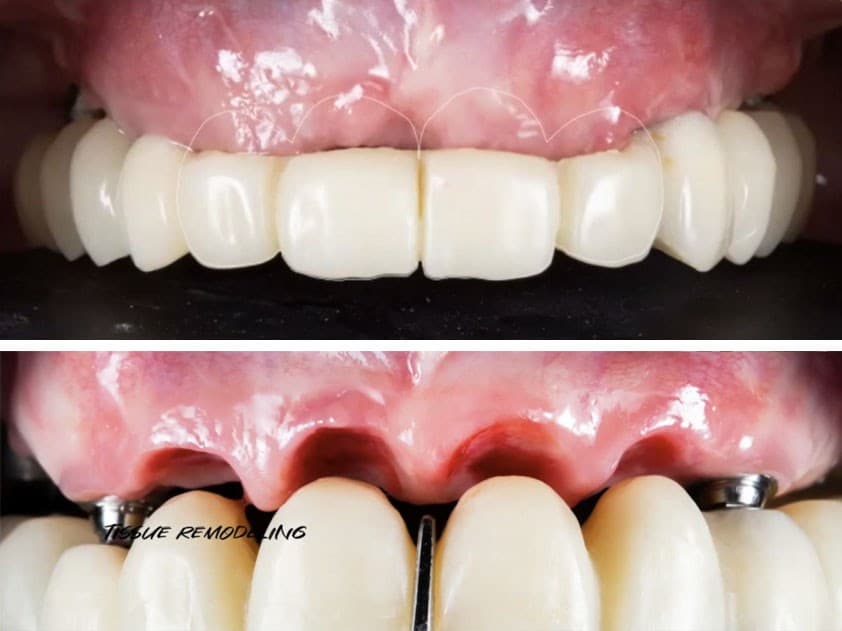
Implant supported restorations that blend in optimally with the natural dentition are now the standard that our patients demand and expect. Our ability to provide such a service predictably is dependent on our diagnostic ability as well as our therapeutic treatment design. The durability of our results, however, especially as they relate to soft-tissue esthetics, are often effected by the implant and abutment design. This presentation will outline a systematic diagnostic and treatment design protocol for anterior implant supported restorations as well as how implant design, components and regenerative techniques influence the process.
Date Added:
2/24/2011
Author(s):
Henry Salama, DMD
[ read more]
|
|
Online Videos / Surgery / Bone Grafting / Making Successful Clinical Decisions in Esthetic Implant Therapy - Part 2 of 3
|
Questions & Comments
|
Shane Claiborne - (3/7/2012 11:28 AM)
Dr. Salamma, Are you just popping open capsules of tetracylcine or buying it in powder form?
Dr. Claiborne
|
henry salama - (3/6/2011 8:15 PM)
Dr. Yip: The antibiotic is Achromycin (tetracycline) mixed into a paste type consistency (water based) and used primarily as a sealer with a very retentive temporary. At 1 week, after a soft tissue seal is achieved, the temp is removed, cleaned and carefully cemented with Tempbond. Good luck.
|
Chi Cheong Yip - (3/5/2011 12:41 AM)
Dr. Salama, Can I know more about the antibiotic cement that you use for temporization for the immediate placement of the Type I case presented? Thank is a very interesting because of our concern of excess cement issue. TQ. rgds, Dr. Yip (Malaysia)
|
Related Videos |
|
|
|
|
Managing the Extraction Site - Optimal Preservation and Enhancement Techniques
There is rarely a day that clinicians do not have to deal with an extraction site. If implant therapy is a consideration, then bone and soft tissue quantity and quality must be factored into treatment options. The ideal opportunity for bone preservation exists at the time of tooth extraction. All too often this opportunity is lost. Extraction techniques will be demonstrated that not only preserve but augment the amount of alveolar bone. The importance of piezosurgery, atraumatic surgical technique, the use of bone grafts, resorbable membranes and growth factors will be elucidated along with soft tissue enhancement.
| Presented By: |
Michael Sonick, DMD |
| Presentation Style: |
Video |
| Community Rating: |
|
|
Watch Now>>
|
|
|
|
|
|
Related Courses |
|
|
|
Gaining Horizontal and Vertical Bone with Mineralized Bone Particulate, rh-BMP2 and Resorbable Ultrasonic-Applied Rigid Barriers
The use of titanium mesh has been well described, but so has the complications of removal and exposure. Bioresorbable barriers are now available which can be molded into any desired three-dimensional form, creating a rigid and resorbable construct that is secured to to the bone using ultrasonic energy. This unique solution has been successfully used to create the proper environment for both large lateral and vertical ridge augmentations for situations previously only treated with block grafting or distraction. Dr. Cummings will share his experience as well as the key soft tissue techniques that are critical for the success of any large augmentation.
| Presented By: |
Lewis C. Cummings, DDS, MS |
| Presentation Style: |
Online Course |
| CE Hours: |
1 CEU (Continuing Education Unit) |
|
Watch Now>>
|
|
|
|
|
Osseointegration & Augmentation
A 4 part course worth 1 CEU.
| Presented By: |
Maurice Salama, DMD;Ziv Mazor, DMD;Hom-Lay Wang, DDS, MSD, PhD;Ady Palti, DDS |
| Presentation Style: |
Online Course |
| CE Hours: |
1 CEU (Continuing Education Unit) |
|
Watch Now>>
|
|
|
|
Related Articles |
|
|
|
|
Mandibular Block Autografts for Alveolar Ridge Augmentation
This article reviews indications, limitations, presurgical evaluation, surgical protocol, and complications associated with mandibular block autografts harvested from the symphysis and ramus buccal shelf for alveolar ridge augmentation. The author draws from 14 years of experience with more than 500 mandibular block autografts.
|
|
|
|