Video Details
|
Making Successful Clinical Decisions in Esthetic Implant Therapy - Part 3 of 3
Description:
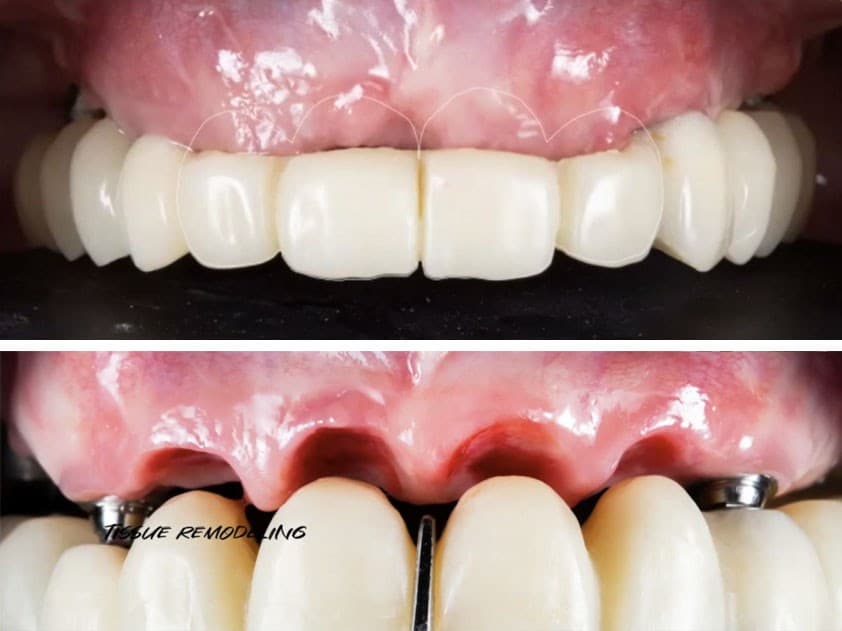
Implant supported restorations that blend in optimally with the natural dentition are now the standard that our patients demand and expect. Our ability to provide such a service predictably is dependent on our diagnostic ability as well as our therapeutic treatment design. The durability of our results, however, especially as they relate to soft-tissue esthetics, are often effected by the implant and abutment design. This presentation will outline a systematic diagnostic and treatment design protocol for anterior implant supported restorations as well as how implant design, components and regenerative techniques influence the process.
Date Added:
2/20/2011
Author(s):
Henry Salama, DMD
[ read more]
|
|
Online Videos / Surgery / Bone Grafting / Making Successful Clinical Decisions in Esthetic Implant Therapy - Part 3 of 3
|
Questions & Comments
|
DR.AYMAN SAKER960 - (1/8/2013 3:11 AM)
Thank you so much ... I just loved your presentation and happy new year :)
|
Maurice Salama - (9/14/2012 11:39 AM)
Excellent lecture series here by my brother Dr. Henry Salama on Decision Making and Tx in Esthetic Implant Dentistry. Is well worth the time.
|
henry salama - (12/21/2011 12:59 PM)
Hi Ronald, a 3.5 Ankylos would do well in these circumstance, especially because of the platform switch type of feature which effectively increases the distance between the adjacent teeth and the implant/abutment junction. A 3.0 one-piece Zimmer TSV would also work well because there would be no implant/abutment junction. Either way, however, the most important factor in these cases is the accuracy of the implant placement because there is no margin for error. Therefore, a CBCT guided implant protocol with a surgical guide etc. is highly useful.
|
ronald shoha85 - (12/20/2011 10:18 PM)
I have a case with two congenitally missing laterals.There is only 4.5 mm of space between the cuspids and the centrals. Do you feel an Ankylos (3.5mm) are too wide to place here? Dr Ron Shoha rshoha@gmail.com
|
Paul Kozy DDS - (2/27/2011 2:16 PM)
Very nice presentation, Henry. The best as always.
|
Related Courses |
|
|
Alveolar Ridge Regenerative Strategies: Autogenous Bone vs BMP-2
This clinical based presentation will compare the use of autogenous bone vs BMP-2 for alveolar ridge reconstruction. The science, indications, advantages and disadvantages of each approach will be featured. Single tooth to full arch reconstruction cases will also be shown along with understanding the application of non-resorbable vs resorbable mesh barriers for alveolar ridge reconstruction.
| Presented By: |
Michael A Pikos, DDS |
| Presentation Style: |
Online Course |
| CE Hours: |
1 CEU (Continuing Education Unit) |
|
Watch Now>>
|
|
|
|
|
|
Related Articles |
|
|
|
|
Minimally Invasive Alveolar Ridge Augmentation Procedure (Tunneling Technique) Using rhPDGF-BB in Combination with Three Matrices: A Case Series
This study investigated a minimally invasive surgical procedure for alveolar ridge augmentation that combined recombinant human platelet-derived growth factor BB (rhPDGF-BB) and three different matrices.
| Author(s): |
Myron Nevins, DDS;Marc L. Nevins, DMD, MMSc; Marcelo Camelo, DDS; Peter Schupbach, PhD; Bernard Friedland, BChD, MSc, JD; Joao Marcelo Borges Camelo, DDS; David M. Kim, DDS, DMSc |
|
View Article>>
|
|
|
|
|