Video Details
|
Management of Congenitally Missing Teeth - Where are we Now?
Description:
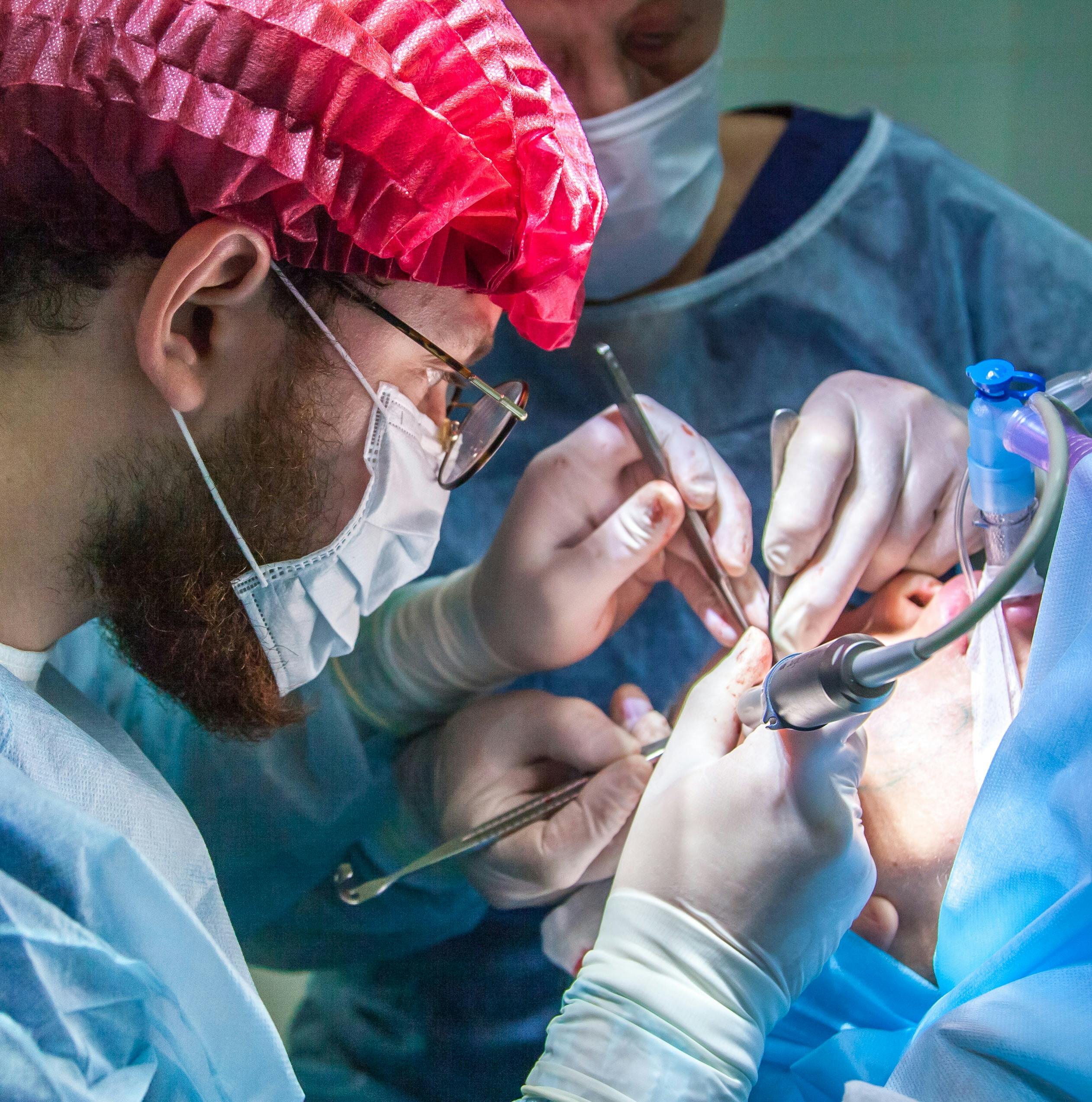
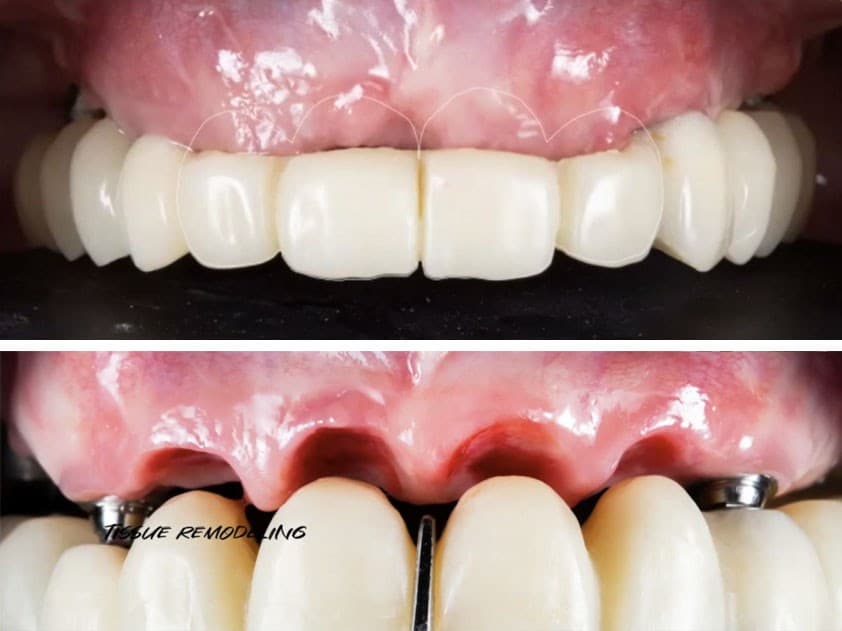
In this presentation, discussed will be the diagnosis and treatment planning for the utilization of small diameter implants as well as techniques utilized to enhance the soft tissue profile. In addition, the use of orthodontics in achieving the appropriate space will also be demonstrated. Implant dentistry continues to impact the quality of care for patients with missing teeth. However, clinical situations with limited or reduced horizontal space continue to be a challenge. In cases of congenitally missing maxillary laterals or mandibular incisors, the situation can be severe. With the ability of small diameter implants less than 3.5 mm, such as Astra OsseoSpeed 3.0 implant, the narrow sites can be readily managed and aesthetic outcomes can be successfully achieved.
Date Added:
12/6/2011
Author(s):
Richard Martin, DDS
Dr. Richard Martin is an Oral and Maxillofacial Surgeon in Lewisville-North Dallas, Texas. He is a graduate of New York University College of Dentistry where he was elected O...
[read more]
|
|
Online Videos / Surgery / Implant / Management of Congenitally Missing Teeth - Where are we Now?
|
Questions & Comments
|
richard martin - (1/20/2012 7:14 PM)
Benjamin,
Completion of growth can be evaluated by several radio graphic methods. Implant placement and soft tissue management has shown to predictable in late teens. Maintenance of soft tissue profile is paramount at the time of surgery. Most of today's implant designs have some form of platform switch in an attempt to maintain bone and tissue- two piece implants utilizing zirconia or gold hue CAD designed abutments allows the ability to change out and adjust margins if needed.
|
Benjamin Lo - (12/10/2011 10:04 PM)
For placing dental implants on tooth #7 & 10 in case one the adolescent patient I presume, do you consider the vertical discrepancy esthetic problem between dental implants and natural dentition in future ? Especially if the patient were a high smile line one, the dental implant crown margin won't be very nice to look.
|
Related Courses |
|
|
All-On-Four Protocol - The Technique and Reality
Dr. Duello will focus on the specific clinical technique of the All On Four procedure. The webinar will introduce the indications, clinical exams, and pre-surgical preparations for All On Four.
| Presented By: |
George V. Duello, DDS, MS |
| Presentation Style: |
Online Course |
| CE Hours: |
1 CEU (Continuing Education Unit) |
|
Watch Now>>
|
|
|
|
|
|
Alveolar Ridge Regenerative Strategies: Autogenous Bone vs BMP-2
This clinical based presentation will compare the use of autogenous bone vs BMP-2 for alveolar ridge reconstruction. The science, indications, advantages and disadvantages of each approach will be featured. Single tooth to full arch reconstruction cases will also be shown along with understanding the application of non-resorbable vs resorbable mesh barriers for alveolar ridge reconstruction.
| Presented By: |
Michael A Pikos, DDS |
| Presentation Style: |
Online Course |
| CE Hours: |
1 CEU (Continuing Education Unit) |
|
Watch Now>>
|
|
|
|
Related Articles |
|
|
Implant Site Preparation with Motorized Bone Expanders
The osteotome technique has been utilized for many years as a viable approach to expand atrophic ridges. Despite its effectiveness, the mechanical impact from the surgical mallet is not well tolerated by patients. Additionally, reports in the literature describe postoperative complications that include concussions and benign paroxysmal vertigo. These conditions can be alarming for the patient and clinician, as their effects may persist for several weeks. A new technique for atraumatic ridge expansion…
|
|
|
|
Failure Causes,Timing, and Cluster Behavior:An 8-Year Study of Dental Implants
An implant-supported restoration offers a predictable treatment for tooth replacement. 1–3 Success rates for implants are high. Never the-less,failures that mandate implant removal do occur.This lengthens and complicates the treatment process, 3–7 as well as jeopardize the clinician’s efforts to accomplish satisfactory function and esthetics. For the patient,this usually involves further cost and additional procedures.
| Author(s): |
Devorah Schwartz-Arad, DMD, PhD;Amir Laviv,DMD,and Liran Levin,DMD |
|
View Article>>
|
|
|
|
|
Prosthetic Management of Implants with Different Osseous Levels
The osseointegrated implant has become a standard treatment with a high degree of predictability for patients missing one or more teeth. It is especially recommended when the patient has a clear medical history and normal bone levels in both width and height in the edentulous areas. In constant search for improvement, clinicians find themselves looking into every element relating to the replacement of a missing tooth or teeth: existing bone structure, surgical technique, implant placement, implant…
| Author(s): |
Sergio Rubinstein, DDS;Alan J. Nidetz, DDS, Leslie B. Heffez, DMD, MS, Fujiki Toshi, RDT, Fujiki Toshi, RDT |
|
View Article>>
|
|
|
|
|