Video Details
|
Managing Complications in Immediate Implant Therapy - Part 3 of 3
Description:
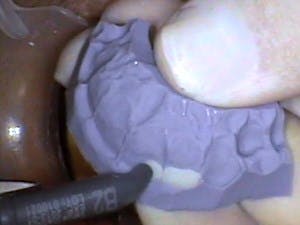
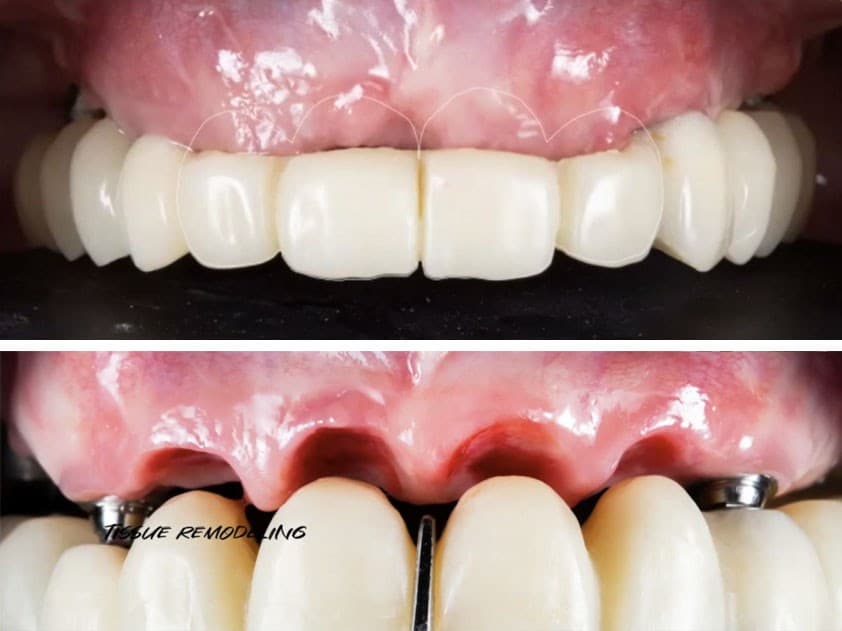
Immediate implant placement in fresh extraction sockets offers several advantages which include patient comfort, ridge preservation as well as decreased treatment time. Prior to undertaking this therapeutic path, however, clinicians must consider several critical factors that become apparent in a thorough diagnostic protocol. These include socket morphology, apical pathology, deficiencies in the labial plate of bone if applicable as well as biotype. This presentation will highlight the potential complications that can occur during immediate implant placement as well as their clinical management.
Date Added:
8/27/2012
Author(s):
Abdelsalam Elaskary, BDS
Dr. Abdelsalam Elaskary is currently maintaining a private practice limited to periodontics, dental implants and oral reconstruction in Alexandria, Egypt. Dr. Elaskary...
[read more]
|
|
Online Videos / Surgery / Bone Grafting / Managing Complications in Immediate Implant Therapy - Part 3 of 3
|
Questions & Comments
|
soulafah belal - (11/20/2012 1:45 PM)
Thanks dr/Abdelsalam for your great presentation but i just have a question about the C.T graft you had used for tissue augmentation, i noticed that you didn't fix it by suturing or by any other mean which is important for its healing & viability & you just put it over the block graft or the collagen membrane, also how the blood supply takes happened for ensuring the graft viability?
|
abdelsalam elaskary - (9/23/2012 7:54 AM)
thanks to all for the nice comments
|
Muhammad Saleh - (9/1/2012 4:04 AM)
Very inspiring, Thank you alot.
|
Maurice Salama - (8/31/2012 9:15 AM)
Failures happen. How to avoid is most important and how to recover from failure is most urgent.
Thanks for your insights.
Maurice
|
Danny O'Keefe - (8/30/2012 1:30 PM)
Thanks good presentation. Love the statement , you learn more from failures and don't be afraid of failure, but tell patient B4 about possibilities.
|
Related Videos |
|
|
|
|
|
Alveolar Ridge Regenerative Strategies: Autogenous Bone vs BMP-2
This clinical based presentation will compare the use of autogenous bone vs BMP-2 for alveolar ridge reconstruction. The science, indications, advantages and disadvantages of each approach will be featured. Single tooth to full arch reconstruction cases will also be shown along with understanding the application of non-resorbable vs resorbable mesh barriers for alveolar ridge reconstruction.
| Presented By: |
Michael A Pikos, DDS |
| Presentation Style: |
Video |
| Community Rating: |
|
|
Watch Now>>
|
|
|
|
|
Related Courses |
|
|
Gaining Horizontal and Vertical Bone with Mineralized Bone Particulate, rh-BMP2 and Resorbable Ultrasonic-Applied Rigid Barriers
The use of titanium mesh has been well described, but so has the complications of removal and exposure. Bioresorbable barriers are now available which can be molded into any desired three-dimensional form, creating a rigid and resorbable construct that is secured to to the bone using ultrasonic energy. This unique solution has been successfully used to create the proper environment for both large lateral and vertical ridge augmentations for situations previously only treated with block grafting or distraction. Dr. Cummings will share his experience as well as the key soft tissue techniques that are critical for the success of any large augmentation.
| Presented By: |
Lewis C. Cummings, DDS, MS |
| Presentation Style: |
Online Course |
| CE Hours: |
1 CEU (Continuing Education Unit) |
|
Watch Now>>
|
|
|
|
|
|
Titanium Mesh and rhBMP-2 in Ridge Augmentation: Options and Limitations
There are several advantages to using titanium mesh for space maintenance including strength, ease of use, low cost and biocompatibility. This webinar will discuss the use of rhBMP-2 for managing horizontal and vertical bone deficiencies with various scaffolds.
| Presented By: |
Craig M Misch, DDS, MDS |
| Presentation Style: |
Online Course |
| CE Hours: |
1 CEU (Continuing Education Unit) |
|
Watch Now>>
|
|
|
|
Related Articles |
|
|
Socket Augmentation: Rationale and Technique
This article presents the rationale behind socket augmentation for future implant placement and describes a technique that has shown to not only facilitate tooth extraction with minimal damage to the surrounding anatomic structures, but also to improve alveolar bone quality and quantity.
| Author(s): |
Hom-Lay Wang, DDS, MSD, PhD;Koichi Kiyonobu, DDS, PhD; Rodrigo F. Neiva, DDS |
|
View Article>>
|
|
|
|
|
Intraoral Autogenous Block Onlay Bone Grafting for ExtensiveReconstruction of Atrophic Maxillary Alveolar Ridges
Autologous bone grafting used with dental implants was originally described by Bränemarketal in 1975, and is now a well-accepted procedure in oral and maxillofacial rehabilitation.Placement of an endosseous implant requires sufficient bone volume for complete bone coverage. Furthermore, the pattern of ridge resorption contributes to an unfavorable maxillomandibular relationship, requires angulations of the implants and/or angled abutments, and affects the proximity of adjacent facial concavities(maxillary sinus, nasal cavity) and vital structures(mandibular nerve).
|
|
|
|
Alloplastic Bone Substitutes Around Dental Implants
The repair of osseous defects has been a goal in dentistry for many decades. Subsequently, within the last several years, there has been an emergence of a new class of materials in dentistry referred to as synthetic bone. Finding the ideal bone substitute material has been the goal of researchers for many years. In attempting to achieve this ideal material, dental practitioners have tried with varying degrees of success: autogenous and demineralized freeze-dried bone, allografts of plastic, carbon…
| Author(s): |
Lee H. Silverstein, DDS, MS, FACD, FICD;Lee M. Whitesides, DMD, MMSC |
|
View Article>>
|
|
|
|
|