Dental Education
Online Dental Education Dental education lectures and videos Online dental ce Dental education articles Expert dental educators Dental products education Dental Community
 
Video Details
One Abutment/One Time - An Evolving Protocol in Implant Therapy

Description:
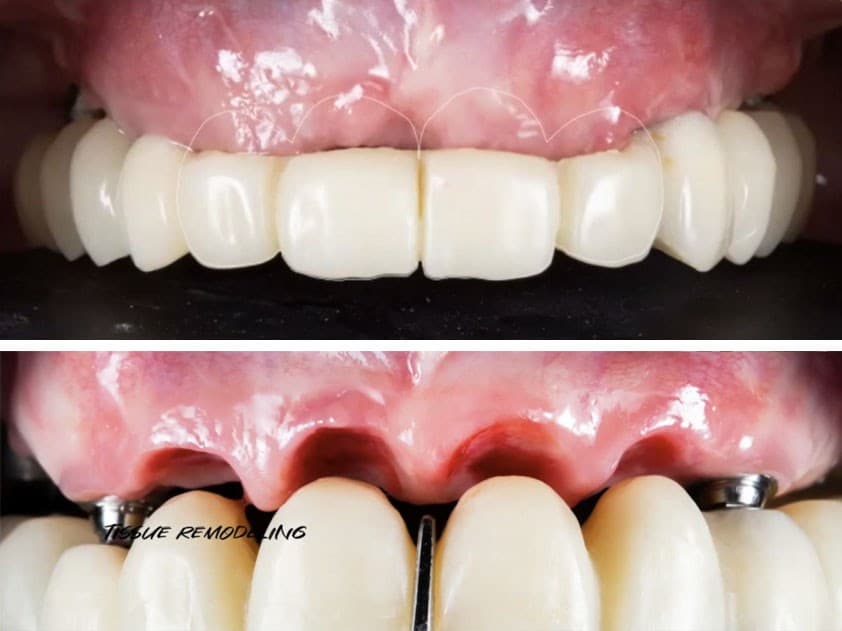
Dr. Henry Salama presents a detailed and well documented clinical protocol, One Abutment/One Time, that calls for the placement of the final abutment on the day of implant placement and never removing it again. Dr. Salama makes the case that by not removing and replacing components, there is less chance of traumatizing the stability and position of the peri-implant soft tissue.

Date Added:
5/22/2011

Author(s):

Henry Salama, DMD Henry Salama, DMD
[read more]


Online Videos / Surgery / Implant / One Abutment/One Time - An Evolving Protocol in Implant Therapy


Questions & Comments
Theron Manson - (3/11/2013 4:34 PM)

Informative thanks.

apurba das - (3/8/2013 9:23 PM)

very good & much usefull in daily practice.

henry salama - (1/3/2013 1:41 PM)

Hi Eiji! The benefits of bone level implants is mostly seen in the Esthetic Zone where thin tissue and slight changes in in tissue height may create an esthetic failure that is difficult to correct. Since I believe a bone level implant is more versatile in the Esthetic Zone, I try to choose an implant design that has a rigid connection and a lesser chance of exhibiting the remodeling often seen around non-rigid microgaps.

eiji ichimaru - (1/1/2013 10:18 AM)

thanks for your excellent lecture.
if we can place an implnat exactly in the same position as we planned before the surgery with CT and guide surgery like this, tissue level implant is better than the bone level implant with platform switch, i think. although i know anlylosis imlant is bone level implant with little microgap, tissue level implant has no microgap. is there more merit in the bone level implnat than in the bone level implant?

Gabriel Schugurensky - (11/21/2012 5:20 PM)

Nice and Sleazy!! Cheers!!!

Madhan Govindaswamy - (11/6/2012 10:58 PM)

good can very much be incorporated in daily practice. thank you

amir shirani - (6/8/2012 9:09 AM)

dear dr.salama ,thank you for nice lecture.

ABDELRAHMAN ELDABE - (4/14/2012 7:08 AM)

good

henry salama - (3/28/2012 8:25 AM)

The most straight forward and accurate method is to send your virtual plan to a company, such as Materialize, that will fabricate a stereolithic model designed to accept an implant analog at exactly the same position as you placed the implant on your virtual plan on the computer. You then place the analog, fixate it, mount to apposing model and utilize it to fabricate your final abutment prior to surgery. A second method is that you use the surgical stent to prepare a model and place your analog, but that is less precise. Good luck.

Related Videos
A Case of Missing Lateral Incisors Part 1

A Case of Missing Lateral Incisors Part 1
Garber & Salama treat a patient missing #7 & #10.

Presented By: Maurice Salama, DMD;Maurice Salama, DMD & David Garber, DMD
Presentation Style: Video
Community Rating:
 
Watch Now>>
Immediate Anterior Implant Therapy: Comprehensive Esthetic Management Premium Member Content

Immediate Anterior Implant Therapy: Comprehensive Esthetic Management
In this lecture, we are going to discuss all the parameters to achieve the correct diagnosis of the socket and the various treatment plan correlated to each type of socket. The bone zone and the tissue zone will be evaluated and discussed in detail, regarding each of their variables.

Presented By: Alessandro Agnini, DMD;Andrea Mastrorosa Agnini, DDS
Presentation Style: Lecture
Community Rating:
 
Watch Now>>
Titanium Mesh GBR in Anterior Implant Therapy - Stage 2 Mesh removal and soft tissue grafting - Part 2 of 2 Premium Member Content

Titanium Mesh GBR in Anterior Implant Therapy - Stage 2 Mesh removal and soft tissue grafting - Part 2 of 2
In this follow-up technique surgical video, Dr. Tomohiro Ishikawa demonstrates stage 2 uncovering of a previously placed titanium mesh and implant as part of guided bone regeneration (GBR)

Presented By: Tomohiro Ishikawa, DDS
Presentation Style: Video
Community Rating:
 
Watch Now>>
Related Courses
Tissue Engineering and Platelet Derived Growth Factors: Evidence Based Therapy Premium Member Content

Tissue Engineering and Platelet Derived Growth Factors: Evidence Based Therapy
Platelet derived growth factors are now routinely utilized in reconstructive therapy. This presentation describes very detailed and evidence based guidelines for clinicians interested in enhancing their abilities in tissue engineering, especially as it relates to bone augmentation. Specifically, while successful bone augmentation requires the standard surgical parameters of space maintenance, low pressure on the grafts and tension-free flap closure, optimization of this goal requires management and enhancement of the local biological conditions with growth factors. Towards that end, platelet concentrates through the constant release of growth factors are able to promote and enhance new vascularization, provide plasma protein, normal lipidemia, as well as increased collagen and fibrin activity.

Presented By: Joseph Choukroun, MD
Presentation Style: Online Course
CE Hours: 1 CEU (Continuing Education Unit)
Watch Now>>
Why CBCT Guided Implant Surgery & Treatment Planning for Your Patients: A Restorative Roadmap to Success Premium Member Content

Why CBCT Guided Implant Surgery & Treatment Planning for Your Patients: A Restorative Roadmap to Success
This presentation will discuss the advantages of using cbct, accuracy of guided surgery, and advantages of guided implant surgery to help achieve a predictable result for a patient driven treatment.

Presented By: Christopher B. Marchack, DDS
Presentation Style: Online Course
CE Hours: 1 CEU (Continuing Education Unit)
Watch Now>>
Optimizing Tissue Esthetics of Single Tooth Implants Premium Member Content

Optimizing Tissue Esthetics of Single Tooth Implants
With optimized planning, precise placement of the fixture, and the use of laser technology to reduce tissue trauma we can minimize the bone and tissue changes during the surgical phase. During the restorative phase creation of proper tissue contours using the CO2 laser and control of tooth form to position tissue set the stage for obtaining optimal esthetic results.

Presented By: Lee Ann Brady, DMD
Presentation Style: Online Course
CE Hours: 1 CEU (Continuing Education Unit)
Watch Now>>
Related Articles
Sinus Floor Augmentation With Simultaneous Implant Placement Using Choukroun’s Platelet-Rich Fibrin as the Sole Grafting Material: A Radiologic and Histologic Study at 6 Months

Sinus Floor Augmentation With Simultaneous Implant Placement Using Choukroun’s Platelet-Rich Fibrin as the Sole Grafting Material: A Radiologic and Histologic Study at 6 Months
Sinus augmentation with simultaneous implant placement without bone graft material is a hotly debated technique. This technique could be improved and secured by the use of an autologous leukocyte-and platelet-rich fibrin (PRF) (Choukroun’s technique) concentrate. The objectives of this study were to assess the relevance of PRF clots and membranes as the sole filling material during a lateral sinus lift with immediate implantation using radiologic and histologic analyses in a case series.

Author(s): Ziv Mazor, DMD;Robert A. Horowitz, DDS;Marco Del Corso, Hari S. Prasad, Michael D. Rohrer and David M. Dohan Ehrenfest
View Article>>
Utilising a restorative approach to correct an adult skeletal class III malocclusion

Utilising a restorative approach to correct an adult skeletal class III malocclusion
Gerard J. Lemongello discusses all the steps taken to correct the malocclusion.

Author(s): Gerard Lemongello, DDS
View Article>>
Vertical Distance from the Crest of Bone to the Height of the Interproximal Papilla Between Adjacent Implants

Vertical Distance from the Crest of Bone to the Height of the Interproximal Papilla Between Adjacent Implants
As patient demand increases for more natural restorations in the esthetic zone, clinicians must have the highest level of skill and knowledge to maintain or reform the interdental papilla between teeth, between implants and teeth, and between adjacent implants. To date, there are no reports that have measured the distance from the contact point to the bony crest between implants. One reason for this may be the fact that, with two adjacent implants, the contact point of the crown can be established at any distance from the gingival margin according to the restorative dentist's specifications. Therefore, in this study, the height of the soft tissue to the crest of bone was measured between two adjacent implants independent of the location of the contact point. The purpose of this study was to determine the range and average height of tissue between two adjacent implants.

Author(s): David Garber, DMD;Maurice Salama, DMD;Henry Salama, DMD;Dennis P. Tarnow, DDS;Dr. Paul Fletcher, Dr. Stuart Froum, Dr. Ann Magner, Dr. Sang-Choon Cho
View Article>>
Contact Us | Privacy Policy | Terms of Use
©2013

Preferred Language: English Flag
Contact Us · Login · Register