Video Details
|
Osteotome Technique & Piezosurgery Utilized for Internal Sinus Lift with PRGF Protocol
Description:
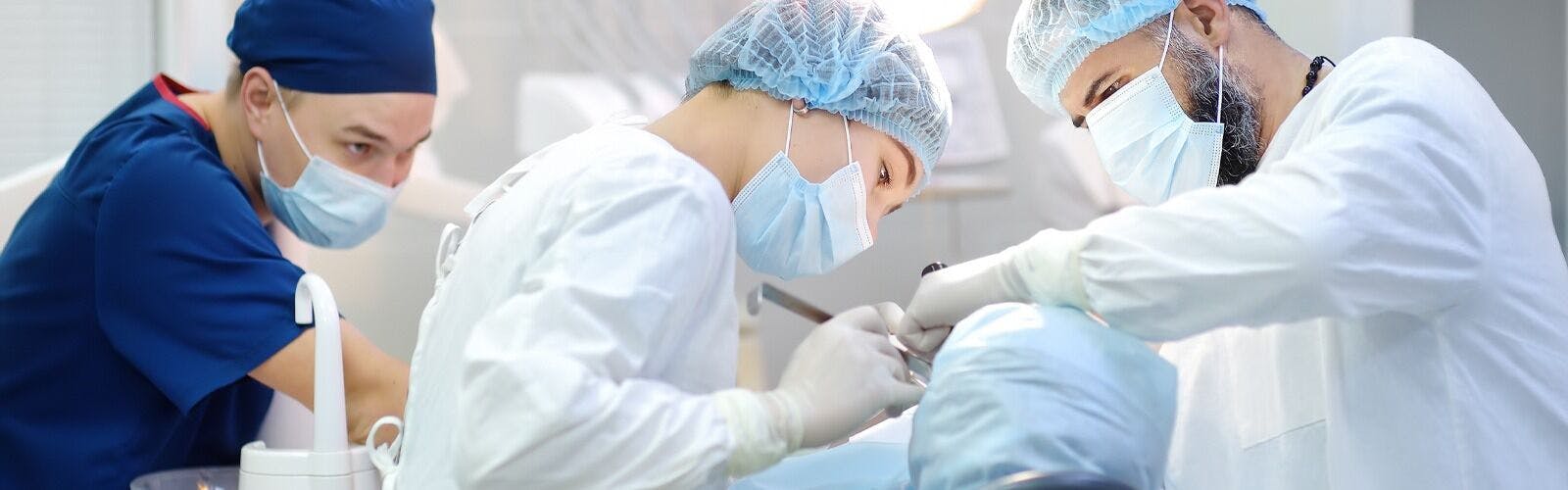
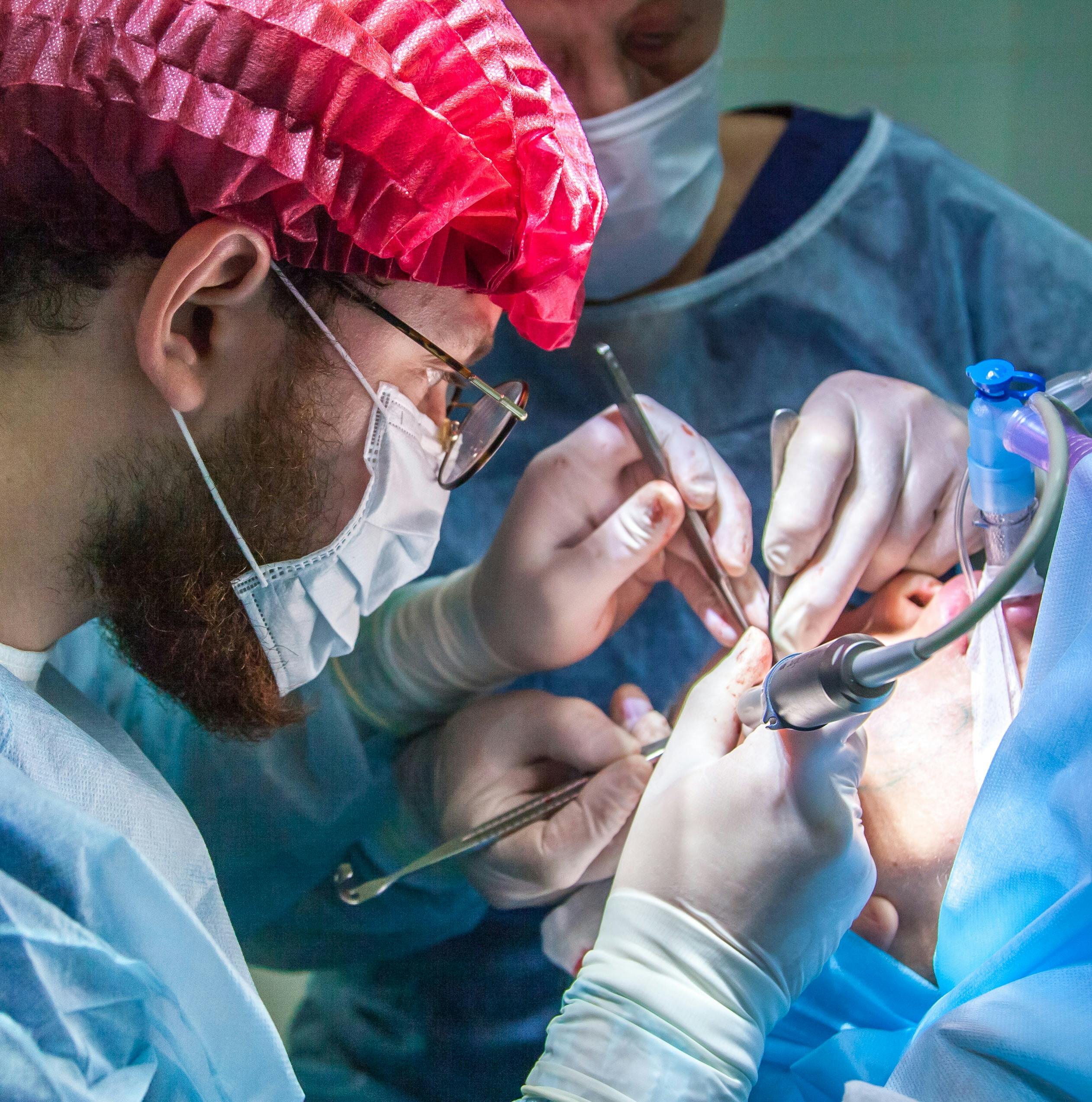
In this video, Dr. Salama highlights multiple regenerative tools and protocols in the posterior maxilla. Internal sinus lift utilizing a combined osteotome technique and PRGF is featured first prior to implant insertion and followed by bone grafting of the thin labial plate using PRGF, fibrin, and 50:50 mixture of mineralized irradiated allograft bone, Miner-Oss and xenograft. Hydraulic effects of Fibrin and PRGF for sinus lift are also featured along with autologous fibrin membrane utilization to protect buccal bone augmentation.
Date Added:
6/5/2009
Author(s):
Maurice Salama, DMD
Dr. Maurice A. Salama completed his undergraduate studies at the State University
of New York at Binghamton in 1985, where he received his BS in Biology. Dr. Salama
r...
[read more]
|
|
Online Videos / Surgery / Sinus Lift / Osteotome Technique & Piezosurgery Utilized for Internal Sinus Lift with PRGF Protocol
|
Questions & Comments
|
Maurice Salama - (9/1/2010 5:28 AM)
Michael; I also use the NSK unit and it is very good. The tips to use with their system would be the ST-2 and ST-4 but they do not seem to have a osteotomy tip as of yet.
good luck
Dr. Salama
|
Michael McClure - (8/31/2010 6:06 PM)
Dr. Salama, Is it possible to use the piezosurgery tips with an NSK piezosurgery unit. Thanks
|
Maurice Salama - (8/30/2010 12:12 PM)
Michael; I utilized the "osteotome" tip provided by Piezosurgery and then went to the OT-4 once I make contact with the sinus floor. Hope that helps. Dr. Salama
|
Michael McClure - (8/26/2010 10:58 AM)
Dr Salama, Which piezo tip did you use for the lift? Thanks for a great presentation.
|
Michael McClure - (8/26/2010 10:58 AM)
Dr Salama, Which piezo tip did you use for the lift? Thanks for a great presentation.
|
- (7/8/2010 8:29 AM)
Dear Dr, Bartakke Your message has been recieved by BTI in Spain, and they will be in contact with you soon. Good luck. Eddie Salama
|
satish bartakke - (7/6/2010 7:52 AM)
Dear Dr Salama, I have been using PRGF for last 8 years with very good results. I even visted BTI,Spain in 2005 to know the technique in depth. It is very good technique and cost effective as well. Today I would like use Dental XP platform to convey my difficulties about getting BTI material in India. I even wrote twice to Dr Anitua,but there was no reply. Dr Salama,I would be greatful to you if you direct this message to Dr Anitua. BTI office in Spain didn't respond. I need activator and other material very badly. I hope Dr Anitua will consider my problem and contact as early as possible. Thanking you Dr Salama for developing such a great platform for dental education. Regards. Dr Satish M.Bartakke,Mumbai
|
james kim - (5/18/2010 1:59 PM)
Just food for thought: Percussion induced Vertigo.
Abstract The osteotome method is an often-used technique of great utility in certain patients with maxillary bone atrophy. However, it has been associated with the provocation of benign paroxysmal positional vertigo (BPPV), which has been described as a consequence of working the implant bed with osteotomes. During the placement of maxillary dental implants using the osteotome technique, the trauma induced by percussion with the surgical hammer, along with hyperextension of the neck during the operation, can displace otoliths and induce BPPV. Four cases of BPPV occurring after the preparation of maxillary implant beds are presented. Treatment consists fundamentally of maneuvers to move the calcium carbonate crystals from their anomalous location in the semicircular canal to their correct place in the utricle.
PMID: 18416423 [PubMed - indexed for MEDLINE]
Discuss...o:)
|
Sam Busich - (5/18/2010 6:46 PM)
PRGF PRP don't know about PRF (from another forum site discussion)
I have been using PRGF for the past 4.5 years. Prior to that I was using PRP. I practice in NYC USA. The main reason I started using PRGF is because I took it upon myself to go and visit BTI in spain and spend time with Dr. Anitua and his team, the developers of this technology. Once one is able talk to the scientists in the facility, see how the company operates, and see how patients benefit from this science once will be using PRGF. I see the benefits in my own patients and my own surgical outcomes. THe argument of cost is irrelevant because you can charge for that service, and it will replace most of your needs for membranes ( so you are making money this way as well). So then it boild down to science. Not one believes or does not believe, but what is known and discovered through meticulous applications of scientific methodology. If one read hematology reseach and specifically the coagulation cascade, one will see that white blood cells join in wound repair hours to days after the initial clot is established, the platelets released their various factors and direct the wound to heal in the proper manner to generate the appropriate tissue. This happens at any wound. Thus the major factor in the initiation of healing of any wound in the presence of platelets and the release of growth factors. The BTI protocol is the only one that allows the clinician a way to control platelet activation, clot formation and growth factore release. These are three activities that are separated by the PRGF protocol only. One does not have that ability with PRP or PRF because these methods include WBC as well as generate a clot already at the latter method. That is wby PRP does not exhibit hard tissue benefits, and PRF can only be used as a membrane and hard tissue benefits are inconclusive. However PRGF allows one the following: 1-Formation of clot rich in growth factors that can be used as an autogenous graft or used together with particulate graft material, 2-FOrmation of fibrin membrane to be used as membrane in covering grafts or PRGF clots 3- wetting of wound sites or implants. Wetting of wound sites or implants with a concentrate of platelets will allow a higher percentage of growth factors to be released in the wound site, or on the implant surface thus leading to a higher percentage of bone formation or bone to implant surface contact. PRGF protocol is unique in that respect and as far as I am concerned, its the best option for the patient. I encourage you to seek more information from BTI, and if you can go visit their headquartets and see how they operate. You will not be disappointed.
|
|
|
Related Courses |
|
|
|
Sinus Augmentation - Current and Future Trends
In this presentation, Dr. Ziv Mazor reviews present techniques as well as detailing the latest innovations in sinus augmentation. Specifically, Dr. Mazor pays special focus to new materials and techniques involving both the crestal as well as the lateral window approach.
| Presented By: |
Ziv Mazor, DMD |
| Presentation Style: |
Online Course |
| CE Hours: |
1 CEU (Continuing Education Unit) |
|
Watch Now>>
|
|
|
|
|
Tissue Engineering and Platelet Derived Growth Factors: Evidence Based Therapy
Platelet derived growth factors are now routinely utilized in reconstructive therapy. This presentation describes very detailed and evidence based guidelines for clinicians interested in enhancing their abilities in tissue engineering, especially as it relates to bone augmentation.
| Presented By: |
Joseph Choukroun, MD |
| Presentation Style: |
Online Course |
| CE Hours: |
1 |
|
Watch Now>>
|
|
|
|
|
Tissue Engineering and Platelet Derived Growth Factors: Evidence Based Therapy
Platelet derived growth factors are now routinely utilized in reconstructive therapy. This presentation describes very detailed and evidence based guidelines for clinicians interested in enhancing their abilities in tissue engineering, especially as it relates to bone augmentation. Specifically, while successful bone augmentation requires the standard surgical parameters of space maintenance, low pressure on the grafts and tension-free flap closure, optimization of this goal requires management and enhancement of the local biological conditions with growth factors. Towards that end, platelet concentrates through the constant release of growth factors are able to promote and enhance new vascularization, provide plasma protein, normal lipidemia, as well as increased collagen and fibrin activity.
| Presented By: |
Joseph Choukroun, MD |
| Presentation Style: |
Online Course |
| CE Hours: |
1 CEU (Continuing Education Unit) |
|
Watch Now>>
|
|
|
|
Related Articles |
|
|
|
|
Maxillary Sinus Membrane Repair: Update on Technique for Large and Complete Perforations
Maxillary sinus membrane perforation is the most common complication that occurs with sinus elevation augmentation surgery. A technique using a slow resorbing type I collagen membrane for repair of large and complete sinus membrane perforations is described. The biocompatibility and semirigid structural integrity of this membrane, along with external tack fixation, allows for optimal membrane stabilization and maintenance. (Implant Dent 2008;17:24–31)
|
|
|
|