Dental Education
Online Dental Education Dental education lectures and videos Online dental ce Dental education articles Expert dental educators Dental products education Dental Community
 
Video Details
Platform Switching: Myth or Reality

Description:
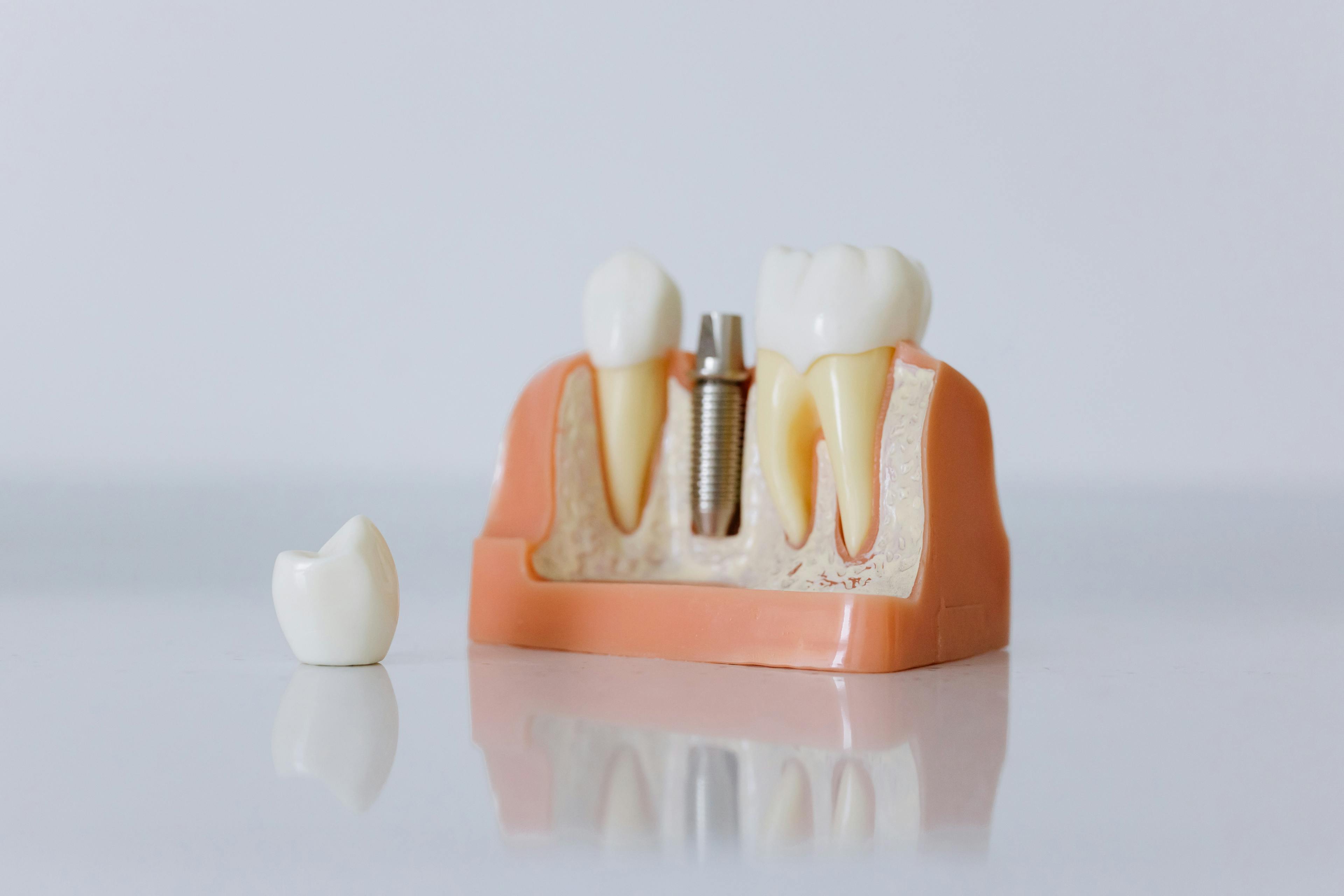
In this first in an ongoing series, Dr. Dennis Tarnow, Professor & Chairman, Dept. of Implant Dentistry New York University College of Dentistry, discusses the popular concept of platform switching as it relates to crestal bone stability, health, survival and color of the soft. In this section, the biology, research and relevance of where the biologic width exists on the implant and how it is affected by clinical circumstances related to macro and micro-geometries of various implant designs is discussed in detail. In addition, how this concept applies to adjacent implants is also outlined.

Date Added:
11/11/2009

Author(s):

Dennis P. Tarnow, DDS Dennis P. Tarnow, DDS
Dennis P. Tarnow is currently Clinical Professor of Periodontology and Director of Implant Education at Columbia School of Dental Medicine. Dr. Tarnow has a certificate in Per...
[read more]


Online Videos / Surgery / Implant / Platform Switching: Myth or Reality


Questions & Comments
farshad bajoghli - (11/25/2010 4:58 PM)

great information.i wish we could see the pointer on the slides.because there was no way to see where the pointer was pointing at.but the concept was there.thanks

Devapratim Mohanty - (7/18/2010 8:53 AM)

J Oral Maxillofac Surg. 2007 Jul;65(7 Suppl 1):33-9. Peri-implant bone level around implants with platform-switched abutments: preliminary data from a prospective study. Hürzeler M, Fickl S, Zuhr O, Wachtel HC. Department of Operative Dentistry and Periodontology, Albert Ludwigs University, Freiburg, Germany. markus@huerzeler.biz CONCLUSION: The concept of platform switching appears to limit crestal resorption and seems to preserve peri-implant bone levels. A certain amount of bone remodeling 1 year after final reconstruction occurs, but significant differences concerning the peri-implant bone height compared with the nonplatform-switched abutments are still evident 1 year after final restoration. The reduction of the abutment of 0.45 mm on each side (5 mm implant/4.1 mm abutment) seems sufficient to avoid peri-implant bone loss. Hope it is allowed to quote studies, Will like to have the valued views of the experts about this offset of 0.45 mm each side as optimum.

Simon Milbauer - (7/18/2010 2:22 AM)

I was reading the commments and start to think whether platform shifting in a form like nobel replace implants for example makes sense. In order to platform switch an adapter has to be attached. this creates an external hex with its weaknesses, and perhaps two microgaps are present once the adaptor is attached. Is it really worth to platform switch implants in this fashion or better to use ines with "built in" platform shift like bicon, ankylos etc? thanks for comments. Simon M.

Devapratim Mohanty - (7/18/2010 12:50 AM)

Thanks a lot Dr Salama for the answer. Wish some one can comment on the most commonly used offset. That will be valuable.

henry salama - (7/16/2010 6:03 AM)

One can apply the platform switch to many implant systems just by mismatching components, i.e. using a narrower diameter abutment than the width of the implant. However, there are a few implants that are specifically designed to gain a greater benefit from the concept and have a rigid connection that I believe synergistically amplifies the effect, i.e. Ankylos, Astra etc. As to what is the most beneficial offset, I am not aware of any studies that give us guidance o that issue.

Devapratim Mohanty - (7/15/2010 7:23 PM)

Sorry for the typing error, I meant implant diameter to abutment diameter.

Devapratim Mohanty - (7/15/2010 12:13 PM)

Which Implant systems are platform switch compartible? Or is just mismatching the implant diameter to the implant diameter will serve the purpose?Last but not the least which is the optimum mismatch ratio for optimum result?

Mitch Silverman - (12/29/2009 6:09 AM)

Thank you Dr. Tarnow. Great lecture! Excellent information.

Gerald Niznick - (12/28/2009 7:52 PM)

[quote=Jay Lutsky]Finally we are back to the key point. Bone loss at the crest is a multifactorial challenge that requires a multi-faceted response. Whether you believe in platform switching or not, there are definitely other factors that are important to consider in your surgical and restorative planning. I'm interested in what other clinicians believe are the other important clinical factors governing bone as well as soft tissue stability and esthetics success.[/quote]

Notice that you are questioning "soft tissue stability". That is another opportunity for a company to claim design differentiation by making something that no one else wants to make - grooves on the neck of the implant that are not much different than machining score lines. Just look at BioHorizons' ad/link on this website: Touting Laser-Loc by using a quote from Myron Nevins "A true physical connective tissue attachment." If you want to maintain the soft tissue, you need to maintain the hard tissue - one follows the other. Sure you can graft to create a thick piece of tissue to simulate a papilla. Bob James from Loma Linda showed 25 years ago that you get a hemi-desmisomal attachment of soft tissue to titanium, and that was when people worried that an endosseous implant created a pathway of infection into the bone. Branemark showed that if you had the implant projecting through unattached soft tissue, it did not effect bone loss or implant survival so what is a "true physical connective tissue attachment other than a marketing story to create a "unique selling proposition. You can put Nevins up there among the best researchers money can buy. I heard Carl Misch lecture at the AAID meeting in November and he put it well when he said laser-loc was designed to maintain soft tissue. He didn't actually say it did it. An article was published in COIR earlier this year that compared fibroblast attachment to a grooved surface with grooves that were 15u, 30u and 60u. BioHorizons has grooves that in a 2mm band with 12u depth for bone and 8u for soft tissue, as if you could get that half and half band just where you wanted it and the tissue/bone would stay there. At least with micro-threads, you are providing grooves a lot closer to the 60u size and provide additional threaded stability as well. But there are micro-threads and there are micro-threads. They differ in depth and design. What do you not want is micro-threads that cross-thread the bony threads created by the body threads. This can result if the spacing and pitch of the micro-threads do not coordinate with the body threads. The US Patent Office agreed with me that there was one unique combination that eliminated cross-threading while offering the advantages of deeper micro-threads for real bone engagement and double lead body threads for speed of insertion.

Related Videos
Extraction Site Micro-gap and Treatment Options in Implant Therapy Premium Member Content

Extraction Site Micro-gap and Treatment Options in Implant Therapy
Extraction site management with special emphasis on the biology and clinical treatment options of the micro-gap.

Presented By: Dennis P. Tarnow, DDS
Presentation Style: Lecture
Community Rating:
 
Watch Now>>
Delayed Implant Placement after Extraction - Strategies and Soft Tissue Management - Part 1 Premium Member Content

Delayed Implant Placement after Extraction - Strategies and Soft Tissue Management - Part 1
Dr. Orlando Alvarez outlines his risk management and clinical strategies for implementing a delayed implant placement protocol after extraction.

Presented By: Orlando Alvarez Del C., DDS, MS
Presentation Style: Lecture
Community Rating:
 
Watch Now>>
Anterior Prosthetics: Challenges Solutions and Considerations Premium Member Content

Anterior Prosthetics: Challenges Solutions and Considerations
Much has been said about the maxillary anterior region and the challenges that exist to restore or improve a patient's smile but few master clinicians actually outline the secrets of a reliable perio-prosthetic design.

Presented By: Sergio Buda, DDS, MD
Presentation Style: Video
Community Rating:
 
Watch Now>>
TMD, Parafunction and Occlusion for Natural Teeth and Implants: Diagnosis and Management Premium Member Content

TMD, Parafunction and Occlusion for Natural Teeth and Implants: Diagnosis and Management
This presentation will address the basic science related to mechanics of the head and neck and the interrelationship with everyday clinical dentistry directly related to occlusion involving implants and the natural dentition. Alternative strategies for the management of parafunction and TMJ related issues will also be outlined.

Presented By: Alvaro Ordoñez, DDS
Presentation Style: Video
Community Rating:
 
Watch Now>>
Related Courses
Tissue Engineering and Platelet Derived Growth Factors: Evidence Based Therapy Premium Member Content

Tissue Engineering and Platelet Derived Growth Factors: Evidence Based Therapy
Platelet derived growth factors are now routinely utilized in reconstructive therapy. This presentation describes very detailed and evidence based guidelines for clinicians interested in enhancing their abilities in tissue engineering, especially as it relates to bone augmentation. Specifically, while successful bone augmentation requires the standard surgical parameters of space maintenance, low pressure on the grafts and tension-free flap closure, optimization of this goal requires management and enhancement of the local biological conditions with growth factors. Towards that end, platelet concentrates through the constant release of growth factors are able to promote and enhance new vascularization, provide plasma protein, normal lipidemia, as well as increased collagen and fibrin activity.

Presented By: Joseph Choukroun, MD
Presentation Style: Online Course
CE Hours: 1 CEU (Continuing Education Unit)
Watch Now>>
Prosthetic Strategies to Enhance Dental Implant Aesthetics Premium Member Content

Prosthetic Strategies to Enhance Dental Implant Aesthetics
The principle focus of implant dentistry has changed significantly from the era of ‘Anatomically driven implant placement’ to the current practice of ‘Restoration driven implant placement’. When we now look at the failing dentition in the aesthetic zone we now must immediately consider conversion to implants. We are continually seeking greater control of the peri-implant tissues and ultimately the aesthetics of the restoration. Implant/abutment designs allow us to consider immediate implant replacement, and immediate non-functional loading especially in the aesthetic zone, where preservation of hard and soft tissue is of paramount importance in order follow the principles of aesthetics by maintaining the elements which are already there

Presented By: E. Dwayne Karateew, DDS
Presentation Style: Online Course
CE Hours: 1 CEU (Continuing Education Unit)
Watch Now>>
Controversies Surrounding Delayed vs. Immediate Implant Placement: Is There No Middle Ground? Premium Member Content

Controversies Surrounding Delayed vs. Immediate Implant Placement: Is There No Middle Ground?
This presentation looks critically at the literature and attempts to give clinicians a more flexible approach to immediate and delayed implant placement. Critical surgical guidelines and clinical pearls will be offered for both types of treatment as well as the management of some of the complications that may arise from immediate or delayed implant placement.

Presented By: Howard Gluckman, BDS, MChD
Presentation Style: Online Course
CE Hours: 1 CEU (Continuing Education Unit)
Watch Now>>
Related Articles
Customized Provisional Abutment and Provisional Restoration for an Immediately-Placed Implant

Customized Provisional Abutment and Provisional Restoration for an Immediately-Placed Implant
This article explores provisionalization immediately following surgical implant placement. Upon reading this article, the reader should: • Understand how the immediate placement of a custom provisional abutmentguides tissue healing. • Recognize how provisionalization can preserve hard and soft tissues and help minimize the duration of treatment.

Author(s): Gerard Lemongello, DDS
View Article>>
Fifty Years of Interdisciplinary Site Development: Lessons & Guidelines from Periodontal Prosthesis

Fifty Years of Interdisciplinary Site Development: Lessons & Guidelines from Periodontal Prosthesis
Just as "osseointegration" became synonymous with successful restoration of function in the fully edentulous patient during the 1980s, the term "implant site development" has become intricately associated in the 1990s with the techniques used to achieve esthetic results with implants in the partially edentulous patient. This article explores the roots of the concept of site development within the philosophy and principles of periodontal prosthesis. In addition, the myriad of techniques that are…

Author(s): David Garber, DMD;Maurice Salama, DMD;Henry Salama, DMD;Pinhas Adar, MDT, CDT;Edwin S. Rosenberg, DMD
View Article>>
The Replacement of Small-Diameter Teeth in the Esthetic Zone Using Narrow-Diameter Implants

The Replacement of Small-Diameter Teeth in the Esthetic Zone Using Narrow-Diameter Implants
The lack of bone available for the surgeon as well as the lack of restorative space available between the adjacent teeth makes tooth replacement with implants challenging for both the restorative dentist and the laboratory technician.

Author(s): David Garber, DMD;Maurice Salama, DMD;Henry Salama, DMD
View Article>>
Contact Us | Privacy Policy | Terms of Use
©2013

Preferred Language: English Flag
Contact Us · Login · Register