Video Details
|
Prevention and Management of Broken Endodontic Instruments
Description:
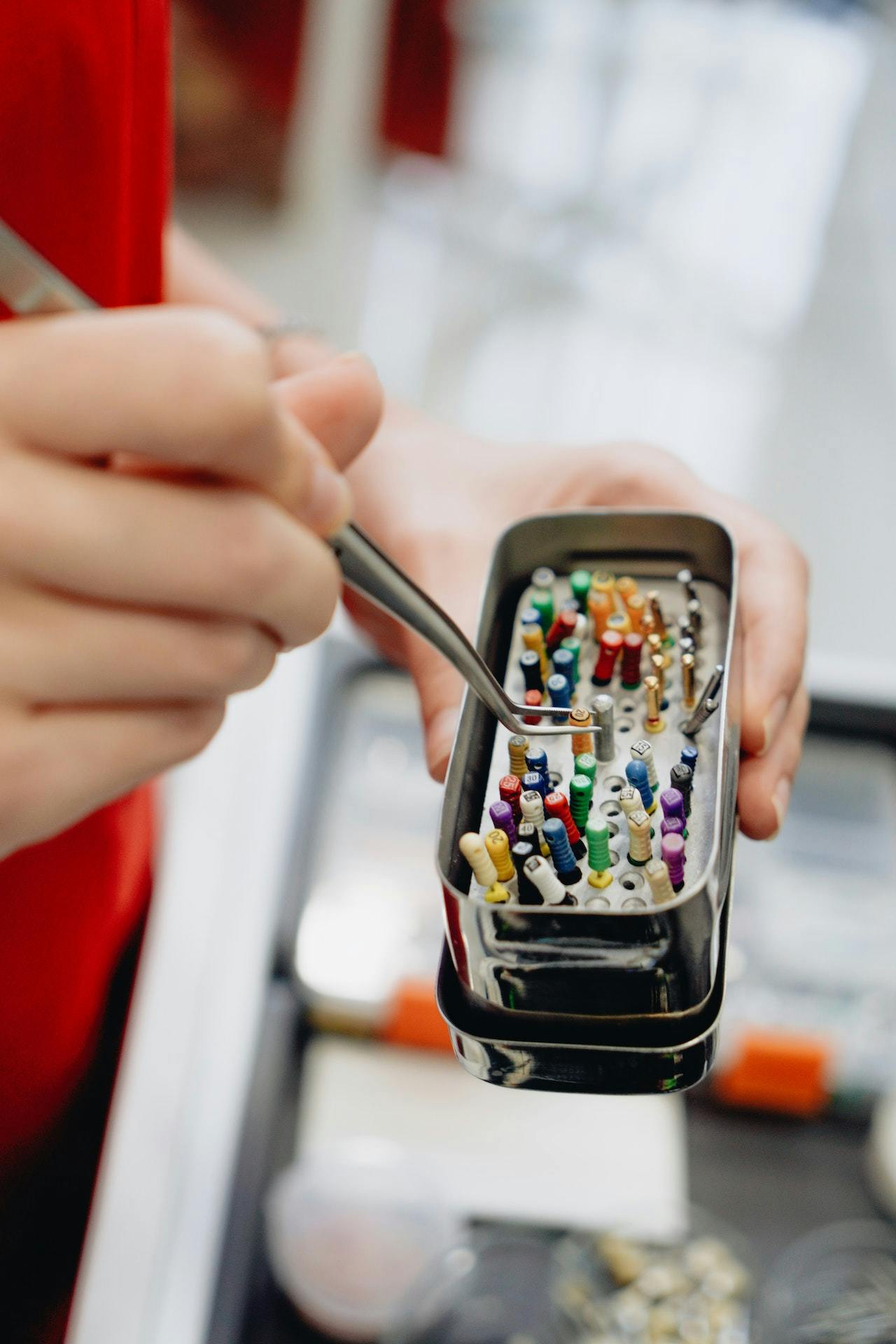
With the advent of rotary nickel-titanium (Ni Ti) instrumentation the issue became extremely prominent. Extensive research has been conducted to understand the mechanics of instrument separation. This has led to changes in the manufacturing methods, instrument design and instrumentation protocols. Most recently, reciprocation is challenging rotary instrumentation in terms of speed and safety from fracture. Although the incidence of file breakage can be drastically decreased, it cannot yet be eliminated. No matter what instruments you are using inside the root canal system, the prevention and management of broken endodontic instruments still remains a hot topic.
This lecture aims to review the most common preventive measures to avoid file breakage and to provide clinical tips and recommendations for the management of challenging broken file cases. Highly invasive, minimal invasive and non invasive broken instrument removal techniques are showcased through video case presentation series under the microscope.
Date Added:
10/31/2012
Author(s):
Antonis Chaniotis, DDS MDSC
Chaniotis Antonis graduated from the University of Athens Dental School (Greece) in 1998. In 2003 he completed the three-year postgraduate program in Endodontics at the Univer...
[read more]
|
|
Online Videos / General / Endodontics / Prevention and Management of Broken Endodontic Instruments
|
Questions & Comments
|
Dimitris Tsanaktsidis - (11/24/2012 6:08 AM)
exellent presentation!! give us more:))
|
yosef kowalsky - (11/15/2012 8:32 AM)
Thanks for a wonderful presentation. You truly have amazing patience. Were you using the ultrasonic instuments DRY? Aren't you afraid of heat?
|
Antonis Chaniotis - (11/6/2012 2:20 PM)
Mixing chlorexidine with NaOCl is contraindicated because it forms a toxic precipitate. In fact there are a lot of arguments concerning the need for CHX use even in retreatment cases.
|
saadia rehman - (11/5/2012 1:06 PM)
Dear Dr.Antonis can we use chlorhexidine with NaoCl,as i know chlorhexidine should be used for retreatment cases?can we use it for irrigating the pulp chamber first time?
|
Antonis Chaniotis - (11/4/2012 4:07 AM)
Dear Sanjit Singh, if you by pass the instrument and be able to clean you might as well incorporate the fragment without altering overall prognosis. You can see an example here http://www.youtube.com/watch?v=aCNJG53soac . Thank you for the comments and stay tuned with Dental xp for more .
|
saadia rehman - (11/4/2012 12:12 AM)
Thank you Dr.Antonis
|
Sanjit Singh - (11/3/2012 3:56 PM)
Thank your for a very educating presentation. In some cases they say if we are able to bypass the instrument and complete the cleaning and shaping with proper irrigation, we could leave the instrument in the canal and obturate. Also , it is said that in order to retrieve the instrument sometime we may tend to remove too much tooth structure and weaken the tooth. I would like to know what your views are about the above ideology??
|
Antonis Chaniotis - (11/2/2012 5:46 PM)
Thank you dr. Saadia rehman I use full strength NaOCl and if you are carefull extrusion of the irrigant can be eliminated. You can place a silicon stop in the needle and adjust the predeterminred length or prebend accordingly the needle. You have to control the pressure applied. NaOCl is contraindicated in known allergies. (Extremely rare)
|
saadia rehman - (11/2/2012 3:27 PM)
Thank you very much doc for ur valuable cases and information .I have some questions
What is the safe concentration of NaOCl to use as an irigant to avoid periapical reaction and in what cases Nahypochlorite is contraindicated as irrigant? is there any contraindication or not?
|
|
|
Related Courses |
|
|
Prevention and Management of Broken Endodontic Instruments
This lecture aims to review the most common preventive measures to avoid file breakage and to provide clinical tips and recommendations for the management of challenging broken file cases. Highly invasive, minimal invasive and non invasive broken instrument removal techniques are showcased through video case presentation series under the microscope.
| Presented By: |
Antonis Chaniotis, DDS MDSC |
| Presentation Style: |
Online Course |
| CE Hours: |
1 CEU (Continuing Education Unit) |
|
Watch Now>>
|
|
|
|
|
Related Articles |
|
|
Evolution and Integration of Current Restorative Endodontic Concepts
The restoration of endodontically treated teeth was advocated by G.V. Black in 1869 followed by a one-unit post and crown by Richmond in 1878. Engineering principles indicate that structural strength on endodontically treated teeth is decreased by the removal of the roof of the pulp chamber, canal enlargement, and hence loss of integrity. The intrinsic strength of dentin can be diminished as a result of root canal treatment originated by decay, pathology, or trauma. When endodontic treatment is indicated,…
| Author(s): |
Sergio Rubinstein, DDS;Enrique Kogan, DDS, Gad Zyman, DDS, Alan J. Nidetz, DDS |
|
View Article>>
|
|
|
|
|
Dental Endoscopic Viewing System
Endoscopy has enabled medicine to take a quantum leap in disease diagnosis and therapeutic management by allowing visualization and access for repair of injuries via minimally invasive surgical (MIS) techniques. Since their introduction, fiberoptic bundles and electronic video technology have continually advanced and fostered smaller-bore (viewing tubes) endoscopes of 2 mm and less, further improving access into smaller cavities and anatomical spaces of the body. This viewing technology has reached…
| Author(s): |
Ronald Goldstein, DDS;David Garber, DMD;Maurice Salama, DMD;Henry Salama, DMD;Lee H. Silverstein, DDS, MS, FACD, FICD |
|
View Article>>
|
|
|
|
|
|