Dental Education
Online Dental Education Dental education lectures and videos Online dental ce Dental education articles Expert dental educators Dental products education Dental Community
 
Video Details
Revolutionary Dental Implant Material Technology: Trabecular Metal

Description:
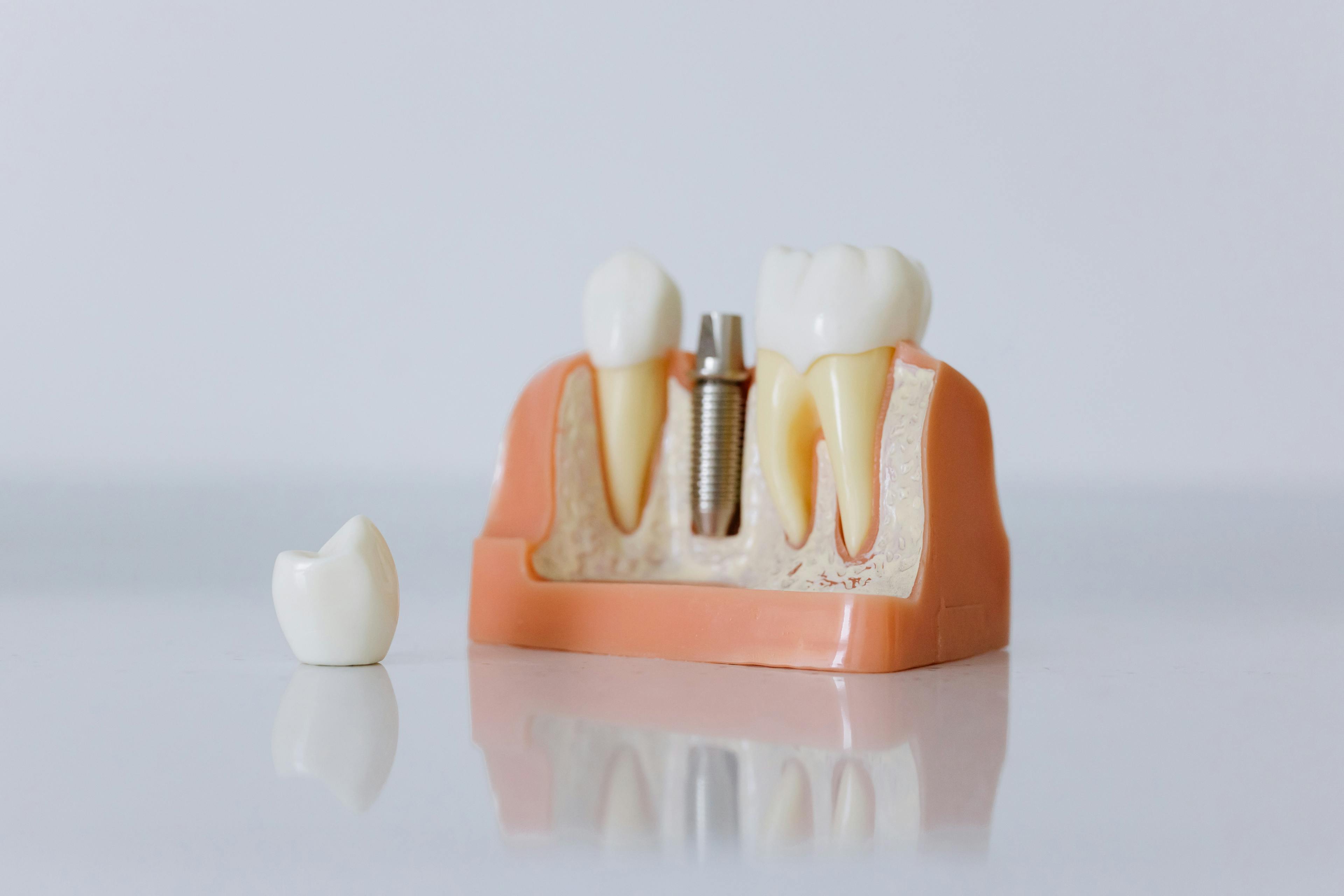
To date, enhancement to implant surface technology has been evolutionary rather than revolutionary. Trabecular Metal has changed all that. This is because Trabecular Metal allows for true bone 'in-growth' rather than just on-growth. This webinar will highlight, in detail, this new implant surface technology, related literature, as well as its enhancing effect on current clinical implant protocols. In addition, techniques for immediate provisionalization of this implant will also be covered in an accompanying surgical video.

Date Added:
12/4/2012

Author(s):

Richard Akin, DDS, MD Richard Akin, DDS, MD

Dr. Akin, an Oral & Maxillofacial Surgeon in private practice in Baton Rouge, LA, earned both his Doctor of Dental Surgery (1998) and Doctor of Medicine (2001) from the Lou...
[read more]


Online Videos / Surgery / Implant / Revolutionary Dental Implant Material Technology: Trabecular Metal


Questions & Comments
Richard Akin - (1/14/2013 11:48 PM)

Henry, With this system I have found that the crestal threads allow for good stability in staged implant surgery and the apical threads provide for stability in immediate implant situations. Adequate insertion torque is something I feel strongly about and was initially concerned about with this implant. With some tweaking of the drilling protocol I have not found this to be the case.

Richard Akin - (1/14/2013 11:41 PM)

Charles, I did get a tremendous amount of information on tantalum and it application to vitreous carbon while in Parsippany, NJ at Zimmer manufacturing plant but I am not sure of the exact method that the titanium is fused to the tantalum sleeve. I can say that I have found this implant to be as strong as the TSV implant and am only minimally concerned about galvanic reaction between these 2 very inert materials.

henry salama - (1/3/2013 1:29 PM)

Hi Richard, my compliments on very nice presentation. I'm interested in knowing your thoughts conceptually on how the loss of threads, that would otherwise be in the area taken up by the trabecular metal, effects initial primary stability and early loading? thanks

Richard Akin - (1/2/2013 3:05 PM)

Dear Sam, My experiences with the trabecular metal implant have all been favorable but I have not loaded any in 2 weeks. I leave all provisionals just out of contact in centric occlusion and excursions.

Sam Busich - (12/10/2012 1:18 PM)

Dr. Akin; Any follow ups on this new implant that you can provide for us? Radiographic changes, early loading responses. Do you feel that a 2 week load protocol is acceptable with the TM? thanks Sam

Charles Schwimer - (12/6/2012 3:23 PM)

Richard,nice video. Immediate screw retained provisionals are ideal when possible. Do you know how the these trabecular metal implants are manufactured. It seems to me these implants are constucted with titanium and tantalum. I am curious how the two metals interphase (Strengh? galvanic reaction?). The Orthopedic trabecular metal components are only made of tantelum. I would be interested to hear your thoughts. Thank you again. Chuck

Richard Akin - (5/25/2012 12:20 AM)

Dear Mauricio, I think the risk of peri-implantitis is very low due to the tantalum surface being present along the body of the implant and not at the crest.

Richard Akin - (5/25/2012 12:17 AM)

Dear Alper, I am very optimistic about the application of this material to a dental implant. My early experience is positive and I feel that the 'ingrowth' versus 'ongrowth' component of these implants changes the discussion from BIC to bone incorporation. Clinically, my early success rates have been exceptional. More time and data is needed to determine how it performs under function.

Richard Akin - (5/25/2012 12:03 AM)

Dear Matthew, The PEEK plastic abutment is a prefabricated abutment made of a highly inert material. It is my preferred abutment due to its ease of use.

Related Videos
Customized 3D Treatment Planning Concepts - Matching Receptor Sites with Specific Implant Designs - Part 2 of 2 Premium Member Content

Customized 3D Treatment Planning Concepts - Matching Receptor Sites with Specific Implant Designs - Part 2 of 2
This presentation will cover detailed concepts of diagnosis and treatment planning using state-of-the-art 3-D imaging modalities for the purpose of customizing therapy based on individual implant receptor sites.

Presented By: Scott D. Ganz, DMD
Presentation Style: Lecture
Community Rating:
 
Watch Now>>
Managing Multiple Extraction and Implant Placement in a Partially Edentulous Arch Premium Member Content

Managing Multiple Extraction and Implant Placement in a Partially Edentulous Arch
Dr. Maurice Salama details the decision making process as well as the application of interdisciplinary methodology utilized to manage a complex case requiring multiple extractions, implant placement and temporization.

Presented By: Maurice Salama, DMD
Presentation Style: Video
Community Rating:
 
Watch Now>>
Maxillary Full Arch Reconstruction with Removable Prosthodontics Premium Member Content

Maxillary Full Arch Reconstruction with Removable Prosthodontics
The utilization of the Galvano Forming Technique in implant overdenture prosthodontics.

Presented By: Marius Steigmann, DDS
Presentation Style: Lecture
Community Rating:
 
Watch Now>>
Related Courses
Revolutionary Dental Implant Material Technology: Trabecular Metal Premium Member Content

Revolutionary Dental Implant Material Technology: Trabecular Metal
This webinar will highlight, in detail, this new implant surface technology, related literature, as well as its enhancing effect on current clinical implant protocols.

Presented By: Richard Akin, DDS, MD
Presentation Style: Online Course
CE Hours: 1 CEU (Continuing Education Unit)
Watch Now>>
Tissue Engineering and Platelet Derived Growth Factors: Evidence Based Therapy Premium Member Content

Tissue Engineering and Platelet Derived Growth Factors: Evidence Based Therapy
Platelet derived growth factors are now routinely utilized in reconstructive therapy. This presentation describes very detailed and evidence based guidelines for clinicians interested in enhancing their abilities in tissue engineering, especially as it relates to bone augmentation.

Presented By: Joseph Choukroun, MD
Presentation Style: Online Course
CE Hours: 1
Watch Now>>
Zirconia Based Implant Supported Restorations: Planning and Design Premium Member Content

Zirconia Based Implant Supported Restorations: Planning and Design
Emphasis will be placed on demonstrating the different restorative options utilizing fixed detachable restorations made of monolithic zirconia, where 100% of the prostheses is zirconia.

Presented By: Fernando Rojas Vizcaya, DDS, MS
Presentation Style: Online Course
CE Hours: 1 CEU (Continuing Education Unit)
Watch Now>>
Prosthetic Strategies to Enhance Dental Implant Aesthetics Premium Member Content

Prosthetic Strategies to Enhance Dental Implant Aesthetics
The principle focus of implant dentistry has changed significantly from the era of ‘Anatomically driven implant placement’ to the current practice of ‘Restoration driven implant placement’. When we now look at the failing dentition in the aesthetic zone we now must immediately consider conversion to implants. We are continually seeking greater control of the peri-implant tissues and ultimately the aesthetics of the restoration. Implant/abutment designs allow us to consider immediate implant replacement, and immediate non-functional loading especially in the aesthetic zone, where preservation of hard and soft tissue is of paramount importance in order follow the principles of aesthetics by maintaining the elements which are already there

Presented By: E. Dwayne Karateew, DDS
Presentation Style: Online Course
CE Hours: 1 CEU (Continuing Education Unit)
Watch Now>>
Related Articles
Soft Tissue Recession Around Implants

Soft Tissue Recession Around Implants
When treatment with dental implants is indicated, an accurate diagnosis must be made to evaluate the clinical parameters and determine the optimal time for immediate or delayed (ie, early or late) implant placement and loading following tooth extraction. It is also important to identify complications and their implications on the aesthetic outcome.1 This article explains behavior of the hard and soft tissue around the implant, evaluates the timing of implant placement after extraction, and reviews various parameters that influence tissue marginal remodeling.

Author(s): André P. Saadoun, DDS, MS;Bernard Touati, DDS, MS
View Article>>
The Reverse Pathway - Parameters for the Integration of Function and Aesthetics with Implants

The Reverse Pathway - Parameters for the Integration of Function and Aesthetics with Implants
Restorative driven implant based decision making by the surgeon will lead to the correct augmentation and implant selection for the specific needs of the patient. This "reverse pathway" approach is the protocol featured in this article to achieve excellent results and avoid complications.

Author(s): Sergio Rubinstein, DDS;David Garber, DMD;Henry Salama, DMD;Maurice Salama, DMD
View Article>>
Immediate Versus Delayed Functional Loading of Implants in the Posterior Mandible

Immediate Versus Delayed Functional Loading of Implants in the Posterior Mandible
A 2-Year Prospective Clinical Study of 12 Consecutive Cases

Author(s): Georgios Romanos, DDS, DMD, Dr.med.dent., Ph.D.;Georg-Hubertus Nentwig, DMD, Dr Med Dent, PhD
View Article>>
Contact Us | Privacy Policy | Terms of Use
©2013

Preferred Language: English Flag
Contact Us · Login · Register