Dental Education
Online Dental Education Dental education lectures and videos Online dental ce Dental education articles Expert dental educators Dental products education Dental Community
 
Video Details
The Role of Orthodontics in the Interdisciplinary Management of Soft Tissue, Occlusal and Esthetic Abnormalities - Part 2 of 2

Description:
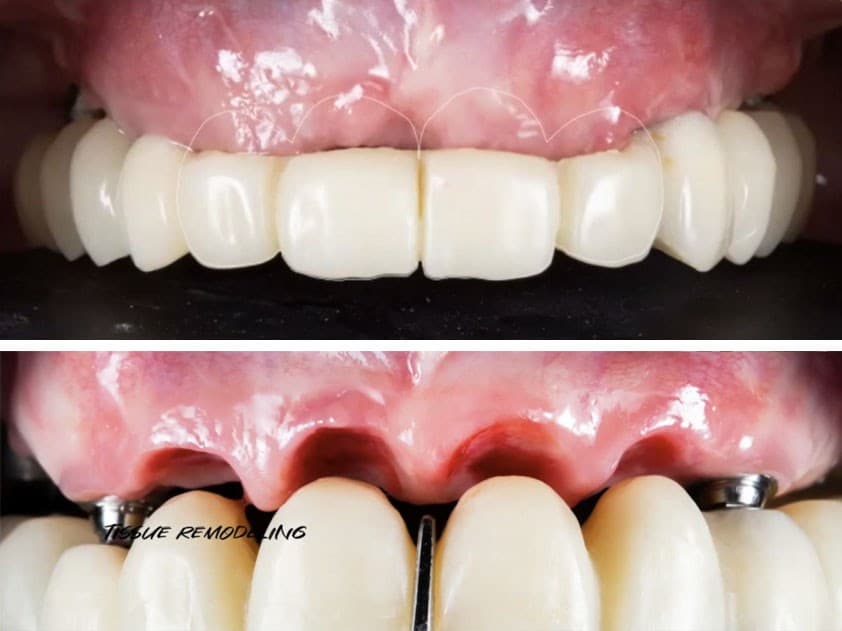
Orthodontic tooth movement can often be combined with periodontal plastic surgical techniques and guided bone regeneration to establish the optimal foundation for functional and esthetic restorations. This presentation will highlight the benefits in such an interdisciplinary approach with and emphasis on the role of "directional" orthodontic tooth movement in the non-surgical enhancement of soft-and hard-tissue dimensions as part of "site development." Occlusal and Esthetic issues related to comprehensive orthodontic therapy will similarly be highlighted as well as the utilization of transitional anchorage devices "TADS" for unconventional tooth movement.

Date Added:
5/15/2012

Author(s):

Maurice Salama, DMD Maurice Salama, DMD
Dr. Maurice A. Salama completed his undergraduate studies at the State University of New York at Binghamton in 1985, where he received his BS in Biology. Dr. Salama r...
[read more]


Online Videos / Orthodontics / Adult Orthodontic / The Role of Orthodontics in the Interdisciplinary Management of Soft Tissue, Occlusal and Esthetic Abnormalities - Part 2 of 2


Questions & Comments
Parr Michael - (12/20/2012 12:01 PM)

Thank you. Great presentation and very helpful

kevin potocsky - (9/17/2012 9:52 PM)

Do u have any videos of how to do traumatic extractions using your diamond tip luxaters?

Maurice Salama - (7/23/2012 3:58 PM)

Lourdes; many thanks for the kind words. I am currently utilizing the GAC brand TADs. Dr. Salama

Lourdes Gutierrez Garrido - (5/16/2012 12:36 AM)

Thank you Dr Salama for this outstanding presentation, what a valuable informations, can you olease enlighten me about the the brand of the TADS that you are using, many thanks

Maurice Salama - (5/15/2012 8:47 PM)

Samir; As long as the tooth to be moved has a healthy attachment apparatus and the movement is performed within physiological limits I am unaware of a limitation of ridge width. good luck Dr. Salama

Samir Badalov - (5/15/2012 3:40 PM)

Dear Dr Salama , are there width limitations of edentulous ridge where we want to move teeth in? For example situation which is called - cortical ancorage

Related Videos
The Role of Orthodontics in the Interdisciplinary Management of Soft Tissue, Occlusal and Esthetic Abnormalities - Part 1 of 2 Premium Member Content

The Role of Orthodontics in the Interdisciplinary Management of Soft Tissue, Occlusal and Esthetic Abnormalities - Part 1 of 2
This presentation will highlight the benefits in such an interdisciplinary approach with and emphasis on the role of “directional” orthodontic tooth movement in the non-surgical enhancement of soft-and hard-tissue dimensions as part of "site development."

Presented By: Maurice Salama, DMD
Presentation Style: Video
Community Rating:
 
Watch Now>>
Management of Tooth Wear in the Adult Patient - Part 1 Premium Member Content

Management of Tooth Wear in the Adult Patient - Part 1
Dr. Vincent Kokich Sr. discusses the interdisciplinary decision making protocol for evaluating and managing tooth wear in the adult patient with Dr. David Garber.

Presented By: Vincent G. Kokich, Sr., DDS, MSD
Presentation Style: Lecture
Community Rating:
 
Watch Now>>
The Role of CBCT in the Evaluation of Alveolar Bone Premium Member Content

The Role of CBCT in the Evaluation of Alveolar Bone
While traditional 2D radiography has been said to show less than 50% of the anatomy of alveolar bone, the arrival of CBCT technology for practicing orthodontists has given practitioners the ability to completely view and study this area with respect to tooth movement. An update on the related research will introduce this topic with a specific emphasis on the accuracy, application and importance of this radiological advancement followed by the presenter's own protocols for patient diagnosis and treatment methods. Case presentations will be used throughout the lecture to highlight the clinical significance of using CBCT in Orthodontics to anticipate and assess the periodontal consequences of tooth movement.

Presented By: Robert L Waugh, DMD, MS
Presentation Style: Video
Community Rating:
 
Watch Now>>
The Role of Orthodontics in Treating the Adult and Periodontal Patient - Making Critical Clinical Decisions

The Role of Orthodontics in Treating the Adult and Periodontal Patient - Making Critical Clinical Decisions
In this lecture presentation, a focus on multidisciplinary treatment planning and decision making is utilized to outline the benefits of adult orthodontics for the treatment of complex periodontal, occlusal and esthetic challenges. Timing of therapy and patient management are especially emphasized.

Presented By: Manuel De La Rosa Garza, DDS, MS
Presentation Style: Lecture
Community Rating:
 
Watch Now>>
Related Courses
Assessment and Treatment in Dentofacial Esthetics: A Comprehensive Global Perspective Premium Member Content

Assessment and Treatment in Dentofacial Esthetics: A Comprehensive Global Perspective
Dr. Sarver will present a different system of esthetic classification which is made up of three major components: Macroesthetics (the facial appearance), Miniesthetics (the smile) and Miniesthetics (the teeth and gingival scaffold). We will cover a systematic analysis of the face, smile, and teeth and how they interact, adding a new and rewarding dimension to your approach to treatment planning and treatment outcomes.

Presented By: David M Sarver, DMD, MS
Presentation Style: Online Course
CE Hours: 1 CEU (Continuing Education Unit)
Watch Now>>
Related Articles
Open Gingival Embrasures After Orthodontic Treatment in Adults

Open Gingival Embrasures After Orthodontic Treatment in Adults
The purposes of this study were to determine the prevalence of posttreatment open gingival embrasures in adult orthodontic patients and to examine the association of pretreatment maxillary incisor malalignment, posttreatment alveolar bone height, interproximal contact position, root angulation, crown shape, and embrasure area with open gingival embrasures. Posttreatment intraoral photographs of 337 adult orthodontic patients were evaluated to determine the prevalence of open gingival embrasures.…

Author(s): Vincent G. Kokich, Sr., DDS, MSD;Jacklyn R. Kurth, DDS, MSD
View Article>>
Interdisciplinary Management of Single-Tooth Implants

Interdisciplinary Management of Single-Tooth Implants
Orthodontists treat many patients who are missing maxillary lateral incisors and/or mandibular second premolars. In the past, if the canines could not be substituted for lateral incisors, conventional full-coverage bridges were the common restoration. Recently, resin-bonded Maryland bridges became a popular substitute for conventional bridges to avoid crowns on the nonrestored abutments. However, resin-bonded bridges have a poor long-term prognosis for retention, lasting on average about 10 years.…

Author(s): Vincent G. Kokich, Sr., DDS, MSD;Frank M. Spear, DDS, MSD, David P. Matthews, DDS
View Article>>
Adults Orthodontics in the 21st Century

Adults Orthodontics in the 21st Century
For the past two decades, increasing numbers of adults have been referred to orthodontists for correction of their malocclusions. Adults usually are cooperative, clean their teeth, show up for appointments, and are appreciative of the clinician's efforts. However, adults may have problems other than malposed teeth and jaws that make their orthodontic treatment more challenging. Adults may have old and failing restorations, edentulous spaces, abraded teeth, periodontal bone defects, gingival level…

Author(s): Vincent G. Kokich, Sr., DDS, MSD
View Article>>
Contact Us | Privacy Policy | Terms of Use
©2013

Preferred Language: English Flag
Contact Us · Login · Register