Video Details
|
The Role of Piezo-Surgical Ridge Split Technique in the Reconstruction of Ridge Deficiencies - Part 1 of 2
Description:
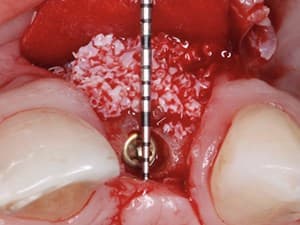
In this 1st of a 2 part lecture, Dr. Dan Holtzclaw reviews multiple ridge augmentation techniques for the reconstruction of ridge width deficiencies in order to facilitate more optimal placement of dental implants. One particularly effective technique involves splitting the resorbed ridge and filling the split with bone. Dr. Holtzclaw discusses the role of piezoelectric hinge assisted ridge split (PHARS) technique as an additional new protocol to help accomplish this endeavor more efficiently.
Date Added:
7/4/2011
Author(s):
Dan Holtzclaw, DDS, MS
Dr. Holtzclaw received his dental degree (Cum Laude) from the University of Texas Health Science Center at San Antonio. During a subsequent 12 year ...
[read more]
|
|
Online Videos / Surgery / Bone Grafting / The Role of Piezo-Surgical Ridge Split Technique in the Reconstruction of Ridge Deficiencies - Part 1 of 2
|
Questions & Comments
|
omid moghaddas - (7/26/2012 12:30 PM)
GREAT .ENJOYED IT A LOT.my question is should the depth of the osteotomy from the crest be equal or more than the length of the implant?and do you prefere to do ridge splitting in maxilla or mandible? tnx again, Dr Omid Moghaddas
|
Andres Freixas - (7/30/2011 1:54 AM)
Great lecture, about the 2 screws placed in the first case, they were removed in the second surgery? or the implant goes between them? regards Andres Paraud.
|
dan holtzclaw - (7/19/2011 5:07 PM)
Thank you for the kind comments. To answer your questions:
1) About the screws used for GBR early in the presentation. That case simply demonstrates that there are multiple ways to solve the problems of a deficient ridge. The case could have been treated with a variety of techniques. Personally, I would not use a block of bone there as I have built my practice around non-autogenous grafting and I find that block allografts sometimes don't tend to fare as well in the posterior as the anterior.
2) When mobilizing the buccal plate, the height of the plate will be slightly apical to the height of the lingual plate. When you add the particulate bone, however, this usually allows you to regain the lost height (which is often very minimal).
|
Daniel Kim - (7/10/2011 10:09 AM)
when ridge split is done what can be done to get same bone height buccaly and lingualy , buccal height is lower than lingual.
when add allograft, decorticalzation has to be done or not?
GREAT LECTURE THANKS
|
Marcelo Silva - (7/9/2011 3:36 PM)
Great Lecture!!! Well done!!
|
dr mohamad ali khayat - (7/8/2011 1:04 PM)
Thank you dr that great video and great explanation, but I want to explain to me why you placed 2 screw at the first case and put granules of the bone and not a block of bone
|
Related Courses |
|
|
|
Osseointegration & Augmentation
A 4 part course worth 1 CEU.
| Presented By: |
Maurice Salama, DMD;Ziv Mazor, DMD;Hom-Lay Wang, DDS, MSD, PhD;Ady Palti, DDS |
| Presentation Style: |
Online Course |
| CE Hours: |
1 CEU (Continuing Education Unit) |
|
Watch Now>>
|
|
|
|
|
Related Articles |
|
|
Alloplastic Bone Substitutes Around Dental Implants
The repair of osseous defects has been a goal in dentistry for many decades. Subsequently, within the last several years, there has been an emergence of a new class of materials in dentistry referred to as synthetic bone. Finding the ideal bone substitute material has been the goal of researchers for many years. In attempting to achieve this ideal material, dental practitioners have tried with varying degrees of success: autogenous and demineralized freeze-dried bone, allografts of plastic, carbon…
| Author(s): |
Lee H. Silverstein, DDS, MS, FACD, FICD;Lee M. Whitesides, DMD, MMSC |
|
View Article>>
|
|
|
|
|
Mandibular Block Autografts for Alveolar Ridge Augmentation
This article reviews indications, limitations, presurgical evaluation, surgical protocol, and complications associated with mandibular block autografts harvested from the symphysis and ramus buccal shelf for alveolar ridge augmentation. The author draws from 14 years of experience with more than 500 mandibular block autografts.
|
|
|
|
The Bio-Derm Ridge Plumping Technique for Pontic Site Development
Seibert Class III apicocoronal and buccolingual alveolar ridge defects with associated gingival mucosal atrophy and absence of interdental papillae are common in edentulous areas within the anterior esthetic zone of the maxilla. Normal emergence profiles, critical to achieving
esthetic restorations, require restoration of
normal hard and soft tissue morphology, including
re-establishment of adjacent interdental papillae.
| Author(s): |
Nicholas Toscano, DDS, MS;Dan Holtzclaw, DDS, MS |
|
View Article>>
|
|
|
|
|