Video Details
|
Odontologia Integral - Simplificacion del Caso Complejo
Description:
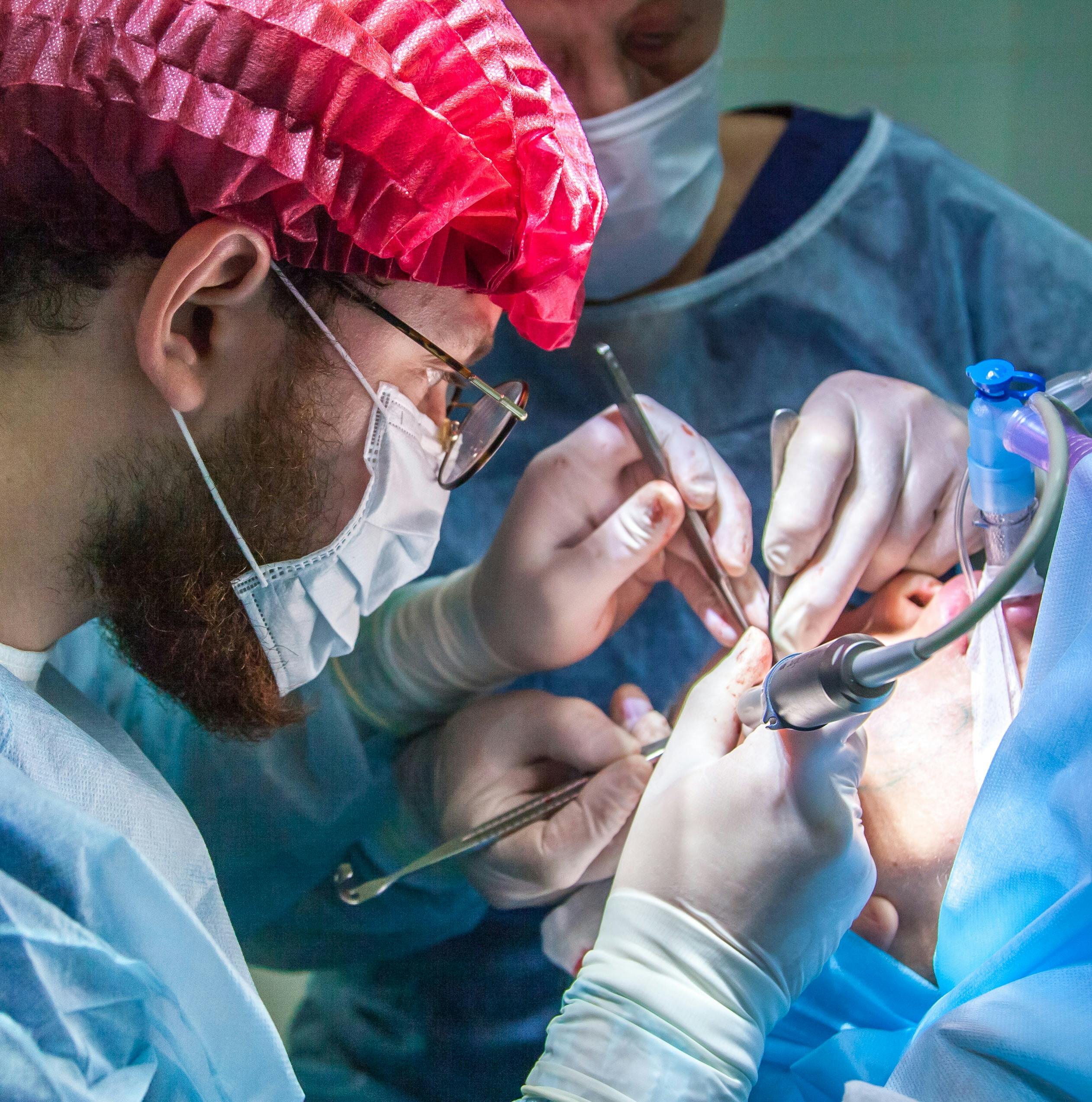
Odontologia implantologica moderna depende de un diagnostico adecuado, plan de tratamiento astuto con un grupo interdisciplinario. Vision, comunicacion y ejecucion detallada son indispensables para un resultado saludable, estetico y duradero. Cuando incorporamos tecnicas modernas para nuestros pacientes, necesitamos que sean basadas en principios de investigacion solida que nos dirigan a obtener resultados optimos. Cuando restauramos o remplazamos a un diente ausente, las expectativas de los pacientes son altas desde una perspectiva estetica, funcional y de salud. Dientes condenados a la extraccion aun son extremadamente utiles! El exito se obtiene con una planificacion en direccion inversa comenzando desde un objetivo estetico hacia un cimiento saludable que provea el soporte adecuado. Aun cuando los casos esteticos complejos pueden ofrecer retos extremados, la sabiduria interdisciplinaria puede salvarnos de un resultado estetico comprometedor y asi proveer a pacientes resultados excepcionales.
Date Added:
12/3/2011
Author(s):
Sergio Rubinstein, DDS
Dr. Sergio Rubinstein received his dental degree from the Universidad Tecnologica de Mexico in 1980. He went on to complete a specialty program in Periodontal-Prosth...
[read more]
|
|
Online Videos / Restorative / Crowns and Bridges / Simplification of the Complex Case - Restorative Efficiencies
|
Questions & Comments
|
Maurice Salama - (5/12/2013 5:37 AM)
Wow Sergio!! Just an excellent presentation with so many pearls of information regarding interdisciplinary planning and the role of the restorative dentist. As always, you are a Master!! It is always a pleasure to work with you. Maurice
|
DR ABDUL SAHITO - (6/14/2012 4:26 PM)
its good and knowledgable website
|
Sergio Rubinstein - (4/12/2012 11:53 PM)
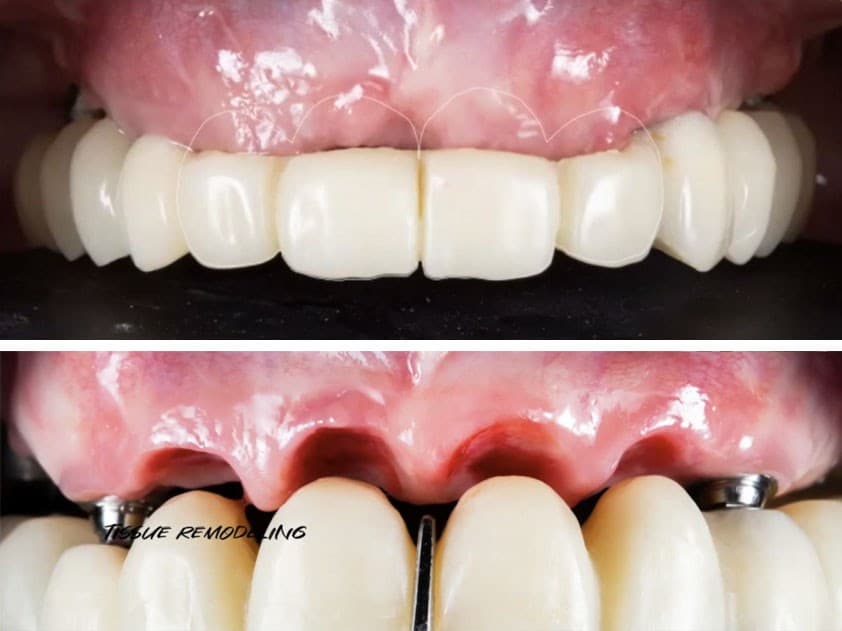
In response to Dr. Jose Lara Gonzalez, the autograft was a decision made by the Oral Surgeon, and it is clear the osseous and soft tissue response to this technique is generally speaking excellent , and we always try for procedures that can be as predictable as a surgery can be. The ovate pontic is usually about 3 mm deep, it must be monitored closely that the tissue response is acceptable. Proper support is necessary to recreate a papillae( although at a lower gingival level) and if irritation occurs, then the depth of the pontic can be reduced by 0.5 mm until the soft tissue response is the anticipated one.
|
José Lara Gonzalez - (4/7/2012 3:57 PM)
Congratulations Dr. Rubinstein, thanks for sharing us these cases, i´d like to ask you a few doubts about the last and complex case, first why do you decided to use an autograft and not other kind of bond, and second how deep do you enter with the central provisional in the tissue in order to get an ovate form? Thanks again for your case and your knowledge shared, regards!
|
Alan Spiwak - (11/30/2011 10:35 PM)
Sergio very impressive presentation,the extrusion case is one of those cases that makes you think out of the box. Thank you for sharing.
|
Maurice Salama - (11/30/2011 10:32 PM)
Wow Sergio!! Just an excellent presentation with so many pearls of information regarding interdisciplinary planning and the role of the restorative dentist. As always, you are a Master!!
It is always a pleasure to work with you.
Maurice
|
James Heise - (11/30/2011 10:11 PM)
Excellent Presentation. Thanks for sharing some of your frustrations in the team approach - sometimes communication solves problems, sometimes one has to have the courage to act on our convictions. Thank you so much - we really enjoyed your presentation.
|
Malek mansour - (11/30/2011 10:08 PM)
keep showing presentations like these.
Malek Mansour
|
Paul Bery - (11/30/2011 9:28 PM)
Sergio is one of the most demanding, exacting and particularly gifted dentists I have seen. Wonderful presentation with amazing examples. The ortho/extrusion case shows what persistence and knowledge of basic biologic rules can accomplish.
|
|
|
Related Videos |
|
|
|
White Esthetics
Professor Nitzan Bichacho joins the Dentalxp community for an overview of white esthetics for more p
| Presented By: |
Nitzan Bichacho, DMD |
| Presentation Style: |
Lecture |
| Community Rating: |
|
|
Watch Now>>
|
|
|
|
|
Related Courses |
|
|
Simplification of the Complex Case - Restorative Efficiencies
Contemporary implant dentistry relies on a proper diagnosis, astute treatment planning with an interdisciplinary team. Vision, communication and execution are indispensable for a long term healthy esthetic outcome.
| Presented By: |
Sergio Rubinstein, DDS |
| Presentation Style: |
Online Course |
| CE Hours: |
1 CEU (Continuing Education Unit) |
|
Watch Now>>
|
|
|
|
|
Smile Design and Team Work
The protocol that is presented will improve the esthetic diagnosis, the communication and the predictability of anterior ceramic restorations.
| Presented By: |
Christian Coachman, DDS, CDT |
| Presentation Style: |
Online Course |
| CE Hours: |
1 CEU (Continuing Education Unit) |
|
Watch Now>>
|
|
|
|
|
|
Provisionals - Anterior, Posterior, Single and Multiple Unit
Provisional restorations have become a vital diagnostic and assessment tool to evaluate function color, shape, contour, occlusion, periodontal response, implant healing, and overall esthetics.
| Presented By: |
Shannon Pace Brinker, CDA, CDD |
| Presentation Style: |
Online Course |
| CE Hours: |
1 CEU (Continuing Education Unit) |
|
Watch Now>>
|
|
|
|
Related Articles |
|
|
Controlled Restorative Treatment of Compromised Anterior Dentition
The aesthetic appearance of the maxillary anterior dentition is determined by the relationship between the shape, contour, color, position, and arrangement of the teeth to the healthy labial gingiva and the interdental papillae. When restoring the anterior dentition, the objective of a harmonious natural appearance of the teeth, surrounded by healthy soft tissue, should be achieved through a controlled predictable treatment protocol. In periodontally compromised teeth, the prognosis of each tooth…
|
|
|
|
Aesthetic Enhancement of Pontic Sites for Fixed Partial Dentures
An adequate alveolar bone base is the prerequisite for functional and aesthetically optimal reconstruction of the soft tissue architecture for a fixed partial denture pontic site or dental implant site. If the horizontal and vertical dimensions of the ridge deficiency are within 3 mm of their original contour, acceptable results can he achieved by soft tissue augmentation procedure only, ie, connective tissue grafts, onlay grafts, or an inlay rolled graft. These procedures are usually performed…
| Author(s): |
Jack A. Hahn, DDS;Lee H. Silverstein, DDS, MS, FACD, FICD;David Kurtzman, DDS, Scott Harden, DMD, Peter C. Shatz, DDS |
|
View Article>>
|
|
|
|
|
Splints Are Not Just for TMD Therapy
Properly made and well-adjusted occlusal splints can help control parafunctional stresses that are applied by the patient to their natural teeth and the restorations that dentists fabricate for them.
| Author(s): |
Edward A. McLaren, DDS, MDC;Greg J Vigoren, DDS |
|
View Article>>
|
|
|
|
|