Video Details
|
Simultaneous Extraction, Implant Placement and Augmentation
Description:
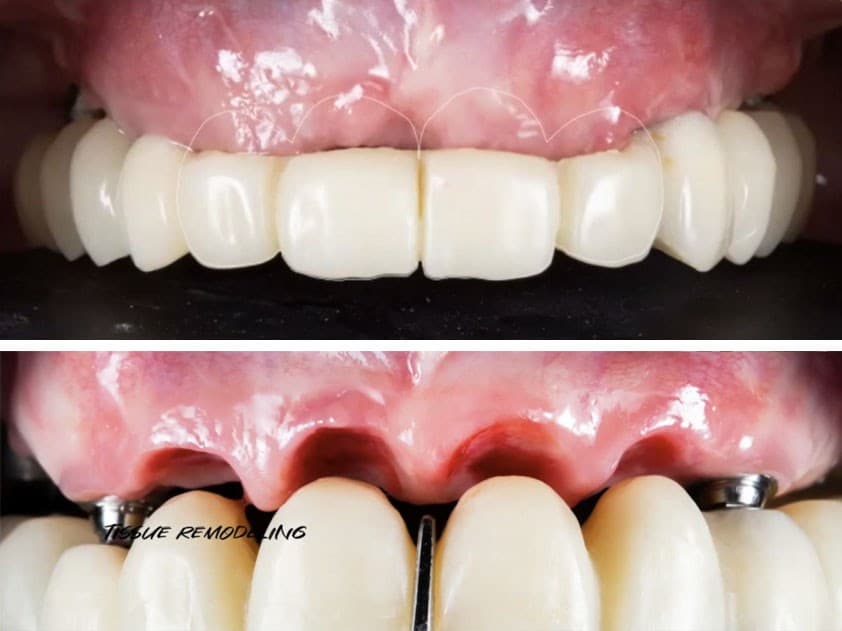
Dr. Maurice Salama described a long term treatment case requiring extraction, grafting, implant placement, restorative and orthodontic treatment. Many of the latest treatment modalities are demonstrated. Part 1 takes the clinician from extraction to implant placement.
Date Added:
8/4/2010
Author(s):
Maurice Salama, DMD
Dr. Maurice A. Salama completed his undergraduate studies at the State University
of New York at Binghamton in 1985, where he received his BS in Biology. Dr. Salama
r...
[read more]
|
|
Online Videos / Surgery / Implant / Simultaneous Extraction, Implant Placement and Augmentation
|
Questions & Comments
|
Band Ditto64 - (11/12/2012 9:18 AM)
Dr. Salama You provide sound reasoning and explanations in your presentation and answers. many thanks Band
|
Maurice Salama - (11/11/2012 5:13 PM)
Emad; thank you for your response. Yes, immediate temporization is an option but as the patient was under going ortho treatment I chose to delay loading.
Regards Dr. Salama
|
emad habib - (11/10/2012 11:24 PM)
Dr Salama,thank u very mutch for ur greatfull surgery
I am always like ur fantastec presetation
My question is
Why not u do immediat loading because u get 45 n as a primery stability
Thank you againe
|
Maurice Salama - (7/4/2012 2:17 PM)
Carl; thank you for the comments. Yes, you are correct in your thoughts regarding my reasons for performing this procedure in this manner. Healing abutments allow for support ofmthvertical component of the soft tissues and move the barrier of GBR 3 mm above the implant fixture head. Yes , PRGF can assist in creating a stable soft tissue barrier during wound healing.
Dr. Salama
|
Carl Choi - (7/2/2012 7:11 PM)
Dr. Salama, thank you for the elegant presentation. Given that you are performing GBR, why did you elect to place a healing abutment on the implant rather than a coverscrew and obtain primary closure? Is it to reduce distortion of the mucogingival position? Is the reason why an "open" GBR technique can work here without increasing the risk of infection due to the use of PRGF which seals the graft despite the lack of primary closure? Thanks so much again.
|
Charles Botbol - (7/2/2012 12:28 PM)
Beautiful surgery!!!
|
Tony Mosquera - (7/1/2012 5:40 PM)
Great video Dr. Salama, In lima in the Oral Rehabilitation Congress was the best expositor of the event!
|
Maurice Salama - (2/19/2012 8:06 AM)
Grant; thanks for your interest. The material I use to hold the bone graft together is PRGF, a blood born bio active modifier. It is a material I use routinely to provide autologous growth factors to the bone graft and the fibrin is sticky and keeps the bone together. PRGF comes from BTI. The instrument I used to carry and pack the bone is from Devemed. I do use this low turnover product to preserve the buccal plate and ridge dimensions. Many of the above products can be found on the product page of this site and can be purchased as well at discount.
Good luck Dr. Salama
|
Grant Appleby - (2/18/2012 4:35 PM)
Dr. Salama, Your xenograft placed on the outside of the buccal wall seems to be in a gel like material to hold the particles together. What is that material? (Because of computer problems i could nt get sound; I apologize for the question if you mentioned it while narrating. Also what was that disc shaped instrument you used to place the xenograft and what was that pointed (rotating instrument you used to refine it at the margin? Also, will bone grow outsite of the buccal husing last? or is this graft there expected to eventually resorb but wil insure that there will be no loss of B-L dimension of the socket? Great video. Thank you, Grant
|
|
|
Related Videos |
|
|
|
|
|
Immediate Dentoalveolar Restoration
The IDR (Immediate Dentoalveolar Restoration) technique has been used for over 6 years. With it, we can reconstruct socket tissue losses in the same surgical session of dental extraction, implant placement and provisional crown installation, minimizing the treatment time and morbidity of the procedures.
In this presentation we discuss the hard and soft tissues stability when the IDR technique is applied in different types of periodontal biotypes and in sites with different defect levels.
The clinical, radiographic and tomographic follow-up of some cases is shown, allowing us to evaluate the maintenance of gingival architecture and peri-implant bone stability around the implants.
| Presented By: |
José Carlos Martins da Rosa, DDS, MS |
| Presentation Style: |
Video |
| Community Rating: |
|
|
Watch Now>>
|
|
|
|
Related Courses |
|
|
Treatment Planning in Implant Dentistry
By completing this course you will receive 1 CEU.
| Presented By: |
Michael Sonick, DMD;Maurice Salama, DMD;Scott D. Ganz, DMD;Dr. Morton Amsterdam |
| Presentation Style: |
Online Course |
| CE Hours: |
1 CEU (Continuing Education Unit) |
|
Watch Now>>
|
|
|
|
|
|
Tissue Engineering and Platelet Derived Growth Factors: Evidence Based Therapy
Platelet derived growth factors are now routinely utilized in reconstructive therapy. This presentation describes very detailed and evidence based guidelines for clinicians interested in enhancing their abilities in tissue engineering, especially as it relates to bone augmentation. Specifically, while successful bone augmentation requires the standard surgical parameters of space maintenance, low pressure on the grafts and tension-free flap closure, optimization of this goal requires management and enhancement of the local biological conditions with growth factors. Towards that end, platelet concentrates through the constant release of growth factors are able to promote and enhance new vascularization, provide plasma protein, normal lipidemia, as well as increased collagen and fibrin activity.
| Presented By: |
Joseph Choukroun, MD |
| Presentation Style: |
Online Course |
| CE Hours: |
1 CEU (Continuing Education Unit) |
|
Watch Now>>
|
|
|
|
Related Articles |
|
|
Determining the Cessation of Vertical Growth of the Craniofacial Structures to Facilitate Placement of Single-Tooth Implants
<b>Introduction:</b> Single-tooth implants are commonly used to replace congenitally missing teeth in adolescent orthodontic patients. However, if implants are placed before cessation of facial growth, they will submerge relative to the adjacent erupting teeth. Therefore, it is important to know when facial growth is complete in postpubertal orthodontic patients. The purposes of this study were to determine and quantify the amount of vertical growth of the facial skeleton and the amount of eruption…
| Author(s): |
Vincent G. Kokich, Sr., DDS, MSD;Piotr Fudalej, Brian Leroux |
|
View Article>>
|
|
|
|
|
Osseointegrated Titanium Implants for Maxillofacial Protraction in Monkeys
Titanium implants were placed surgically into the maxillary, zygomatic, frontal, and occipital bones of four pigtail monkeys. After a 4-month healing period, the implants were exposed and abutments were placed. Extraoral traction appliances were then attached to the abutments. The cranial implants were used to support the framework of the traction appliance; those in the facial bones were used to attach springs that delivered a protraction force. The application of force varied among animals. In animal…
| Author(s): |
Vincent G. Kokich, Sr., DDS, MSD;Ward M. Smalley, DDS, MSD, Peter A. Shapiro, DDS, MSD, Thomas H. Hohl, DDS, Per-Ingvar Branemark, MD |
|
View Article>>
|
|
|
|
|
Aesthetic Enhancement of Anterior Dental Implants with the Use of Tapered Osteotomes & Soft Tissue Manipluation
An adequate bone base is usually a prerequisite for functionally and aesthetically optimal reconstruction of the soft tissue architecture around a dental implant. In patients with sufficient bone height but insufficient bone width as a result of tooth loss, a jaw enlargement technique with osteotomes combined with soft tissue manipulation may be utilized to facilitate proper implant placement while concomitantly optimizing the aes thetics of the final implant prosthesis. The learning objective of…
| Author(s): |
Jack A. Hahn, DDS;Lee H. Silverstein, DDS, MS, FACD, FICD;Gregori M. Kurtzman, DDS, Marc E. Moskowitz, DDS, David Kurtzman, DDS |
|
View Article>>
|
|
|
|
|