Video Details
|
Sinus Lift Procedures - A Critical Clinical Review - Part 2
Description:
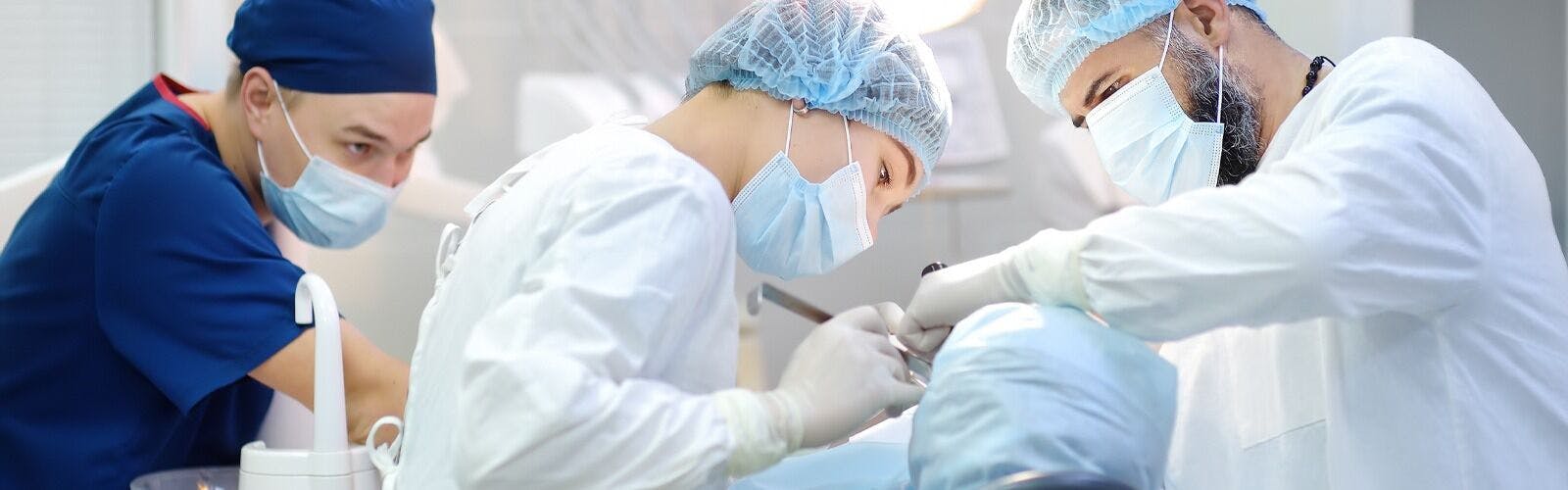
Sinus grafting procedures represent today a predictable solution allowing implant placement in atrophic posterior maxilla with high implant success rate. Several techniques and different grafting biomaterials have been used clinically, depending on residual bone, patient’s needs and implantation protocols.
In this presentation, we will give a critical review of different sinus grafting techniques (lateral approach, crestal approach) based on clinical long term results along with radiographic and histological aspects.
Date Added:
1/28/2011
Author(s):
Christian Makary, DDS, MSc
Dr. Christian Makary graduated as a doctor of dental surgery in 1993 from St Joseph University in Beirut, Lebanon.
He holds a certificate of Oral Surgery from Pari...
[read more]
|
|
Online Videos / Surgery / Sinus Lift / Sinus Lift Procedures - A Critical Clinical Review - Part 2
|
Questions & Comments
|
Keith Friefeld - (9/3/2012 10:57 PM)
Thank you again for part 2 of this presenation. I have two questions: 1. Intraosseous (Summer's) technique, are you placing a collaplug or collagen matrix prior to bone placement. 2. Are you only placing collagen membrane when perforations occur or as a standard for inside the sinus. Lateral wall I will assume you place all the time, to prevet tissue ingrowth. Thanks again
|
Adam Doudney - (5/10/2012 7:45 PM)
Thanks for the presentation, what do you do when the membrane tears with the crestal bone method? just close and leave for 6 motnhs and retry? Since the crestal bone approach would have much less patient trauma and pain/swelling and you perform it in very thin bone caes, why would you use a lateral window technique? Thanks.
|
Ruslan Korobeinik - (1/15/2012 5:58 PM)
Questions: 1. from your experience, what percentage of patients do have that kind of flexible membrane that could be easily raised w graft material up to 6-7mm?
2. what instrument do you use to press graft material against Schniderian Membrane and separate it using crestal approach?
|
Thomas Walker - (12/12/2011 12:27 AM)
This is a Great presentation and so informative and useful to everyday clinical practice. Look forward to seeing more of your presentations!
|
mansour mirzaie - (9/4/2011 3:53 PM)
thank you for the presentation but I think the membrane is not that flexible as it can be raised up to 6 or 7mm without getting damaged,even by lateral approach we never push the membrane away,we remain with one face of the instrument on sinus walls.
|
Vitaliy Kozmenko - (7/25/2011 12:12 PM)
Thank you very much, it was very useful presentation!
|
yuksel yazicioglu - (7/8/2011 6:36 PM)
Excelent presentation. Thanks.
|
Pastor Allende - (6/23/2011 11:32 PM)
Excelent presentation.
|
NAGARAJAN MUTHUSAMY - (6/19/2011 1:41 PM)
very nice and useful presentation.Thanks.
|
|
|
Related Videos |
|
|
Sinus Lift Procedures - A Critical Clinical Review - Part 1
In this presentation, we will give a critical review of different sinus grafting techniques (lateral approach, crestal approach) based on clinical long term results along with radiographic and histological aspects.
| Presented By: |
Christian Makary, DDS, MSc |
| Presentation Style: |
Lecture |
| Community Rating: |
|
|
Watch Now>>
|
|
|
|
|
|
|
Related Courses |
|
|
|
|
Tissue Engineering and Platelet Derived Growth Factors: Evidence Based Therapy
Platelet derived growth factors are now routinely utilized in reconstructive therapy. This presentation describes very detailed and evidence based guidelines for clinicians interested in enhancing their abilities in tissue engineering, especially as it relates to bone augmentation. Specifically, while successful bone augmentation requires the standard surgical parameters of space maintenance, low pressure on the grafts and tension-free flap closure, optimization of this goal requires management and enhancement of the local biological conditions with growth factors. Towards that end, platelet concentrates through the constant release of growth factors are able to promote and enhance new vascularization, provide plasma protein, normal lipidemia, as well as increased collagen and fibrin activity.
| Presented By: |
Joseph Choukroun, MD |
| Presentation Style: |
Online Course |
| CE Hours: |
1 CEU (Continuing Education Unit) |
|
Watch Now>>
|
|
|
|
Related Articles |
|
|
Sinus Augmentation for Single-Tooth Replacement in the Posterior Maxilla: A 3-Year Follow-up Clinical Report
A technique for single-tooth sinus lift and simultaneous implant placement in the posterior maxilla is presented. Ten hydroxyapatite-coated cylindric implants, 13 to 15 mm in length, were placed together with a composite bone graft of demineralized freeze-dried bone allograft and autogenous bone in 10 adults. Surgical technique and anatomic considerations are discussed. Follow-up of 3 years showed successful function and no cervical bone loss in all patients.
| Author(s): |
Ziv Mazor, DMD;Michael Peleg, DMD;Michael Peleg, DMD; Martin Gross, BDS, LDS, MSc |
|
View Article>>
|
|
|
|
|
Indirect Sinus Lift with CPS Putty
In situations where lack of bone volume is related to an enlarged maxillary sinus, elevation of the sinus floor has been advocated for implant placement.
| Author(s): |
Lanka Mahesh, BDS, MBA;Dr. Manesh Lahori; Dr. Sagrika Shukla; Dr. Prerna Kaushik |
|
View Article>>
|
|
|
|
|
Maxillary Sinus Membrane Repair: Update on Technique for Large and Complete Perforations
Maxillary sinus membrane perforation is the most common complication that occurs with sinus elevation augmentation surgery. A technique using a slow resorbing type I collagen membrane for repair of large and complete sinus membrane perforations is described. The biocompatibility and semirigid structural integrity of this membrane, along with external tack fixation, allows for optimal membrane stabilization and maintenance. (Implant Dent 2008;17:24–31)
|
|
|
|