Video Details
|
Smile Design with Anterior Composite Bonding
Description:
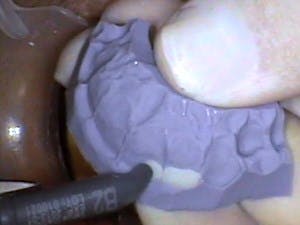
In this instructional video, Dr. Ronald Goldstein utilizes an actual patient's treatment to highlight the application of anterior composite bonding in smile design. In this step-by-step presentation, Dr. Goldstein addresses such common challenges as replacing multiple adjacent failed restorations, matrix utilization and managing anterior crowding to name a few.
Date Added:
9/25/2009
Author(s):
Ronald Goldstein, DDS
Dr. Ronald Goldstein is currently Clinical Professor of Oral Rehabilitation at Georgia Regents University College of Dental Medicine in Augusta, Georgia, Adjunct Clinic...
[read more]
|
|
Online Videos / Restorative / Other Restorative / Smile Design with Anterior Composite Bonding
|
Questions & Comments
|
Stan Ramley - (5/1/2013 7:55 PM)
Practical and informative!
|
جهاد اسكندر - (4/4/2013 12:14 PM)
great work
|
Rashed Sultan - (4/4/2013 9:53 AM)
thanks
|
Weasam Jamoom - (4/2/2013 1:07 PM)
nice work ,, thanx
|
Weasam Jamoom - (4/2/2013 1:07 PM)
nice work ,, thanx
|
hae kang - (3/27/2013 8:25 PM)
Thank you for your information !
|
farshad bajoghli - (2/1/2013 9:56 AM)
thanks for sharing your experience with us,it is such a pleasure watching your informative and practical lectures always.
|
Ali Showkat - (9/6/2012 1:15 PM)
you are a great teacher.
|
Sonika Sharma585 - (8/14/2012 2:59 AM)
Thank you Dr Goldstein. Where ever ( Mean your book, your lecture, or Dental XP ), when ever ( mean 5 year ago from your book, last year from your lecture and today from your this video) I always learn some thing. Thank a lot. Thank you for sharing your knowledge.
|
|
|
Related Videos |
|
|
|
Improving the Dentist/Technician Communication for optimum Smile Design and Ceramic Restorations
As modern dentists and dental technicians we need to keep abreast of the latest developments in dentistry and incorporate new techniques and materials into our armamentarium on an ongoing basis. Moreover, it is essential that all the team members participate proactively in the treatment planning process in order to ensure the best possible result for the benefit of the patient. Consequently, consistent interaction among the members of the dental team is required. Technicians should have a basic understanding of clinical procedures and the development of target-oriented communication protocols are essential prerequisites for a smooth workflow and the provision of high-quality service. Dentists should be aware that crucial treatment steps such as the diagnostic wax-up, the fabrication of the mock-up, shade selection, material selection, prep design, and the fabrication of temporary restorations, etc. can be greatly improved by taking into account the technician’s perspective.
| Presented By: |
Christian Coachman, DDS, CDT |
| Presentation Style: |
Video |
| Community Rating: |
|
|
Watch Now>>
|
|
|
|
|
The Hidden Value of Digital Radiography for Caries Detection
Digital radiography allows the dentist to use powerful image analysis tools to extract information from the image that might otherwise be missed by visual inspection alone. Historically interproximal caries detection is done by visually inspecting the radiograph for evidence of a radiolucency produced by the decay and visually determining if the decay is deep enough that a restoration is required.
| Presented By: |
David C. Gakenheimer, PhD |
| Presentation Style: |
Video |
| Community Rating: |
|
|
Watch Now>>
|
|
|
|
Related Courses |
|
|
Optimizing Tissue Esthetics of Single Tooth Implants
With optimized planning, precise placement of the fixture, and the use of laser technology to reduce tissue trauma we can minimize the bone and tissue changes during the surgical phase. During the restorative phase creation of proper tissue contours using the CO2 laser and control of tooth form to position tissue set the stage for obtaining optimal esthetic results.
| Presented By: |
Lee Ann Brady, DMD |
| Presentation Style: |
Online Course |
| CE Hours: |
1 CEU (Continuing Education Unit) |
|
Watch Now>>
|
|
|
|
|
Give Back a Smile: Full mouth Restorations
Dr. Lynn Jones presents solutions for a full mouth restorative treatment while showing the benefits utilizing a microscope.
| Presented By: |
Dr. Lynn Jones, DDS |
| Presentation Style: |
Online Course |
| CE Hours: |
1 CEU (Continuing Education Unit) |
|
Watch Now>>
|
|
|
|
|
The Merger of Orthodontics with Cosmetic Dentistry
As orthodontists, we don’t do laminates. But when we are finishing a case, sometimes the smile just doesn’t “look right”. But not all our patients either want or can afford laminates. Not all even need them to get a great smile. So, what principles can we learn from the cosmetic dentists and use in our orthodontic cases? Apparently quite a lot! In this presentation, Dr. Sarver will illustrate finishing procedures such as reshaping contacts, connectors, embrasures, and even soft tissue contouring with lasers to achieve that next level of smile presentation in your orthodontic cases.
| Presented By: |
David M Sarver, DMD, MS |
| Presentation Style: |
Online Course |
| CE Hours: |
1 CEU (Continuing Education Unit) |
|
Watch Now>>
|
|
|
|
Related Articles |
|
|
Immediate Custom Implant Provisionalization: A Prosthetic Technique
This article outlines a provisionalization technique that can be performed after traditional healing of the implant site. Upon reading this article, the reader should:
Realize that this technique is also effective when immediate implant loading is not possible.
Become familiar with the benefits of an immediate customized provisional, including duplicating the emergence profile of the extracted tooth.
|
|
|
|
Introducing Choukroun’s Platelet Rich Fibrin (PRF) to the Reconstructive Surgery Milieu
Platelet-rich fibrin (PRF), developed in France
by Choukroun et al (2001), is a second generation
platelet concentrate widely used to
accelerate soft and hard tissue healing. Its advantages
over the better known platelet-rich plasma
(PRP) include ease of preparation/application, minimal
expense, and lack of biochemical modification
(no bovine thrombin or anticoagulant is required).
PRF is a strictly autologous fibrin matrix containing
a large quantity of platelet and leukocyte cytokines.
This article serves as an introduction to the PRF
“concept” and its potential clinical applications.
| Author(s): |
Dan Holtzclaw, DDS, MS;Michael Toffler, DDS;Nicholas Toscano, DDS, MS;Marco Del Corso, DDS, DIU ; David Dohan Ehrenfest, DDS, MS, PhD |
|
View Article>>
|
|
|
|
|
Smile Analysis - The Photoshop Smile Design Technique: Part 1
Computer design software will become the main communication technology between dentists and ceramists and a useful tool for showing patients the possibilities for enhancing their smiles. By understanding the elements of esthetics and learning how to incorporate technology applications into clinical dentistry, clinicians can predictably plan smile design cases and communicate anticipated results to patients and ceramists alike. This article, the first in a two-part series, introduces elements of smile design and reviews some timeless concepts. It discusses new, step-by step techniques for incorporating digital technology into the smile design process that can be accomplished in approximately three to four minutes.
| Author(s): |
Edward A. McLaren, DDS, MDC;Lee Culp, CDT, AAACD |
|
View Article>>
|
|
|
|
|