Video Details
|
Titanium Mesh Mediated Guided Bone Regeneration
Description:
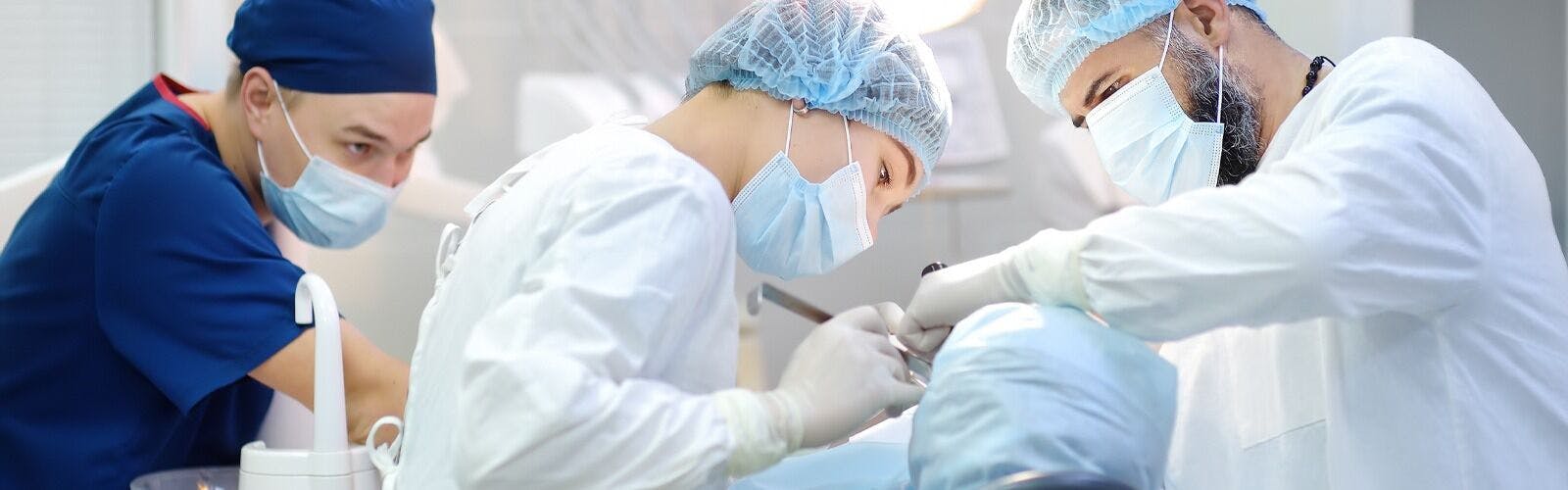
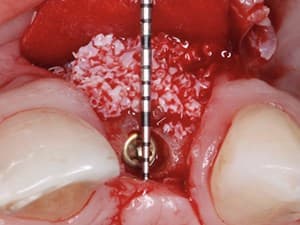
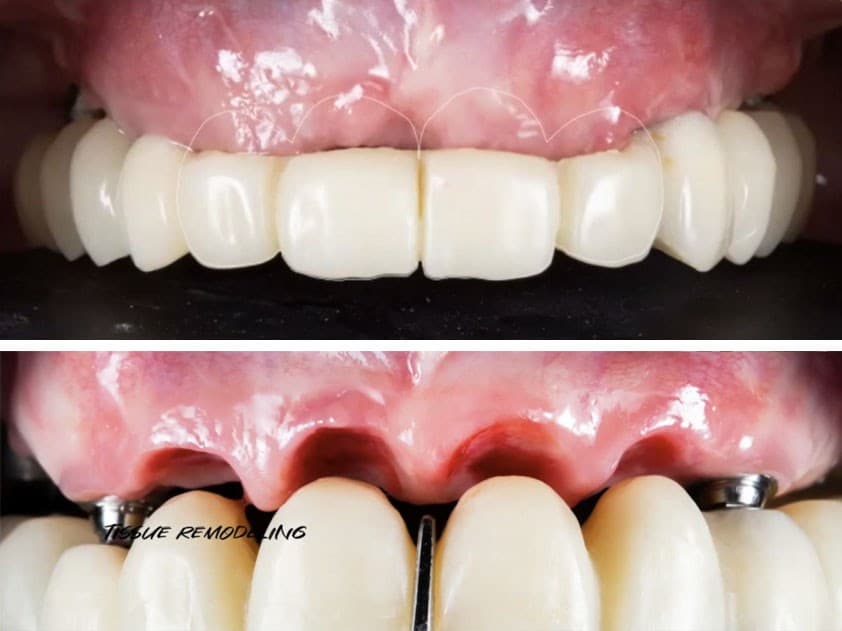
In this surgical technique video, Dr. Tomohiro Ishikawa demonstrates, in great detail, the clinical step-by-step techniques required for successful GBR procedures utilizing a collagen membrane, titanium mesh and autogenous bone grafts.
Date Added:
11/26/2009
Author(s):
Tomohiro Ishikawa, DDS
Tomohiro Ishikawa, D.D.S.
Professional Experience:
- Ishikawa Dental Office, private practice, at Hamamatu, Shizuoka, Japan, 1996-present<...
[read more]
|
|
Online Videos / Surgery / Bone Grafting / Titanium Mesh Mediated Guided Bone Regeneration
|
Questions & Comments
|
mansour mirzaie - (9/20/2011 2:49 PM)
thank you for the nice presentation dear Dr.ishikawa.titanium mesh is a nice membrane ,easy to place but hard to remove.how do you remove the membrane ?
|
Milo Garcia Tempone - (3/7/2010 3:08 PM)
Thank you for sharing this nice technique. Where and how can we purchase these titanium membranes.
|
Mark Neale - (12/3/2009 8:15 PM)
Great results. Thanks for sharing. How were the mesh and membranes stablized?
|
Tomohiro Ishikawa - (6/16/2009 5:54 AM)
James, yes it is a little difficult to remove the Titanium mesh.I now always use cross-linked collagen membrane to cover the mesh in compliance with the accepted theory of GBR. Sometimes the mesh is covered with newly formed bone, in this case we have to use burs or chisels to remove the bone, before removing the mesh. On occasion, there is a thin soft tissue layer under the membrane. In this case, I use a blade to separate the tissue from the titanium mesh. In answer to your other question,I feel that it shouldn't be necessary to ever remove regenerated tissue.
|
Tomohiro Ishikawa - (6/16/2009 5:21 AM)
Maurice, I agree that PRGF,BMP or PDGF would have a positive influence on new bone formation. In addition, PRGF and PDGF would enhance soft tissue healing; which in turn, would reduce the chance of post-operative complications.
Paul, Thank you for your comment. I agree with you, a more stable video would be easier to watch.
|
james kim - (6/11/2009 8:22 AM)
How difficult is it to remove the titanium mesh at the uncovering stage?
Does it leave a somewhat bumpy ridge that you'll have to smooth down with a bur?
|
Maurice Salama - (5/17/2009 7:16 AM)
Amazing. Great surgical technique. Fitting the titanium membrane today can be done presurgically on a stereolithographic 3D model. Perhaps this would be a good indication for a bioactive modifier incorporated into the bone graft like PRGF or rhBMP?
|
|
|
Related Courses |
|
|
|
Alveolar Ridge Regenerative Strategies: Autogenous Bone vs BMP-2
This clinical based presentation will compare the use of autogenous bone vs BMP-2 for alveolar ridge reconstruction. The science, indications, advantages and disadvantages of each approach will be featured. Single tooth to full arch reconstruction cases will also be shown along with understanding the application of non-resorbable vs resorbable mesh barriers for alveolar ridge reconstruction.
| Presented By: |
Michael A Pikos, DDS |
| Presentation Style: |
Online Course |
| CE Hours: |
1 CEU (Continuing Education Unit) |
|
Watch Now>>
|
|
|
|
|
Tissue Engineering and Platelet Derived Growth Factors: Evidence Based Therapy
Platelet derived growth factors are now routinely utilized in reconstructive therapy. This presentation describes very detailed and evidence based guidelines for clinicians interested in enhancing their abilities in tissue engineering, especially as it relates to bone augmentation. Specifically, while successful bone augmentation requires the standard surgical parameters of space maintenance, low pressure on the grafts and tension-free flap closure, optimization of this goal requires management and enhancement of the local biological conditions with growth factors. Towards that end, platelet concentrates through the constant release of growth factors are able to promote and enhance new vascularization, provide plasma protein, normal lipidemia, as well as increased collagen and fibrin activity.
| Presented By: |
Joseph Choukroun, MD |
| Presentation Style: |
Online Course |
| CE Hours: |
1 CEU (Continuing Education Unit) |
|
Watch Now>>
|
|
|
|
Related Articles |
|
|
Socket Gafting with the use of Autologous Bone - an Experimental Study in the Dog
In five beagle dogs, the distal roots of the third and fourth mandibular premolars were removed. The sockets in the right or the left jaw quadrant were grafted with either anorganic bovine bone or with chips of autologous bone harvested from the buccal bone plate. After 3 months of healing, biopsies of the experimental sites were sampled, prepared for buccal–lingual ground sections and examined with respect to size and composition.
|
|
|
|
|
Alloplastic Bone Substitutes Around Dental Implants
The repair of osseous defects has been a goal in dentistry for many decades. Subsequently, within the last several years, there has been an emergence of a new class of materials in dentistry referred to as synthetic bone. Finding the ideal bone substitute material has been the goal of researchers for many years. In attempting to achieve this ideal material, dental practitioners have tried with varying degrees of success: autogenous and demineralized freeze-dried bone, allografts of plastic, carbon…
| Author(s): |
Lee H. Silverstein, DDS, MS, FACD, FICD;Lee M. Whitesides, DMD, MMSC |
|
View Article>>
|
|
|
|
|